Latest Insights & In-Depth Reports · Page 14

The Less You Eat, the Higher Your Blood Sugar? The Metabolic Paradox of Survival Mode
Health·

The Less You Eat, the Higher Your Blood Sugar? The Metabolic Paradox of Survival Mode

When you adopt severe caloric restriction below your basal metabolic rate (BMR) to lower blood glucose or drop weight, your body interprets this as a mortal survival threat rather than a fat loss cue. This article examines how the hypothalamus triggers survival compensation—downregulating active thyroid hormone (T3) and driving cortisol up—forcing the liver into hyperactive gluconeogenesis by cannibalizing muscle tissue.

Muscle Gain vs. Fat Loss: Which Is the Ultimate Weapon Against Elevated Blood Sugar?
Health·

Muscle Gain vs. Fat Loss: Which Is the Ultimate Weapon Against Elevated Blood Sugar?

When confronting hyperglycemia or prediabetes, many instinctively turn to weight loss, believing that dropping scale weight will automatically normalize glycemic control. However, scientific evidence reveals that isolated fat loss offers limited metabolic clearing capacity and can even backfire. The true ultimate weapon is muscle hypertrophy. This article compares muscle gain and fat loss to explain why expanding your glucose sink solves hyperglycemia at its root.

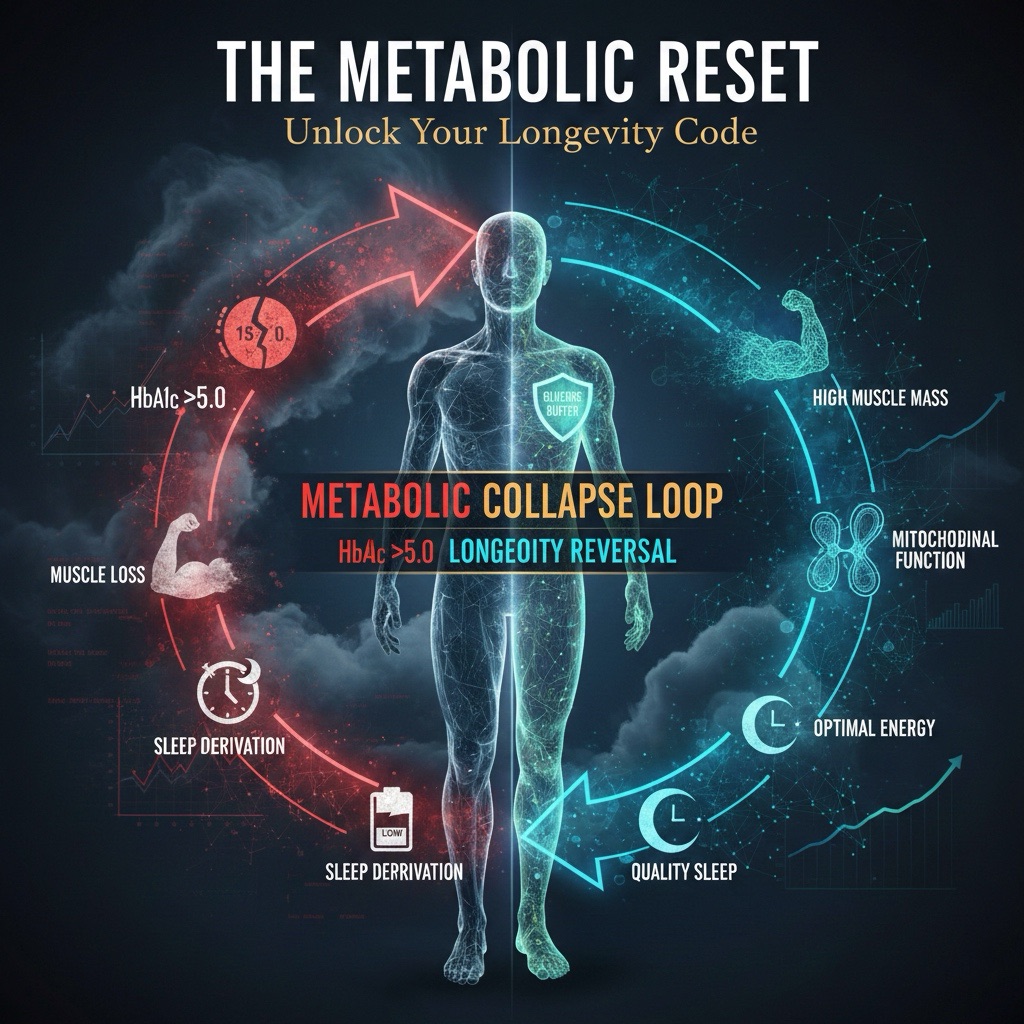
Why Won't My Blood Sugar Come Down Even Though I Don't Eat Sugar? The Metabolic Truth Behind "HbA1c > 5.0"
Health·

Why Won't My Blood Sugar Come Down Even Though I Don't Eat Sugar? The Metabolic Truth Behind "HbA1c > 5.0"

Many people find that even without sugary drinks or desserts, their HbA1c stays above 5.0 and even creeps upward. Conventional wisdom blames "too much sugar," but physiology reveals a harsher truth: this is often an early warning that your metabolic buffer is draining away. This article explains why muscle loss is the real culprit behind runaway blood sugar, and why an HbA1c of 5.0 is a longevity watershed you must take seriously.