
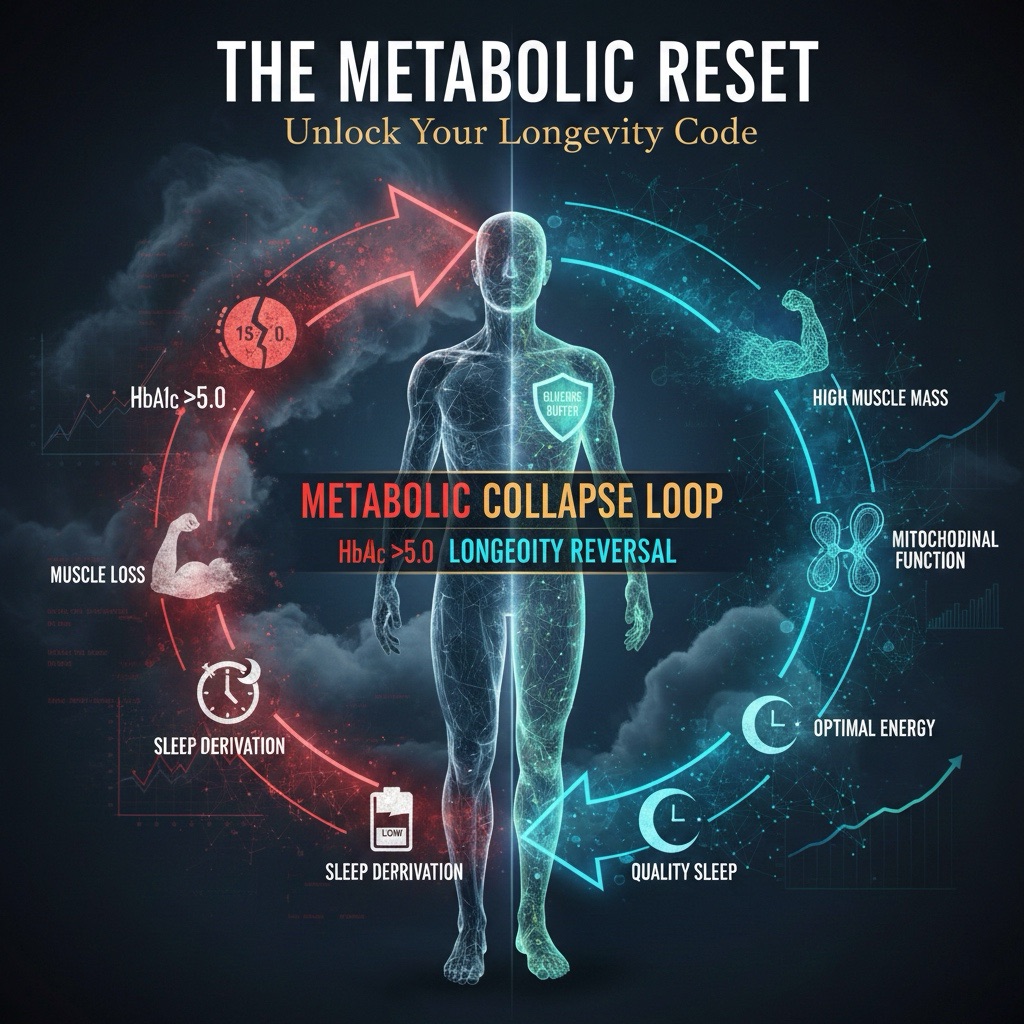
When the conversation turns to improving blood glucose, the instinctive first thought for most people is “losing weight.”
“Eat less, move more; drop your body weight, and your blood sugar will naturally fix itself.” While this advice sounds indisputable on the surface, on the metabolic battlefield it captures only half the picture.
In clinical reality, if you are struggling with elevated blood sugar or prediabetes, building skeletal muscle represents a far more foundational, potent, and permanent metabolic weapon than isolated fat loss.
1. The Limitations of Fat Loss: Why Merely Getting Thinner Is Insufficient
Reducing adipose tissue—specifically visceral fat—confers clear health advantages:
- Lower systemic inflammation: Hypertrophic adipocytes secrete inflammatory cytokines (such as TNF-alpha and IL-6) that blunt insulin receptor signaling. Fat reduction mitigates this chronic low-grade inflammation.
- Improved secondary metabolic markers: Dropping body weight often improves resting blood pressure and lipid fractions.
However, isolated fat loss exhibits a critical limitation when it comes to systemic glucose clearance rate.
You may shed ten kilograms, but if that loss includes substantial lean muscle mass, your physiological capacity to process carbohydrates will not improve. In fact, it often deteriorates into “lean diabetes”—sarcopenic insulin resistance.
Think of it this way: skimming a thin layer of oil off the top of a water bucket does not expand the bucket’s volumetric capacity or increase its drainage speed. When a sudden surge of water arrives, it will still overflow immediately.
2. The Superiority of Muscle Gain: Expanding Your Glucose Disposal Facility
Skeletal muscle is not merely decorative tissue that creates athletic aesthetic lines; it is the most metabolically active, voluminous glucose disposal plant in the human body. Building muscle resolves circulating glucose stagnation across multiple physiological dimensions:
1. Upregulation of GLUT4 Transporters: The Powerful Glucose Vacuum Cleaner
- Hypertrophic effect: When you perform progressive resistance training, mechanical overload stimulates myofibrillar remodeling. The abundance of GLUT4 glucose transporter proteins on the muscle cell membrane increases dramatically.
- Glycemic impact: Increased GLUT4 operates like opening dozens of new warehouse doors. It clears postprandial glucose surges out of the bloodstream with unprecedented speed, sharply reducing peak glucose and total area under the curve. This is equivalent to installing high-capacity industrial drainage pumps in your reservoir.
2. Expanded Glycogen Storage Capacity: A Vast Buffer Warehouse
- Hypertrophic effect: Skeletal muscle serves as the body’s largest endogenous reservoir for glycogen (the polymerized storage form of glucose). As muscle volume expands, total glycogen storage capacity scales proportionately.
- Glycemic impact: Greater glycogen capacity means your body can absorb substantial amounts of dietary glucose without leaving excess sugar trapped in the bloodstream. This provides a robust glycemic buffer, granting far greater dietary carbohydrate tolerance.
3. Heightened Insulin Receptor Sensitivity: Restoring Cellular Hearing
- Hypertrophic effect: Metabolically active, healthy myocytes express insulin receptors that respond with high fidelity to endocrine signals.
- Glycemic impact: The pancreas no longer needs to hypersecrete massive quantities of compensatory insulin to coax cells into clearing sugar. This directly reduces pancreatic beta-cell fatigue and protects long-term endocrine function.
4. Enhanced Mitochondrial Density and Oxidative Capacity
- Hypertrophic effect: Resistance exercise stimulates mitochondrial biogenesis and enhances the oxidative efficiency of the respiratory chain within muscle fibers.
- Glycemic impact: Higher mitochondrial density accelerates the clean, complete oxidation of glucose into cellular energy (ATP), preventing toxic metabolic intermediates from accumulating inside cells.
3. Building Muscle Restores the Freedom to Eat
While isolated fat loss brings secondary benefits, it fails to solve the architectural problem of where glucose goes.
Muscle hypertrophy, on the other hand, directly upgrades your body’s built-in glycemic disposal infrastructure.
This fundamental upgrade delivers distinct clinical benefits:
- Rapid glucose clearance: Postprandial glucose avoids dangerous hyperglycemic spikes, returning swiftly to baseline.
- Lower fasting glucose: Upgraded resting metabolic activity maintains stable baseline glucose levels around the clock.
- Sustained HbA1c reductions: Long-term glycemic control improves even when baseline carbohydrate intake remains unchanged.
- Greater nutritional flexibility: You can enjoy wholesome meals without constant dietary anxiety; occasional carbohydrate splurges are smoothly absorbed by expanded muscle glycogen stores.
Conclusion
If you are currently wrestling with elevated blood glucose, it is time to rethink your strategic framework.
Fat reduction matters, but direct your core efforts toward the true root solution: building lean muscle.
Transforming your skeletal muscle into the ultimate weapon against hyperglycemia is about far more than chasing impressive clinical lab panels—it is the foundation for securing metabolic freedom, resilience, and vibrant longevity.
Support Independent Perspectives & In-Depth Insights
Every thoughtful analysis and candid critique comes from our dedication to truth and quality. We choose not to follow sensational algorithms or clickbait headlines.
Sustaining independent research requires reader support. Make a one-time or monthly contribution, securely processed by Google.
Payments secured by Google · Manage or cancel anytime in your Google Account

Comments