
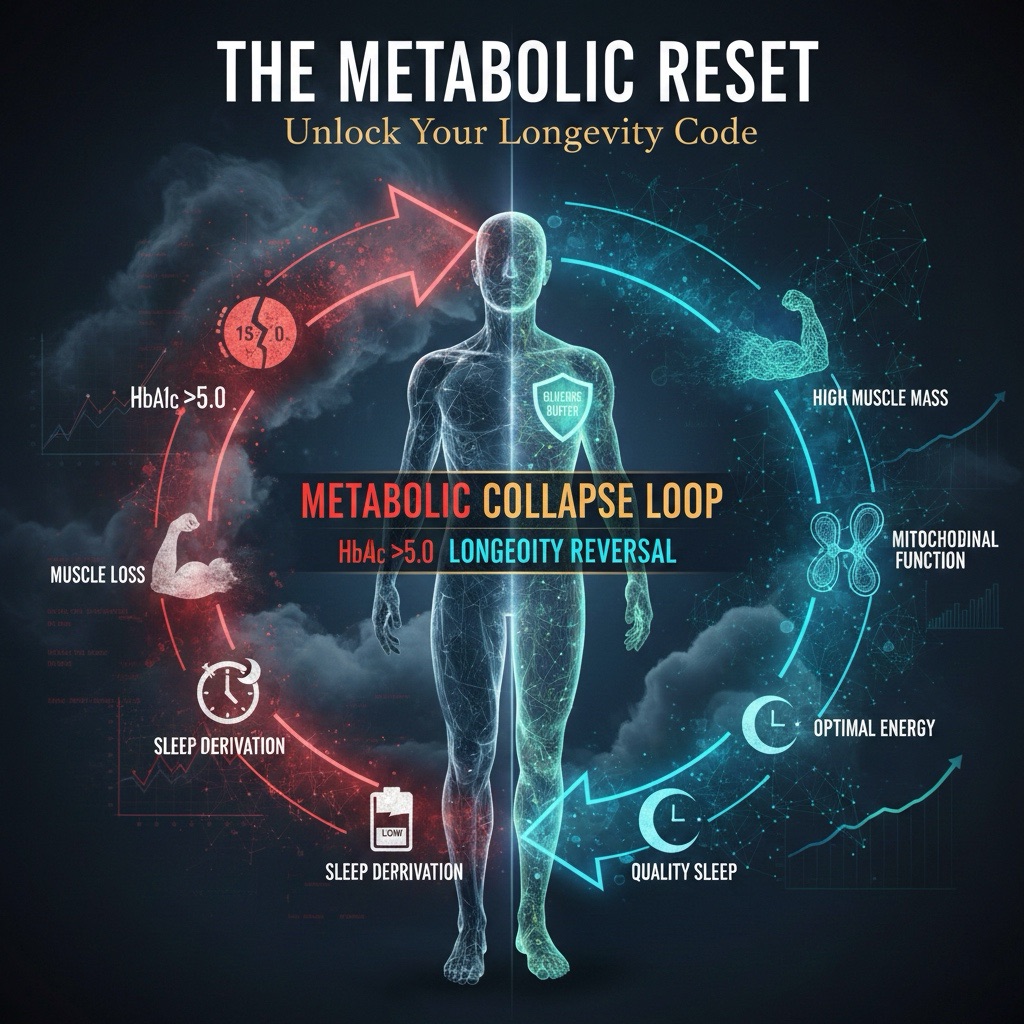
Metabolic specialists often encounter distressing clinical scenarios: a patient rigorously counts calories and eats solely boiled vegetables and chicken to lower blood sugar. Body weight drops noticeably, yet their HbA1c remains stubbornly elevated, often accompanied by paradoxical morning fasting hyperglycemia.
This failure is not caused by a lack of willpower; it happens because your hypothalamus has detected an acute survival threat. To preserve life, it deliberately locks down peripheral glucose clearance.
1. The Hypothalamic Alarm: Caloric Deficits Do Not Equal Fat Loss
To understand this paradox, you must recognize that your brain (specifically the hypothalamus) does not understand intentional dieting; it only recognizes famine.
When daily energy intake drops persistently below your Basal Metabolic Rate (BMR), your central nervous system deduces that the external environment has suffered a severe ecological collapse in food availability.
To ensure obligate survival organs—the brain and heart—survive the famine, the hypothalamus sounds the alarm and initiates a coordinated survival compensation cascade:
- Suppressed active thyroid hormone (Declining T3): Much like an automobile switching to low-power battery-saving mode when fuel is critical, your basal metabolism drops, causing cold sensitivity, chronic lethargy, and telogen effluvium (hair loss).
- Surging cortisol (Elevated stress hormones): Cortisol signals life-or-death mobilization, serving as the master architect of endogenous hyperglycemia.
2. The Chain Reaction: How Cortisol Manufactures Glucose from Within
When chronic caloric deficits elevate circulating cortisol levels, it initiates two powerful physiological mechanisms to maintain blood glucose:
Muscle Catabolism and Uncontrolled Gluconeogenesis
Cortisol actively commands the body to cannibalize healthy skeletal muscle tissue, breaking myofibrillar proteins down into free amino acids.
This explains why people who lose weight through severe starvation end up soft, weak, and metabolically fragile.
Even if you ingest zero dietary carbohydrates, your liver acts on cortisol’s direct orders, manufacturing an unrelenting torrent of glucose from endogenous muscle to feed the central nervous system.
Induction of Adaptive Insulin Resistance
To ensure that the glucose produced by the liver reaches the brain, cortisol instructs peripheral skeletal muscle cells to stop absorbing blood sugar.
This is not primary pancreatic failure; it is an autonomous, protective triage mechanism designed by evolution to divert fuel toward the brain during starvation.
The disastrous consequence is that excess glucose stagnates in your bloodstream, keeping HbA1c stubbornly elevated.
3. Why Severe Caloric Deprivation Destroys Longevity
Weight loss achieved through semi-starvation inflicts severe endocrine disruption:
- Skeletal muscle atrophy: Destroys your body’s largest metabolic glucose buffer.
- Suppressed IGF-1 (Insulin-like Growth Factor 1): Halts cellular repair and anabolic regeneration, dramatically accelerating biological aging.
- Plunging leptin: Traps you in insatiable neurochemical hunger while slowing metabolic expenditure to a crawl.
Low scale weight achieved through extreme deprivation represents nothing less than accelerated biological aging.
4. How to De-escalate the Survival Threat
To reverse this paradoxical hyperglycemia, the solution is never more aggressive dietary restriction, but strategic physiological alignment:
- Eat at or above your Basal Metabolic Rate (BMR): Signal directly to your hypothalamus that the famine has ended. Only when baseline energy availability is secure will cortisol normalize and peripheral muscle tissue reopen glucose pathways.
- Prioritize high-density micronutrients: Choose nutrient-dense whole foods over hollow calories, ensuring ample trace minerals to support thyroid deiodinase activity.
- Discontinue prolonged fasting regimens: For individuals exhibiting metabolic distress (HbA1c > 5.0%), fasts exceeding 24 hours often provoke exaggerated cortisol counter-regulation.
- Monitor dawn phenomenon spikes: Waking up with your highest blood glucose reading of the day usually signals nocturnal cortisol hyperactivity or bedtime caloric inadequacy triggering hepatic overcompensation.
Conclusion
Glycemic regulation is not an exercise in relentless caloric subtraction; it is an endocrine orchestration of biological safety.
When you provide your body with energetic security, it grants cellular permission for glucose to be cleanly oxidized in your mitochondria, rather than trapping it in circulation where it damages your vascular endothelium.
Support Independent Perspectives & In-Depth Insights
Every thoughtful analysis and candid critique comes from our dedication to truth and quality. We choose not to follow sensational algorithms or clickbait headlines.
Sustaining independent research requires reader support. Make a one-time or monthly contribution, securely processed by Google.
Payments secured by Google · Manage or cancel anytime in your Google Account

Comments