
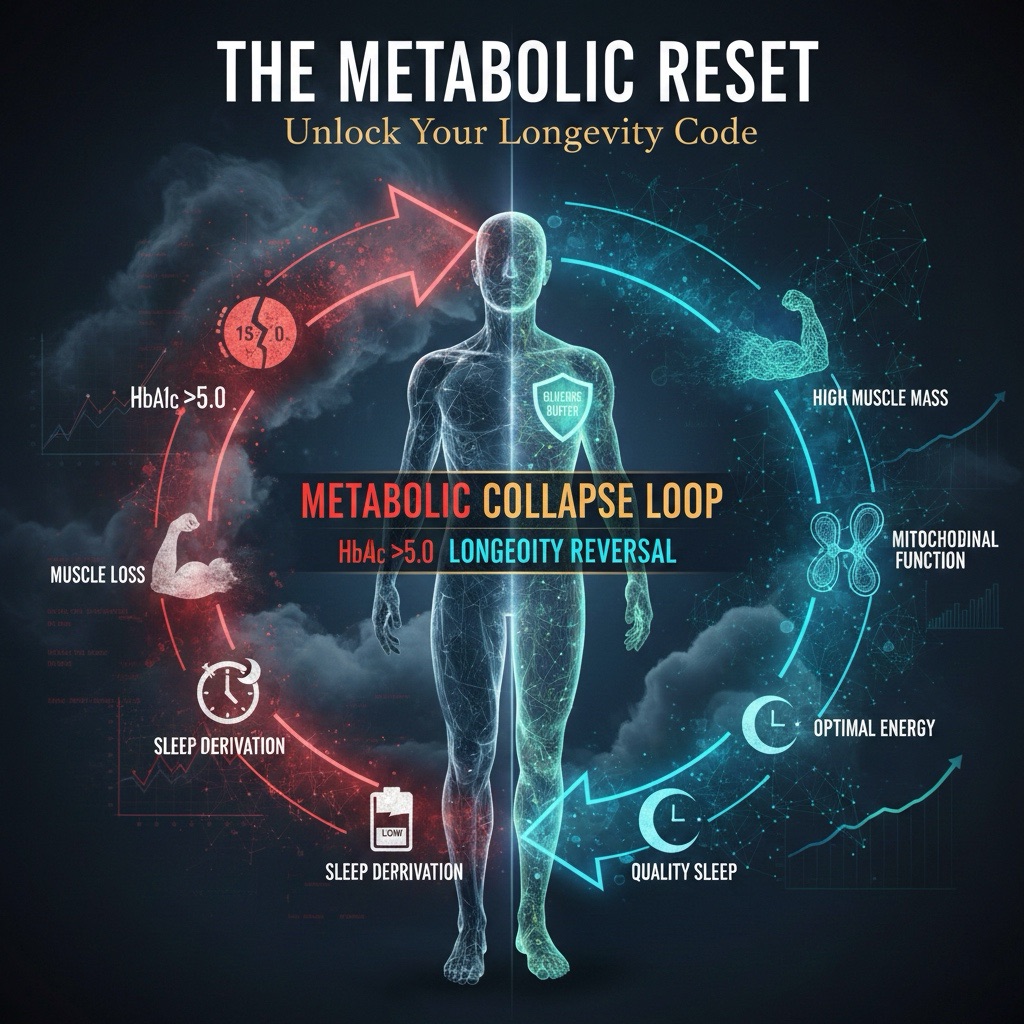
Imagine your body housing a massive reservoir responsible for capturing the rush of “sugar water” that floods into your bloodstream after every meal.
When this reservoir has ample capacity and unblocked spillways, no matter how sweet a drink you enjoy, water levels recede quickly without overflowing (which would cause hyperglycemia).
That reservoir is your muscle tissue.
1. Why Do Athletic Foodies Keep Their Blood Sugar So Stable?
We all know people with enormous appetites who love sweets, yet boast enviable, near-perfect blood glucose numbers.
Their secret lies in the volume of their “glucose sink”.
Human skeletal muscle is the primary organ for disposing of glucose, responsible for clearing approximately 70% to 80% of circulating blood sugar. For someone equipped with high-quality muscle mass:
- Rapid Absorption Rate: The surfaces of their muscle cells contain abundant GLUT4 (glucose transporter type 4) proteins, soaking up blood glucose like a dry sponge.
- Large Storage Capacity: Muscles convert excess glucose into glycogen for storage. The more muscle mass you carry, the larger the storage capacity, making overflow rare.
The result? When you drink a sugary milk tea, your blood sugar spikes; when they drink it, the glucose goes straight into their muscles.
2. The Hard Truth: Is Your “Glucose Sink” Shrinking?
The most common metabolic crisis facing modern adults is not pancreatic failure, but the decline in muscle mass (sarcopenia).
When you lack regular resistance training or cut calories drastically to lose weight at the expense of lean muscle, your blood sugar buffer shrinks. This triggers a destructive chain reaction:
- Insufficient Storage Space: A modest serving of carbohydrates quickly caps out your muscle glycogen capacity.
- Blocked Pathways: Underused muscles lose their insulin sensitivity, leaving glucose queuing in the bloodstream, unable to enter cells.
- A Vicious Cycle: The longer glucose lingers in the vessels, the greater the vascular damage. The pancreas must pump out ever-increasing amounts of insulin, culminating in beta-cell burnout.
This is precisely why early warning signs of type 2 diabetes often present as declining muscle strength rather than elevated fasting glucose alone.
3. Don’t Just Cut Sugar—You Need to Expand the Reservoir
Conventional diabetes prevention advice fixates on passive defense: “Don’t eat this, don’t eat that.”
To achieve true metabolic freedom, you must actively expand your body’s glucose absorption sink.
- Resistance Training Is the Only Expansion Project: Only the mechanical tension generated by resistance training forces muscle cells to increase GLUT4 density. This isn’t merely for aesthetics—it directly upgrades your margin of error against blood sugar spikes.
- The Science of Post-Meal Walks: Muscle contractions alone pull glucose into cells independently of insulin. If you just finished a bowl of noodles, the single most effective intervention is a 20-minute walk, actively instructing your muscles to open the floodgates for glucose.
- Adequate Protein Intake as Critical Infrastructure: Without sufficient calories and protein to sustain muscle mass, your glucose sink will steadily contract. This explains why those who starve themselves skinny are often far more susceptible to diabetes upon regaining weight.
4. Reimagining Your Body
Diabetes should not be viewed as an inevitable destiny. It is fundamentally the outcome of a “metabolic resource asymmetry”: you supply the body with far more fuel (glucose) than your engine (muscle) possesses the displacement to consume.
When you possess sufficient muscle mass, you cease to be a hostage to your blood sugar. You can savor life’s sweetness on occasion, knowing full well you have built a powerful reservoir ready to turn that energy into vitality.
Support Independent Perspectives & In-Depth Insights
Every thoughtful analysis and candid critique comes from our dedication to truth and quality. We choose not to follow sensational algorithms or clickbait headlines.
Sustaining independent research requires reader support. Make a one-time or monthly contribution, securely processed by Google.
Payments secured by Google · Manage or cancel anytime in your Google Account

Comments