
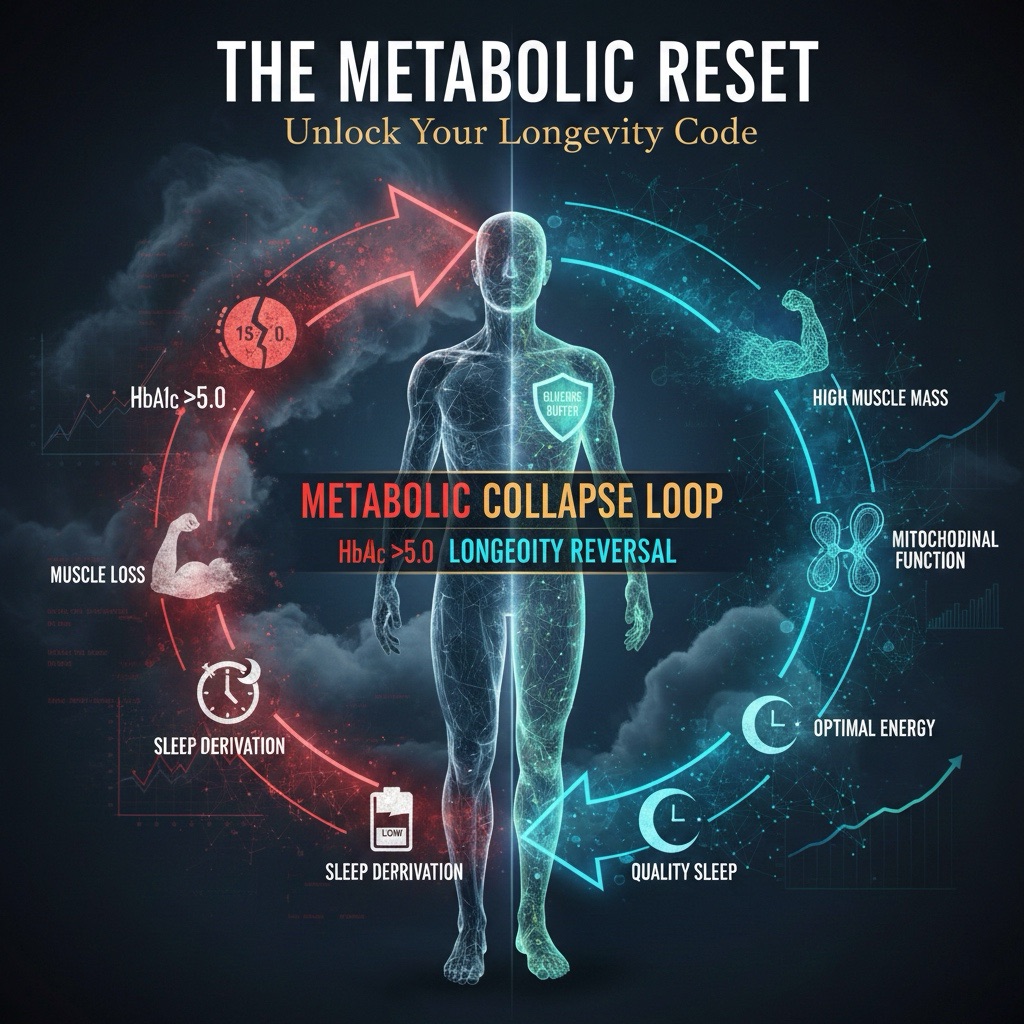
In gyms and clinics alike, we frequently encounter “metabolically stranded” individuals: they adhere to clean nutrition, exercise regularly, yet their fasting blood glucose and body fat percentages refuse to budge. Probing deeper, the underlying culprit is almost always fragmented sleep or chronic late-night wakefulness.
Scientific literature demonstrates that the destructive impact of sleep debt on blood sugar regulation is immediate and severe. Sleeping less than four hours for just one night can slash whole-body insulin sensitivity by up to 40% the following morning. In physiological terms, even if your breakfast consists solely of black coffee, your cellular response mimics having just guzzled a giant bottle of soda.
1. The Nocturnal Hormonal Pas de Deux: Growth Hormone vs. Cortisol
During healthy, restorative sleep architecture — particularly deep slow-wave sleep — the body orchestrates comprehensive tissue repair and metabolic recalibration:
- Pulsatile Growth Hormone (GH) Secretion: The body’s premier anabolic agent. Released in robust pulses during deep slow-wave sleep, GH facilitates tissue remodeling, stimulates protein synthesis, and mobilizes adipose stores.
- Deep Cortisol Suppression: Upon falling asleep, systemic cortisol (the primary glucocorticoid stress hormone) should plummet to its lowest 24-hour nadir. This nocturnal suppression allows peripheral insulin receptors to “resensitize,” clearing metabolic cache and preparing cells to clear postprandial glucose efficiently the next day.
2. When You Stay Up Late: Entering Catabolic Dismantling Mode
When sleep is truncated or fragmented, this hormonal choreography collapses into a metabolic disaster:
- Chronically Elevated Cortisol: Without deep slow-wave suppression, cortisol remains stubbornly high throughout the night, broadcasting continuous emergency signals: “Crisis detected; mobilize rapid fuel immediately!”
- Cannibalizing Skeletal Muscle for Glucose: Under high-cortisol and suppressed GH conditions, the body shifts into aggressive catabolism. It breaks down contractile muscle fibers, shuttling free amino acids into hepatic gluconeogenesis to flood the bloodstream with glucose.
- “Deaf” Insulin Receptors: Sustained nocturnal cortisol directly interferes with insulin receptor substrate signaling at the cell membrane. Regardless of how much compensatory insulin the pancreas secretes, peripheral cells fail to register the signal and refuse glucose uptake. This is precisely why morning fasting glucose stays elevated after a restless night.
3. The Cascading Dominoes of a Single Sleepless Night
If you slept only four hours last night, here is what your body is undergoing today:
- Morning Hyperglycemia: Even before breaking your fast, the liver overproduces glucose stimulated by nocturnal cortisol.
- Surging Ghrelin Output: Satiety signaling plummets while appetite-stimulating ghrelin surges, driving intense cravings for hyper-palatable, sugar-dense calories to patch perceived energy deficits.
- Elevated Mitochondrial Oxidative Stress: Mitochondrial respiratory efficiency drops, triggering early exercise fatigue while muscle protein synthesis grinds to a halt. In clinical physiology, this state is termed “transient diabetes.” When this occurs twice in a single week, your metabolic machinery remains permanently locked in an incomplete repair cycle.
4. A Longevity Sleep Strategy: Controlling Cortisol Equals Controlling Glucose
To halt and reverse this metabolic collapse, you cannot simply lean on caffeine; you must achieve physiologically aligned circadian restorative sleep:
- Protect Pre-Midnight Sleep: The deepest slow-wave sleep and peak growth hormone release occur predominantly before or around midnight. Delaying sleep bypasses this critical regenerative window.
- Darkness as a Potent Hypoglycemic Intervention: Ambient light exposure suppresses nocturnal melatonin and elevates cortisol. An utterly dark sleep sanctuary is indispensable for driving nocturnal cortisol to baseline.
- Anchor Circadian Timing: Wake up at a consistent hour and expose your eyes to morning sunlight. Anchoring your central circadian clock synchronizes peripheral tissue clocks and optimizes nighttime insulin sensitivity.
- Avoid Aggressive Pre-Bed Fasting: Severe caloric restriction right before sleep can provoke nocturnal hypoglycemic stress, driving midnight cortisol spikes that fracture sleep architecture.
Conclusion
Countless individuals sacrifice sleep to finish another hour of work or squeeze in extra sets of bench presses, unaware that they are trading away hard-won muscle mass and deranging their metabolic baseline in return.
Sleep is not passive downtime; it is the human body’s sole window for metabolic recalibration.
If your goal is to bring HbA1c below 5.0%, the most powerful prescription is rarely skipping an extra mouthful of rice — it is turning off the lights and going to sleep early.
Support Independent Perspectives & In-Depth Insights
Every thoughtful analysis and candid critique comes from our dedication to truth and quality. We choose not to follow sensational algorithms or clickbait headlines.
Sustaining independent research requires reader support. Make a one-time or monthly contribution, securely processed by Google.
Payments secured by Google · Manage or cancel anytime in your Google Account

Comments