
In an effort to control blood sugar once and for all, you make a radical decision: eliminate all carbohydrates.
You embark on a strict ketogenic or carnivore diet. In the early stages, the results feel miraculous: body weight drops swiftly, mental focus sharpens, and afternoon lethargy vanishes.
A few months later, however, an unexpected anomaly appears: despite consuming zero carbohydrates, your morning fasting glucose climbs steadily from normal levels to 105 or even 110 mg/dL.
Confused and anxious, your immediate instinct is to cut calories further and extend fasting intervals. Yet the physiological reality is precisely the opposite: your body is actively refusing to lower blood sugar in order to protect you.
1. What Is “Physiological Insulin Resistance”?
Under sustained, long-term carbohydrate restriction, skeletal muscle undergoes a remarkable biological adaptation.
To ensure that the limited glucose produced endogenously by the liver is reserved for glucose-dependent tissues—primarily the central nervous system and red blood cells—muscle tissue deliberately downregulates its own glucose uptake.
This adaptive preservation mechanism is known as physiological insulin resistance (or the glucose-sparing effect).
- Mechanism: Muscle tissue shifts almost entirely to utilizing free fatty acids and ketone bodies as its primary fuel source.
- Consequence: When you occasionally ingest a small amount of carbohydrate, or when the liver initiates dawn gluconeogenesis, muscle cells decline to absorb this glucose. Consequently, glucose lingers in circulation, mimicking a diabetic glycemic profile on blood tests.
In isolation, this represents a benign evolutionary adaptation. However, when compounded by two specific metabolic stressors, it transforms into an outright metabolic crisis.
2. When Caloric Deficits Collide with Cortisol: The Dietary Ceiling
Many individuals practicing keto or carnivore diets inadvertently combine carbohydrate restriction with severe caloric deficits in hopes of accelerating fat loss. This immediately triggers a biological “survival threat.”
Related Reading: The Less You Eat, the Higher Your Blood Sugar? The Metabolic Paradox of Survival Mode
Even if your daily intake consists of premium grass-fed ribeye or clean animal fats, once total energy drops below your basal metabolic rate (BMR), cortisol (the primary stress hormone) assumes control of your endocrine system:
- Cortisol is a counter-regulatory hormone: Its fundamental duty is ensuring adequate circulating blood glucose during emergencies. It aggressively drives hepatic gluconeogenesis.
- Dietary rules cannot override endocrine signals: You can consciously stop eating carbohydrates, but you cannot stop cortisol from ordering your liver to manufacture glucose endogenously.
If you are sleep-deprived, chronically stressed, and calorically depleted, cortisol will keep your circulating glucose stubbornly elevated.
3. The Pitfall of Carnivore Diets: Muscle Atrophy and Anabolic Resistance
Carnivore advocates frequently assume that copious protein intake automatically insulates against muscle loss. That assumption holds true under one critical prerequisite: adequate total energy availability.
Under chronic high cortisol and energy deprivation, the body enters acute anabolic resistance:
- Protein burned as crude fuel: Dietary and endogenous amino acids are diverted into oxidative pathways and gluconeogenesis rather than muscle tissue synthesis.
- The shrinking sink: As explored throughout our metabolic series, skeletal muscle represents your largest glucose disposal reservoir.
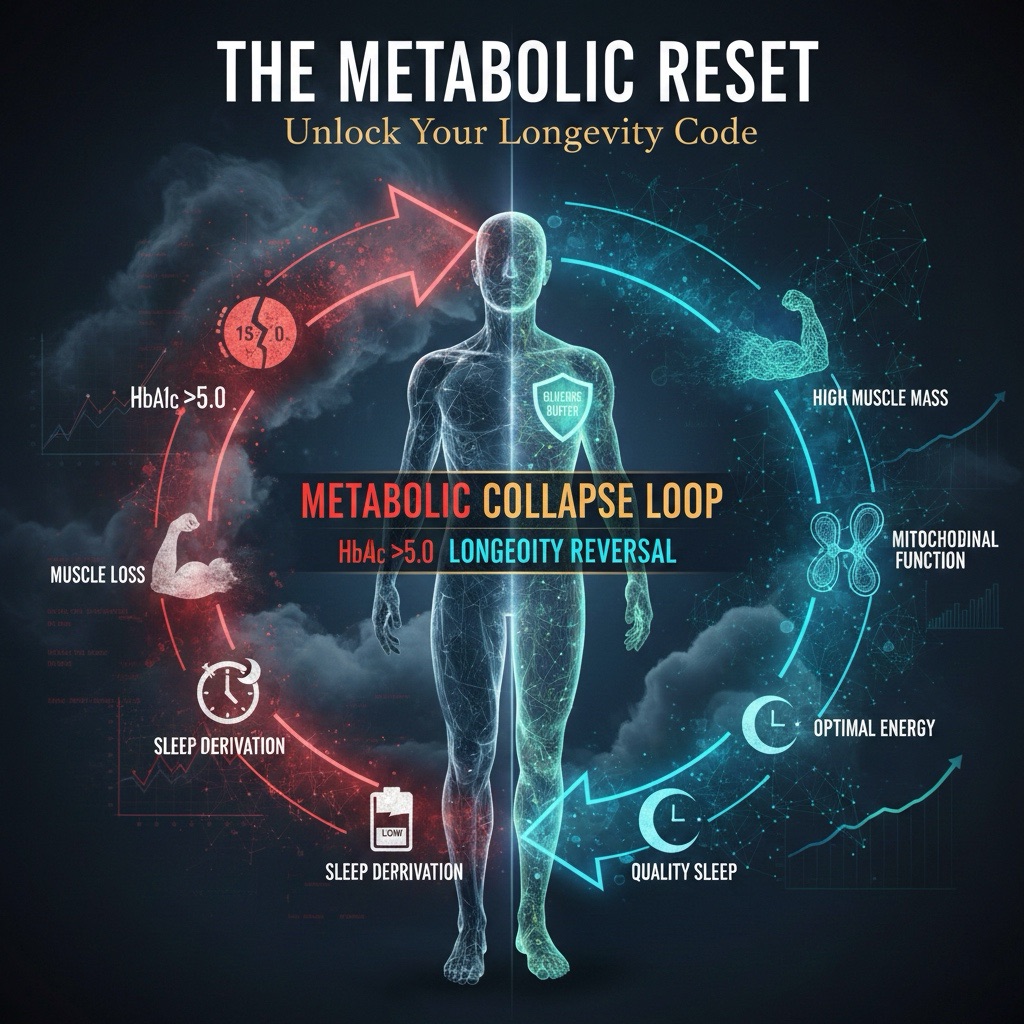
When psychological stress and caloric deficits induce muscle atrophy, your physiological buffer for clearing glucose collapses completely.
4. How to Determine if Your Nutritional Protocol Has Stalled
If your ketogenic or carnivore regimen exhibits the following clinical signs, your metabolism may have entered an adaptive breakdown cycle:
- Fasting blood sugar creeps steadily upward (with a pronounced dawn phenomenon).
- Athletic performance deteriorates noticeably (loss of muscular power and stamina).
- Sleep quality degrades (waking up abruptly in the middle of the night due to disrupted cortisol rhythms).
- Weight loss stalls, while muscle firmness softens into flaccidity.
5. Physiological Realignment: Respecting Endocrinology Over Dogma
To resolve this paradoxical stall, doubling down on extreme carbohydrate restriction is the wrong prescription. You must implement strategic physiological realignment:
- Restore energetic sufficiency: Increase caloric intake to match or exceed your BMR, extinguishing the brain’s internal famine alarm.
- Strategic carbohydrate cycling (as needed): Introducing modest amounts of whole-food carbohydrates (such as cooled sweet potatoes or squash) can blunt cortisol surges and re-sensitize peripheral insulin receptors.
- Structured resistance training: Send clear mechanical signals to your musculoskeletal system that lean tissue is vital and must not be catabolized.
Conclusion
No single dietary framework operates as a universal panacea.
While ketogenic and carnivore protocols are powerful clinical tools, they cannot override the fundamental laws of stress management, caloric adequacy, and muscular preservation.
If you ignore your endocrine signals, even the most meticulous dietary regimen cannot rescue blood sugar locked in place by chronic cortisol elevation.
Support Independent Perspectives & In-Depth Insights
Every thoughtful analysis and candid critique comes from our dedication to truth and quality. We choose not to follow sensational algorithms or clickbait headlines.
Sustaining independent research requires reader support. Make a one-time or monthly contribution, securely processed by Google.
Payments secured by Google · Manage or cancel anytime in your Google Account

Comments