
Every time I cook food on the kitchen counter, the dish I most hate to cook is definitely the seemingly simplest fried egg 🍳.
For many hodgepodge cuisines, once the long prep is done, serving takes only minutes.
Only the fried egg, for the perfectionist streak that occasionally surfaces, allows no sloppiness in any step — and the prep actually becomes the simplest step.
It’s not really simple: to find a raw egg 🥚 you love, it may take days, even months, of careful selection to find the best egg in your heart.
But after eating them for a while, your taste may change, or the egg farmer may change the formula, or the hen may become world-weary — and then you have to start searching all over again.
Fortunately, even the cheap ones bought at a convenience store make me happy, so let’s set aside the so-called simple question of how to buy them, and just talk about the step of taking one out of the carton and placing it by the gas stove.
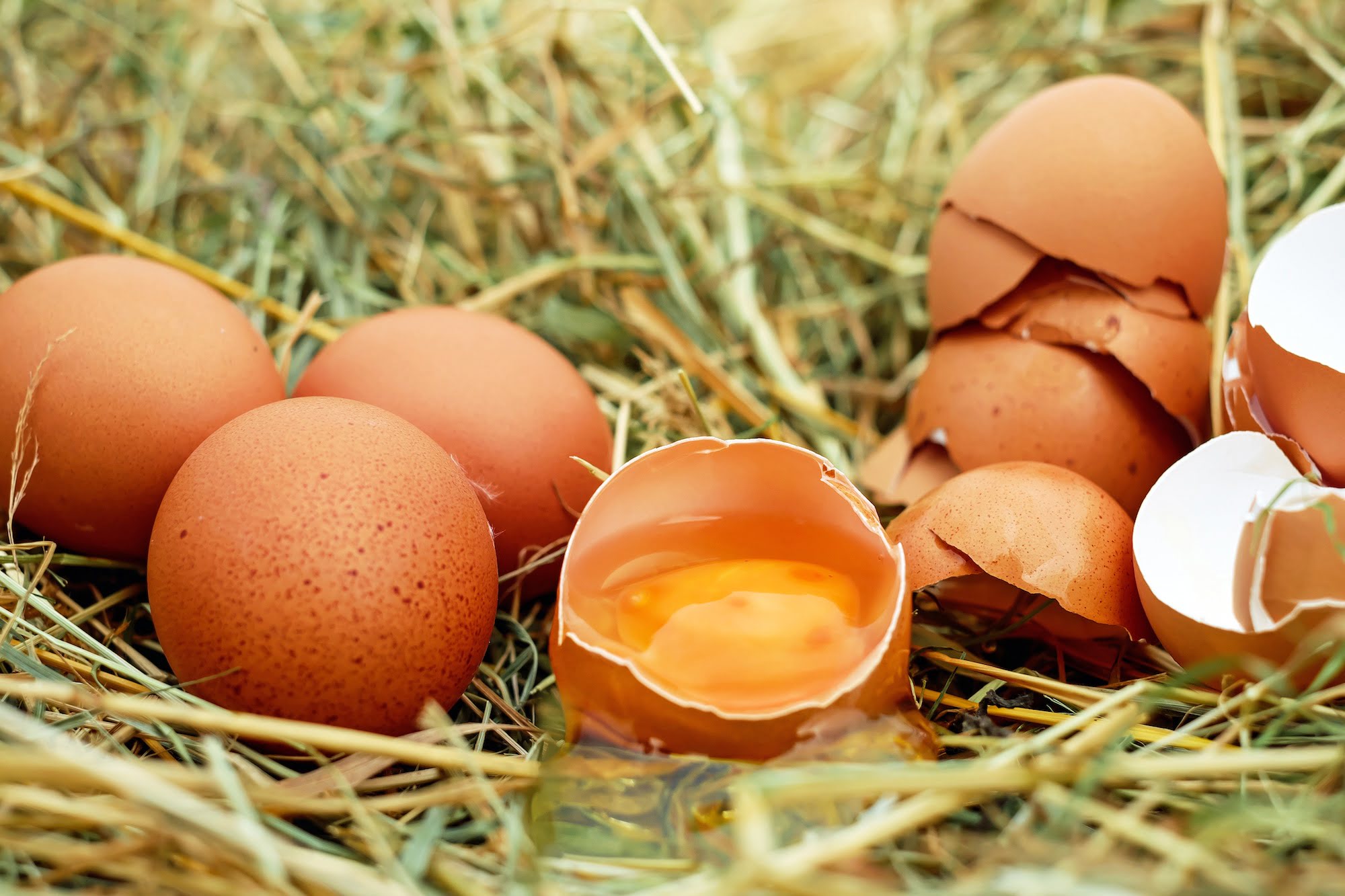
Next, before talking about frying the egg, we have to prepare the cooking tools — the three treasures of cooking oil, frying pan, and spatula, each of which is a field of study in itself.
First, cooking oil. Common ones include olive oil, rice bran oil, grapeseed oil, soybean salad oil, and so on. Olive oil is even divided into five grades under the Republic of China National Standards (CNS), including physically cold-pressed Extra Virgin Olive Oil and others.
Although each oil’s smoke point at which it begins to deteriorate differs, basically they can all safely handle the heat needed to fry an egg (fry it on low heat, please).
But — and here’s the but — there is a school of gourmets who inherit the traditional flavors deeply rooted in Chinese genes, and what they love most is still frying eggs in sesame oil. That aroma is peculiar: those who like it fall hopelessly in love, even giving up ordinary oil-fried eggs, while those who dislike it find it foul-smelling and physiologically unacceptable.
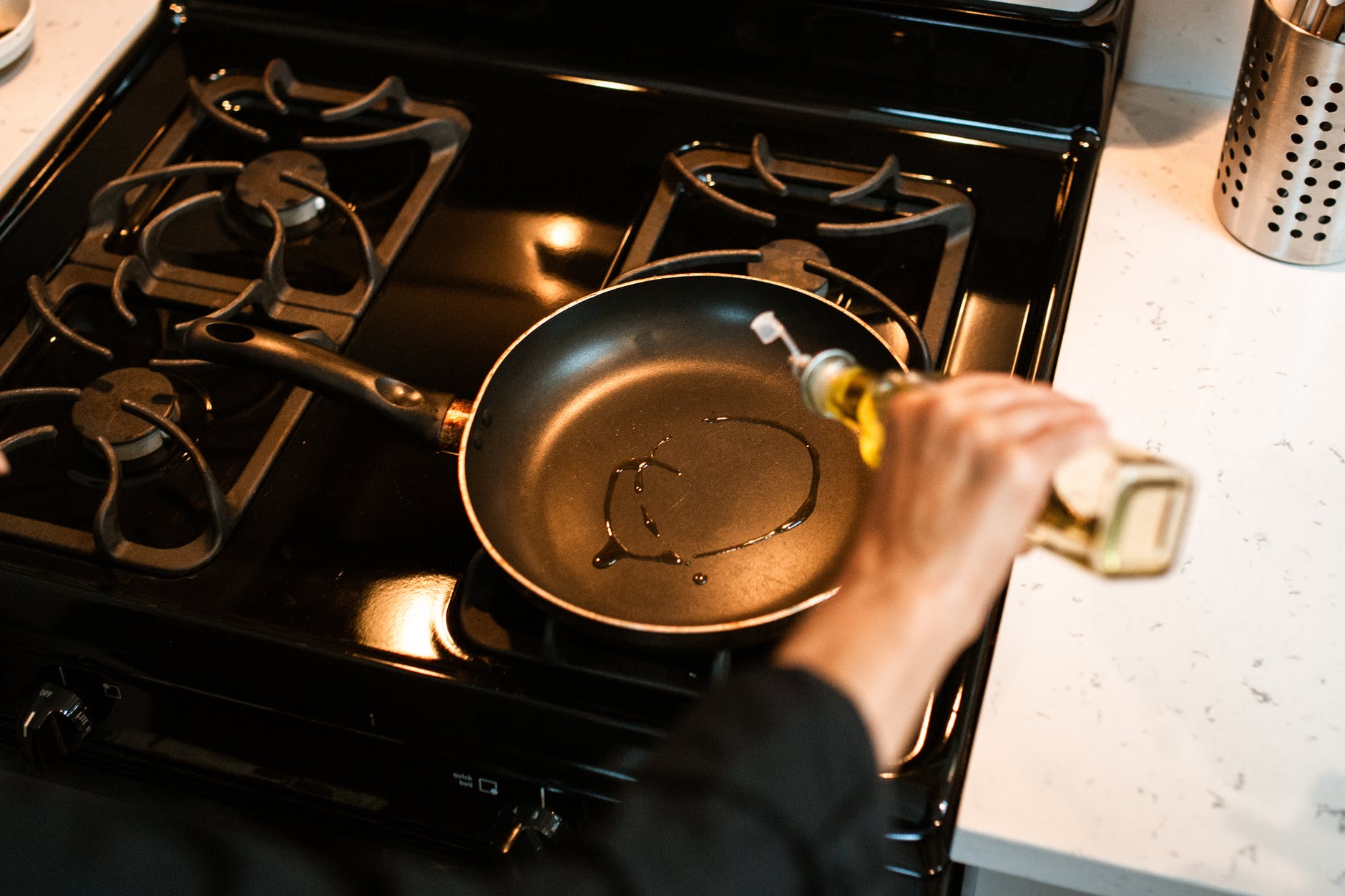
Next comes preparing the frying pan.
Frying pans can be broadly divided into flat-bottom pans and Chinese woks. Although a Chinese wok is convenient for frying eggs and easily produces a beautifully shaped fried egg 🍳, it also demands a higher level of skill from the cook. Especially if you want to make several fried eggs at once, a flat-bottom pan is more convenient.
There is a special frying pan on the market designed specifically to make perfectly round fried eggs. It is a traditional flat-bottom pan structure with three or four round recesses carved out, so you can crack the egg directly into a recess and fry it slowly.
Reference products:
- German AMT fried-egg non-stick pan
- Japanese Nanbu Tekki IWACHU Iwakuni Imagawa-yaki grill pan
But besides costing extra money to buy, this kind of pan actually has few occasions for use (Koreans use it to make pancakes). Especially for those who hate washing pans, the usage rate after buying it can be imagined to be so low that you forget it exists — so it’s not necessarily suitable for everyone.
If it’s a normal flat-bottom pan, it further divides into stainless steel, cast iron, and composite-material non-stick pans, among which cast iron and stainless steel pans also require the routine maintenance of seasoning and the preheating of pan and oil before cooking.
Especially with a stainless steel pan, if the pan-heating and oil-heating steps aren’t done perfectly, the moment an egg goes in it will stick right before your eyes — turning a fried egg directly into scrambled egg.
In terms of difficulty of frying an egg, a non-stick pan is the easiest — you can even fry a dry egg without any oil; next is cast iron, which, as long as you’ve seasoned it well, needs only slight pan-heating and oil-heating to easily fry a beautiful egg; last is stainless steel, which, even if you very diligently heat the pan and oil, still has a considerable chance of sticking.
Although a non-stick pan is the simplest and most convenient, it is very afraid of scratches, and no matter how careful you are, after long use it will still be covered in scars and must be replaced for safety. Besides scratches, a non-stick pan also fears excessive heat — above 260°C it decomposes and releases toxic substances. (Note: normal cooking methods won’t reach such high temperatures, unless you forget and keep dry-heating it.)
So when using a non-stick pan, pay special attention — especially if there are elders at home who easily forget to turn off the stove, it’s safer to recommend a cast iron pan. But ordinary cast iron pans are too heavy. I myself use a “Japanese TAKUMI rock-pattern iron frying pan” with a thinner wall design. Although it loses heat retention, it weighs much less — even lighter than ordinary stainless steel.
Finally, the spatula — really, just pick one to your liking; I even prefer to just grab a spoon and use it deftly.
The only thing to note is that a non-stick pan can only use wood or silicone; a stainless steel spatula will scratch the surface and expose the inner compound.
Finally, how to fry — which is also why I’m writing this article.
For someone who only occasionally surfaces a perfectionist streak, frying an egg is something that easily triggers that emotion.
Every time an egg is cracked in, if it can form a beautiful circle in the pan, that feeling is like a Japanese person drinking tea and seeing a tea stem standing upright in the brew — you believe you’ll have good luck that day.
Especially after careful heat control, one side golden and crisp, the other as tender as gel — that is the most perfect fried egg.
All that’s left is to argue over who’s on team salt, who’s on team soy sauce, or, like me, team original flavor.
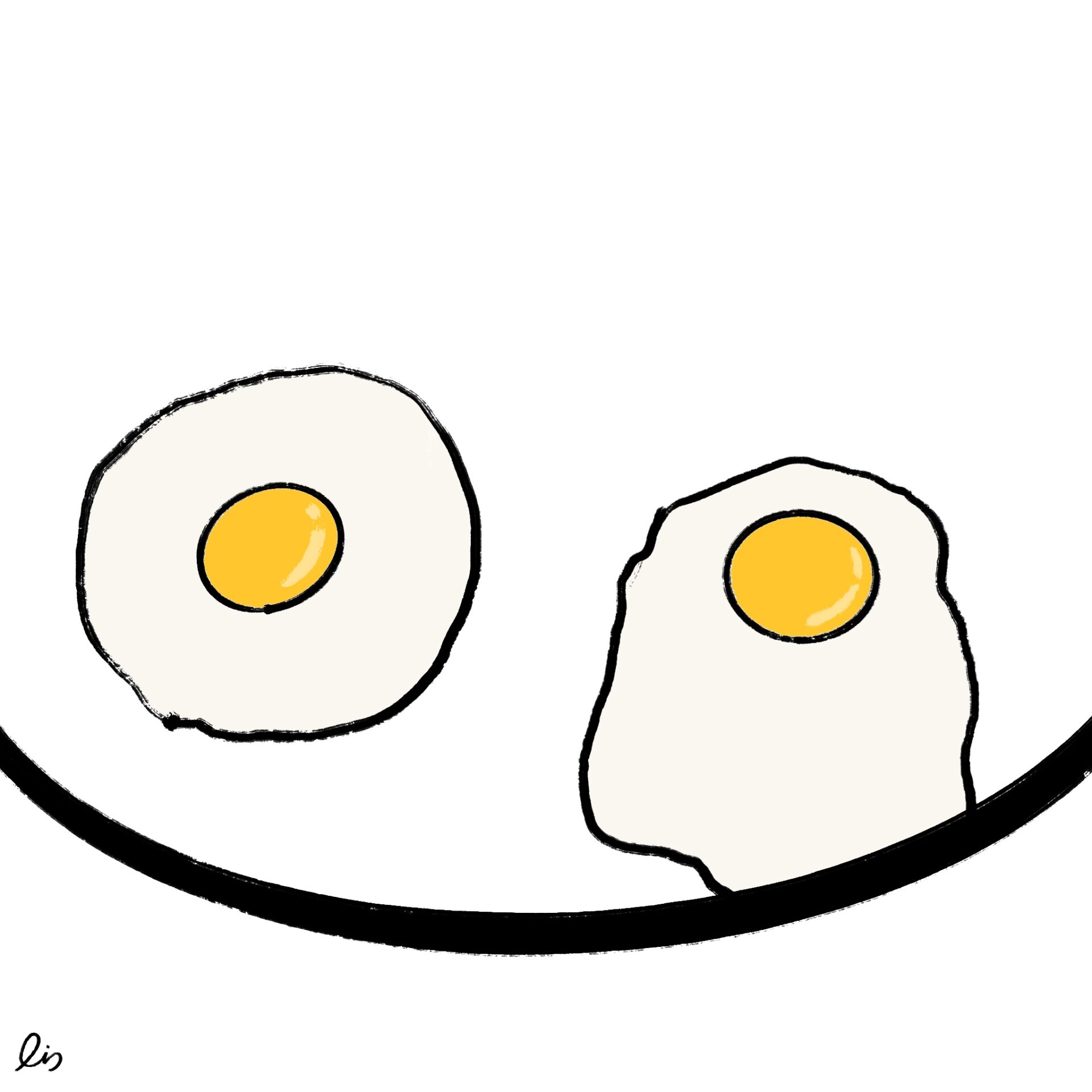 Successful and failed fried egg shapes
But if it turns out like the egg on the right of the image above, all chaotic, you feel a kind of annoyance in life. Or the deep, resentful gloom of the whole thing being stuck to the pan wall.
Especially when heating the pan, people often forget to brush oil onto the pan walls. Once the egg white climbs up, the result is sticking to the pan.
Strangely enough, the counter was only installed two or three years ago, its level hasn’t drifted much, and the bottom of the flat pan is quite flat — yet the moment the yolk and white are cracked into the pan, it’s as if they have a life of their own, desperately trying to escape outward upon meeting the scalding hot pan.
So there’s a little trick when cracking the egg: try to crack it right in the center of the pan, so that even if it becomes all sorts of odd shapes, we can still use a spoon to pull the escaped white back and cover the yolk, then comfort ourselves by calling it a sunny-side-up.
Support Independent Perspectives & In-Depth Insights
Every thoughtful analysis and candid critique comes from our dedication to truth and quality. We choose not to follow sensational algorithms or clickbait headlines.
Sustaining independent research requires reader support. Make a one-time or monthly contribution, securely processed by Google.
Payments secured by Google · Manage or cancel anytime in your Google Account

Comments