
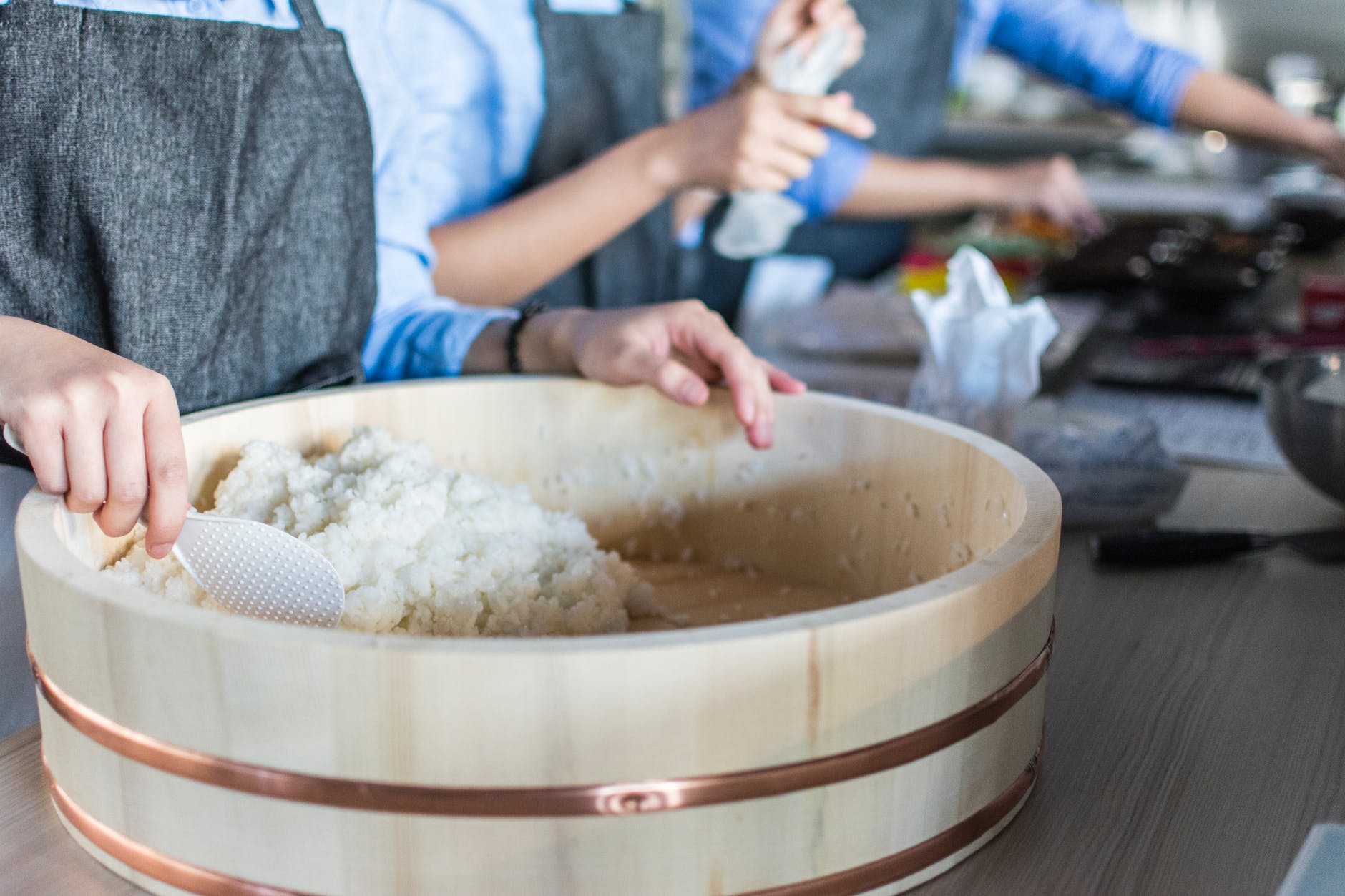
Taking advantage of the COVID-19 pandemic raging on, with most regions nationwide entering a Level 3 alert state and everyone able only to work from home or quarantine at home, many friends have already started heading into the kitchen to hone their cooking skills.
Mizuc is no exception. I specially bought a set of Japanese clay pots (donabe) made for cooking rice. Using this pot, together with edible rice from Japan and sparkling water [1], I really did cook white rice that was more delicious than what a Tatung rice cooker produces.
Putting on an apron, opening the phone timer, and cooking directly over a gas flame, the rice comes out with a springy surface, and the soft, fluffy feeling when you bite into it is like enjoying sushi rice hand-pressed by a sushi chef. The rice aroma and sweetness fill your mouth as you chew—even when Mizuc was traveling around Japan, I didn’t often get to eat rice of this grade.
Well, having eaten everything from B-grade food that no one pays attention to on the roadside, to Michelin-starred restaurants and century-old traditional Japanese inns, Mizuc should be able to tell the difference (I think?).
But just after raising my rice-cooking skills up a few notches, Mizuc suddenly discovered a terrible situation.
It’s also because I’ve recently been controlling my portion size per meal—the rice in the bowl wasn’t much to begin with, but because it became so delicious, just two or three bites of chopsticks and the whole bowl was almost emptied. It got to the point where the white rice became the side dish, and protein ingredients like beef or seafood became the main dish instead. The result is that a whole meal leaves you far less satisfied. This is perhaps an unexpected side effect of rice becoming delicious (kicked).
References
- Cooking rice with sparkling water is something I heard about, and it does seem to taste a bit better. I just can’t figure out whether you start using sparkling water from the soaking stage, or soak first and then cook with sparkling water. After all, in the former case the carbon dioxide in the water would have long since escaped by the time you cook, but in the latter case it also disappears the moment it comes to a boil. From another angle, if you let the white rice soak in carbon dioxide, maybe it really can cause some different chemical changes in the core of the rice.
Support Independent Perspectives & In-Depth Insights
Every thoughtful analysis and candid critique comes from our dedication to truth and quality. We choose not to follow sensational algorithms or clickbait headlines.
Sustaining independent research requires reader support. Make a one-time or monthly contribution, securely processed by Google.
Payments secured by Google · Manage or cancel anytime in your Google Account


Comments