
With Chinese New Year only a few days away, turning the family home upside down for spring cleaning—and preparing some special dishes—has become our annual ritual. Last night, I spent hours kneading glutinous rice dough for our homemade vegetable buns, and my arms are still aching.
If your family frequently makes traditional Chinese dishes, take my advice: buy a stand mixer. It is guaranteed to delight your mother and please your wife, hands down.
Our family’s vegetable buns (Hakka-style glutinous rice buns) are made from real, whole glutinous rice, completely handmade with guaranteed food safety—priced at NT$50,000 each (just kidding!).
The process begins with buying full sacks of glutinous rice from the local rice shop. After rinsing, draining, soaking, and grinding into a huge sack of pure rice milk slurry, the bag is hung on a pole to dehydrate. Eventually, it turns into a massive white glutinous rice lump that practically begs you to pinch its cheeks.
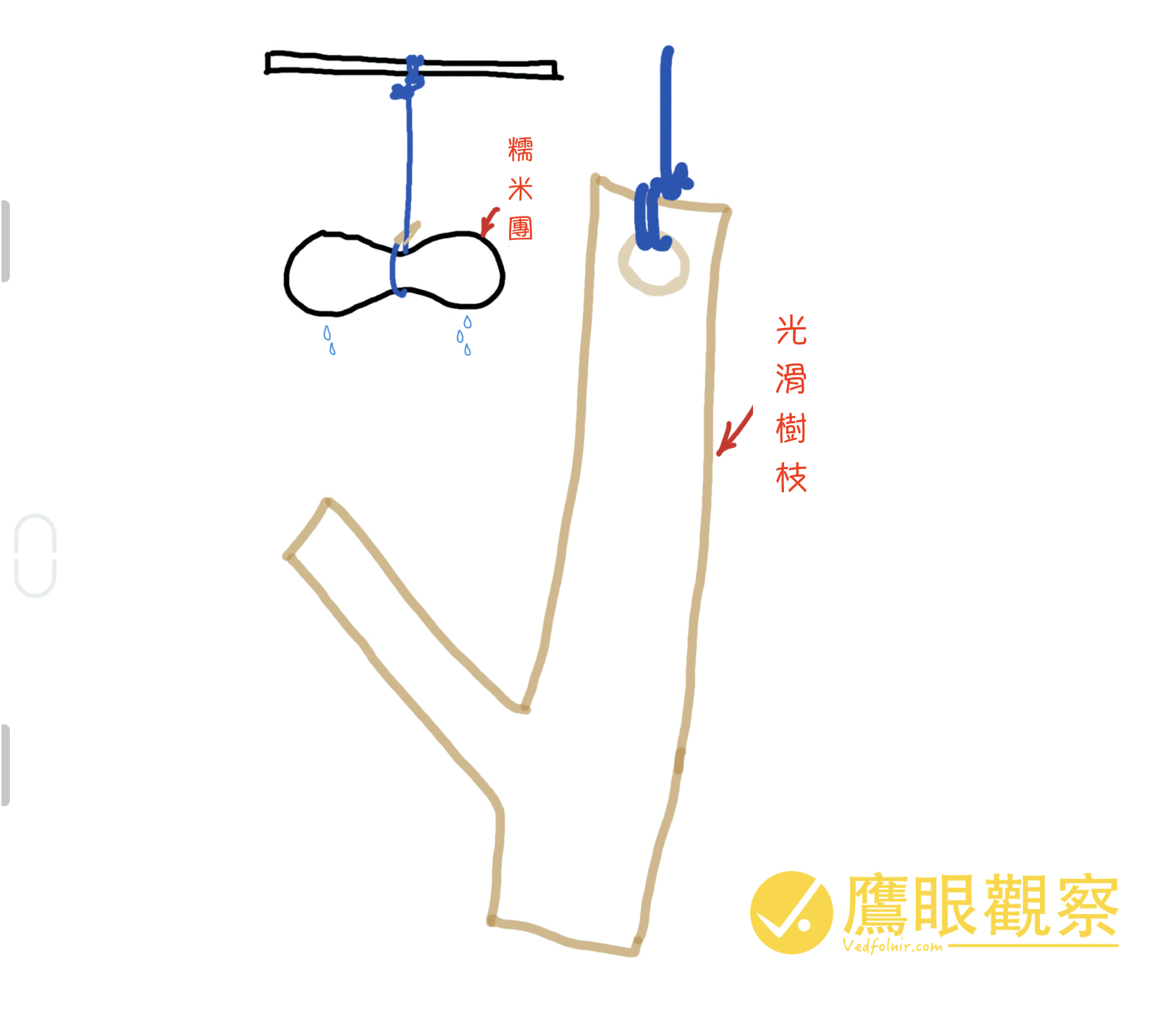
To hang the heavy bag securely from a pole, my mother even made a special trip back to my maternal grandmother’s house to retrieve a traditional wooden hook. It looks just like the one in the photo below: one end is tied to a cord, which is wrapped several times around the cloth sack before latching onto the line, using the sack’s own weight to squeeze out moisture.
However, pinching it is no easy feat—it possesses quite a stubborn temperament. And by that, I mean both my niece’s chubby cheeks and this dough.
The recipe itself is fairly straightforward. First, you take several small, palm-sized lumps of raw dough and cook them beforehand into “cooked dough starters” (ba-chui), either by boiling or pan-frying. People often say pan-frying makes the texture chewier (Q), while boiling makes it softer. Naturally, I do both—home cooking is all about experimenting wildly like this.
— If you only use pan-fried starters, the resulting dough will turn out infuriatingly hard.
Rub, knead, press, poke, punch, pinch.
This is not some trashy pulp novel; I was genuinely losing my temper at this dough. The entire lump had turned utterly uncooperative.
— “You wretched, unruly little brat.” (Sinking into an endless loop of self-muttering)
After an eternity of wrestling with it, I finally managed to tame this plump, giant ball of dough, paid for with stiff, paralyzed thumbs.
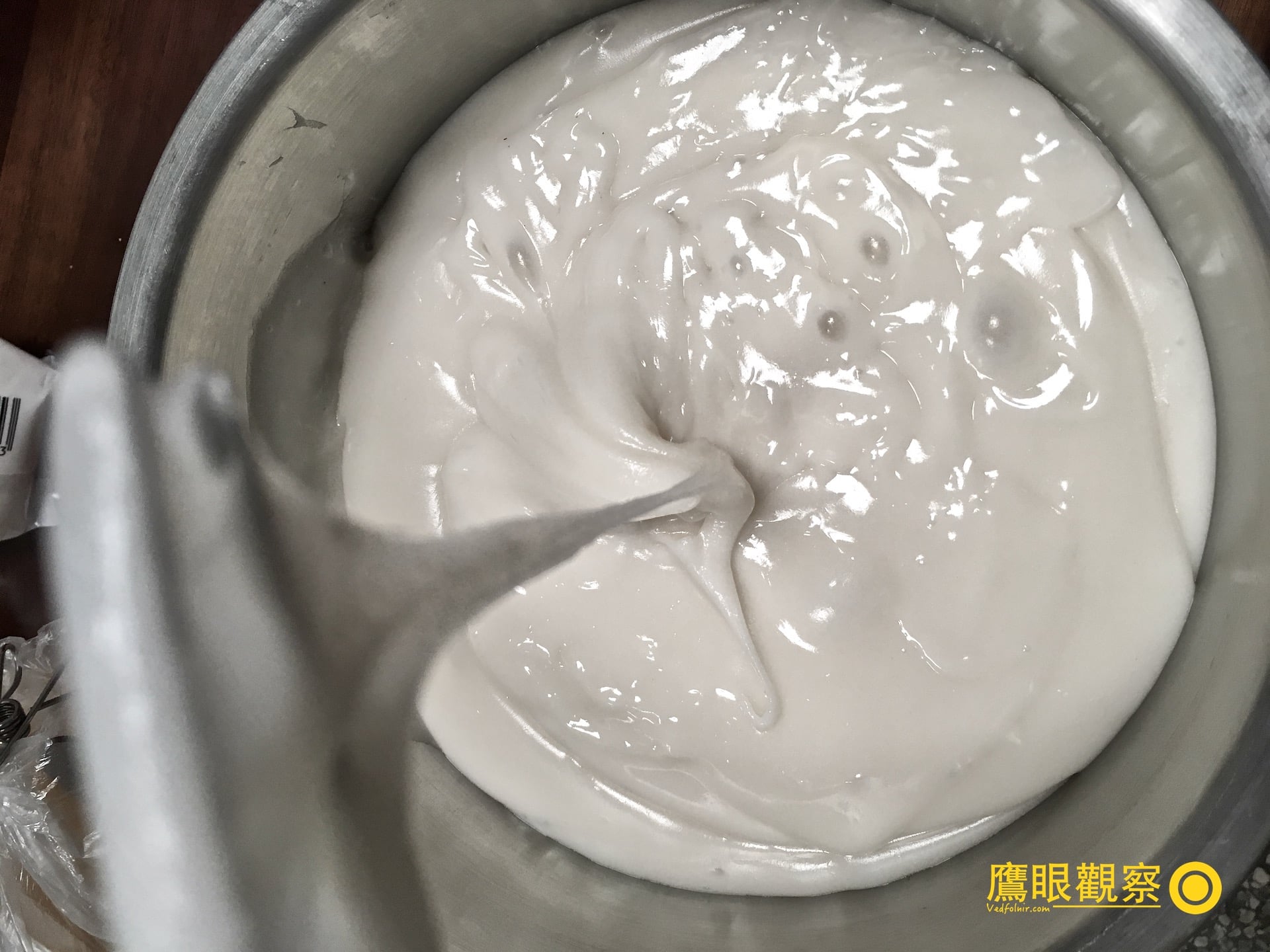
The biggest difference before and after this process of “re-education” is cohesion. Before, the dough was merely a damp agglomeration of powders lacking team spirit, lacking a shared goal, and never crying out to the universe that they wanted to become delicious glutinous rice buns. As a result, it crumbled at the slightest touch, like estranged lovers sharing a bed while dreaming different dreams.
In contrast, the thoroughly kneaded dough turns as fair, smooth, and supple as a young maiden’s calf. When you pull the dough apart, every crumb clings together through thick and thin, ready to live and die as one. That is what ideal love looks like—er, I mean, glutinous rice buns.
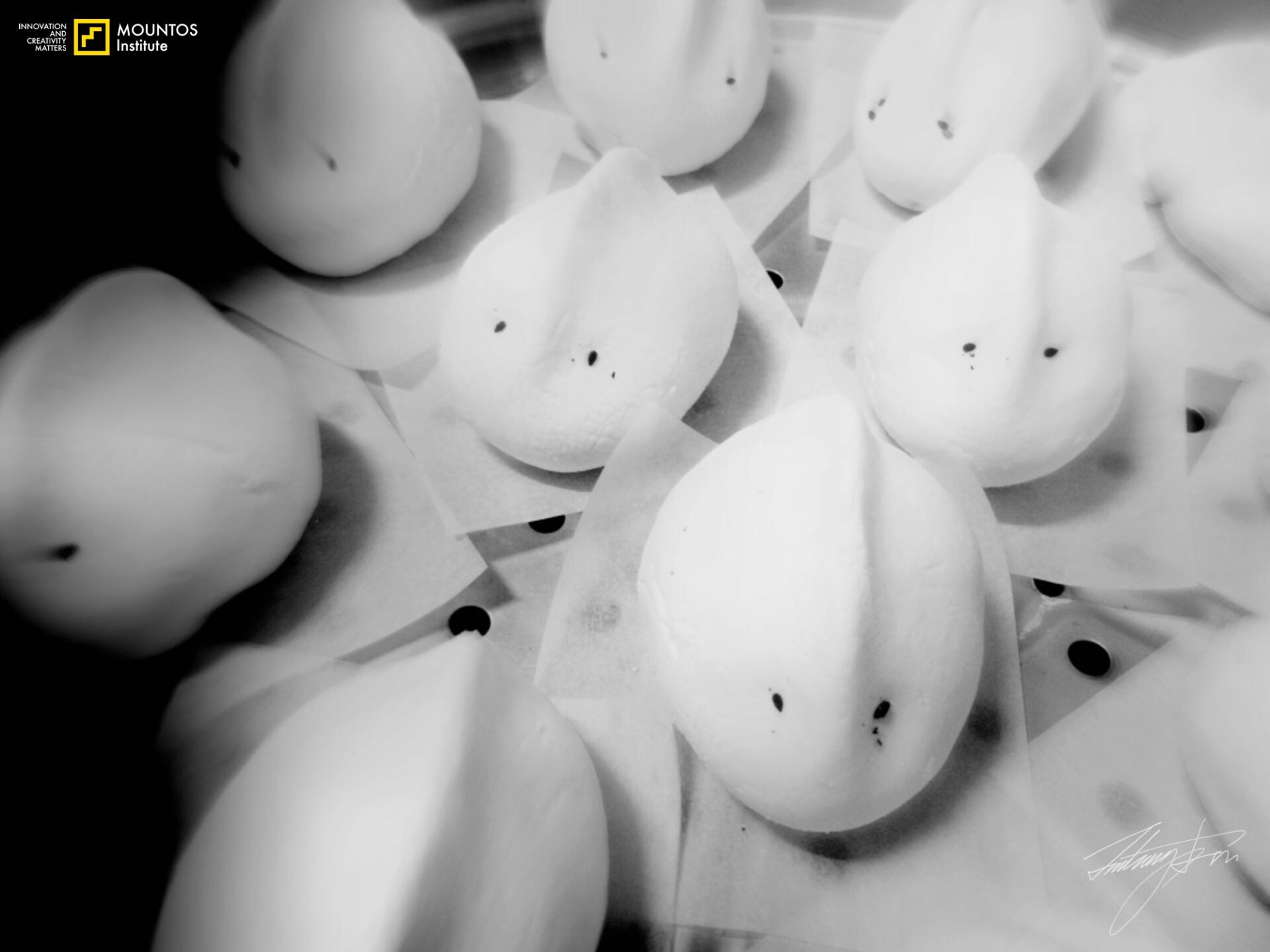
Attack of the Glutinous Rice Bun Army (Photo / Jin-Liang, Lin)
In the past, our family used to visit farmers in the Datun Mountains to harvest citrus leaves to use as bun liners. This was an ancient secret passed down from my grandmother, which infused the buns with the fragrant essential oils of citrus during steaming.
This time around, laziness took over, so we simply used store-bought parchment paper for steaming buns. Although the resulting steamed buns were still delicious, missing that instant sensory delight upon the first bite was a minor regret. Perhaps this is why many famous traditional pastries decline in taste from generation to generation. After all, the exquisite value bought with patient, unhurried time is often as intoxicating as a wildflower blooming on an ancient cliffside.
Support Independent Perspectives & In-Depth Insights
Every thoughtful analysis and candid critique comes from our dedication to truth and quality. We choose not to follow sensational algorithms or clickbait headlines.
Sustaining independent research requires reader support. Make a one-time or monthly contribution, securely processed by Google.
Payments secured by Google · Manage or cancel anytime in your Google Account


Comments