

Over the past few days, I received two suspicious SMS messages: one from mobile number 0989098362, and another from 0911513901. Their contents were almost identical, reading: “7-Eleven is giving you an 800 NTD electronic voucher, valid for 7 days, no change given and not redeemable for cash. Download link: https://www.vedfolnir.com (Note: For security reasons, the original malicious link has been replaced with this website)”.
Upon inspecting the URLs included in the text messages, I confirmed that this was yet another exploit targeting human greed: disguised as an official giveaway from convenience store chain 7-Eleven, it was actually a malicious mobile Trojan designed to compromise smartphones.
Aside from originating from different sender phone numbers, the two text messages also utilized different cloud hosting services for their download links.
Figure 1 shows a shortened link using Dropbox’s URL shortening service, while the link in Figure 2 points to a Box.com domain. Despite pointing to different cloud storage platforms, the payload downloaded from both links is virtually identical: an Android mobile Trojan horse identified as “Smforw.av”.
 Figure 1: SMS content claiming a 7-Eleven voucher.
Upon analyzing this Trojan package, I even discovered a phone number based in mainland China: +8618227665590. While its exact function remains unclear, reverse lookup shows it is a China Mobile number registered in Chengdu, Sichuan, indicating a likely geographic connection to the malware developer.
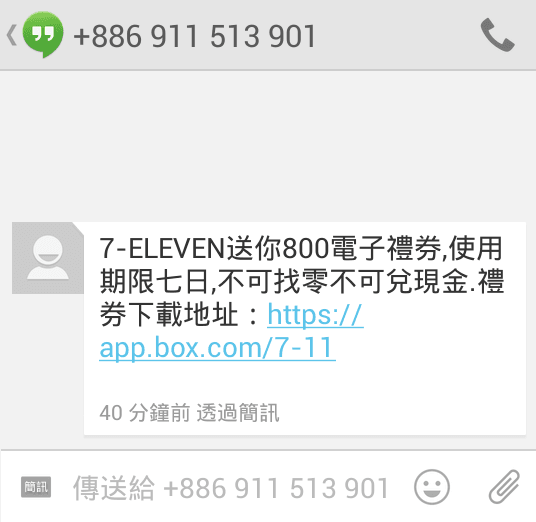 Figure 2: Another fake 7-Eleven voucher SMS message.
As mentioned earlier, the SMS messages shown in Figures 1 and 2 were sent using local phone numbers. While the first number turned up no significant traces online, the second number generated several hits on Google—it was even historically associated with the former township mayor of Jincheng Township in the Kinmen Islands (I did not call back, so its current registrant is unknown).
From this, one can deduce that either the fraud syndicate spoofed fake sender IDs through overseas servers [2], or the handsets associated with these two numbers have already been infected with Trojan malware themselves.
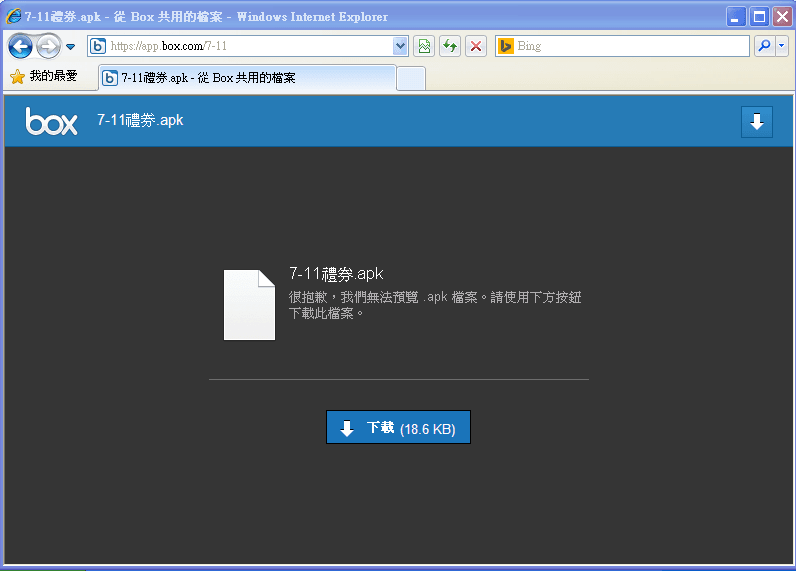 Figure 3: The reality behind the fake voucher masquerading as 7-Eleven.
As seen in Figure 3 above, although this Trojan shares structural similarities with the scam mechanisms I highlighted earlier in Tech Scams: Examining 1+1>2 Smartphone and Internet Fraud Tactics, the two variants exhibit slightly different behavioral characteristics.
In past cases, attackers primarily utilized automated bots to blast out spam phishing links, relaying stolen personal data back to command-and-control servers (or relays) hosted in Russia. This time, however, the malware appears to turn infected devices into bot relays to blast out further scam SMS messages, though its complete objectives remain under investigation. Regardless of the exact vector, it is unequivocally dangerous.
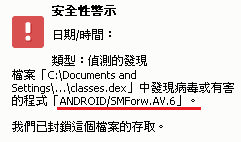 Figure 4: Avira Antivirus detects the Android Trojan Smforw.av.6.
Figure 4 shows the Avira antivirus detection triggered automatically when I unpacked the aforementioned Android APK installer file.
Interestingly, Windows Defender built into Windows 8 did not flag the Trojan file during scanning, presumably because the APK does not compromise native desktop Windows environments and was thus treated as harmless (ironically).
Although these recent social engineering scams seem crude and can be easily deflected with basic vigilance, fraud syndicates operate on a centuries-old law of numbers: even if 99 attempts fail, deceiving just one person makes the scheme profitable—and sadly, there are always victims caught off guard.
Further Reading / Recommended Appendix
Support Independent Perspectives & In-Depth Insights
Every thoughtful analysis and candid critique comes from our dedication to truth and quality. We choose not to follow sensational algorithms or clickbait headlines.
Sustaining independent research requires reader support. Make a one-time or monthly contribution, securely processed by Google.
Payments secured by Google · Manage or cancel anytime in your Google Account




Comments