

Tonight, I received an SMS notification from the mobile number 0928941124. The message read: “icash is gifting you a 1,000 NTD cash voucher, can be topped up directly into icash, or spent on 7net web click http://cht.tw/h/vedfolnir” (shown in Figure 1 below, with part of the link masked to prevent anyone from accidentally opening it).
The link provided in the message used Chunghwa Telecom’s official short URL domain “http://cht.tw”. At first glance, it carried a semblance of credibility, and tempted by the prospect of a free 1,000 NTD voucher, an unsuspecting user might easily tap through to inspect it.
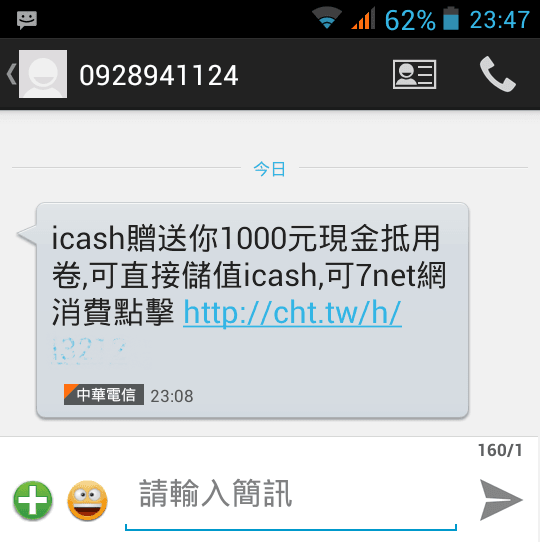 Figure 1: The malicious icash SMS notification.
However, this is actually a malicious phishing SMS scam.
Such fraudulent text messages surface several times each year, yet people continue to click the links blindly and even install the malicious files hidden behind them, inevitably leading to a malware infection on their mobile phones. Once an Android phone is compromised, it frequently broadcasts the identical spam message to other mobile contacts, enabling rapid viral propagation.
Because the compromised devices themselves are often the ones sending out the rogue messages [1], searching online for the sender’s phone number rarely turns up any consumer complaints. As a result, the average recipient cannot easily verify whether the SMS is legitimate.
For instance, Chunghwa Telecom’s billing reminder number 03-2160784 calls three times a day like clockwork, generating countless online complaints; outside of my home landline and my partner’s cell, it is the third number I have memorized by heart (an inner voice quips: go pay your bill already!).
If you open the short link on a mobile device, it redirects straight to Chunghwa Telecom’s cloud storage, presenting a file disguised under the name 7-11.apk, as shown in Figure 2. An unsuspecting user might mistake it for an official app from 7-Eleven (President Chain Store), drop their guard, and proceed to download and install the malicious package.
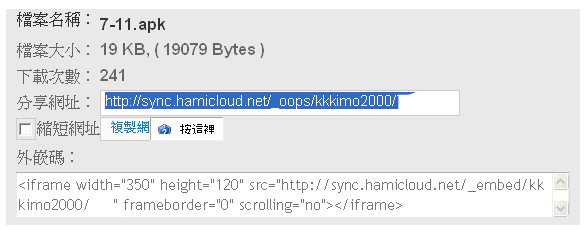 Figure 2: The actual malicious file hosted on cloud storage.
In fact, the screenshot clearly reveals that the download count had already reached 241. That means at least 241 phones had come into direct contact with the malicious APK, leaving their devices and sensitive personal data completely vulnerable to attackers.
If you ever receive a similar SMS notification, be extremely vigilant about what links you click: never click on links from unknown or unverified sources (and if you are ever unsure, feel free to ask us!).
Scammers are constantly upgrading their tactics. Back when I wrote about tech fraud and smartphone scams [1], attackers relied on Google URL shorteners to mask payload URLs. Today, they have progressed to piggybacking on Chunghwa Telecom’s trusted public domain names for cover. Who knows what they might try next.
While I have always considered installing heavy anti-virus software on smartphones a largely inefficient waste of memory compared to cultivating personal security awareness, some people certainly could use the extra protection (such as those 241 unfortunate downloaders)!
By the way, a quick message to the scammer author behind this text: you made a typo in your Chinese phrasing. It should be 抵用券 rather than 抵用卷 (which reveals that it was sent by someone locally in Taiwan).
Furthermore, since your message only used 62 characters out of the 70-character single-SMS quota, you might want to use those remaining 8 characters to polish your grammar next time. (Inner voice: Why on earth are you offering grammar lessons to scammers!)
Further Reading
- Tech Scams: Chatting About How 1+1>2 Smartphone and Online Fraud Tactics Operate.
Support Independent Perspectives & In-Depth Insights
Every thoughtful analysis and candid critique comes from our dedication to truth and quality. We choose not to follow sensational algorithms or clickbait headlines.
Sustaining independent research requires reader support. Make a one-time or monthly contribution, securely processed by Google.
Payments secured by Google · Manage or cancel anytime in your Google Account




Comments