
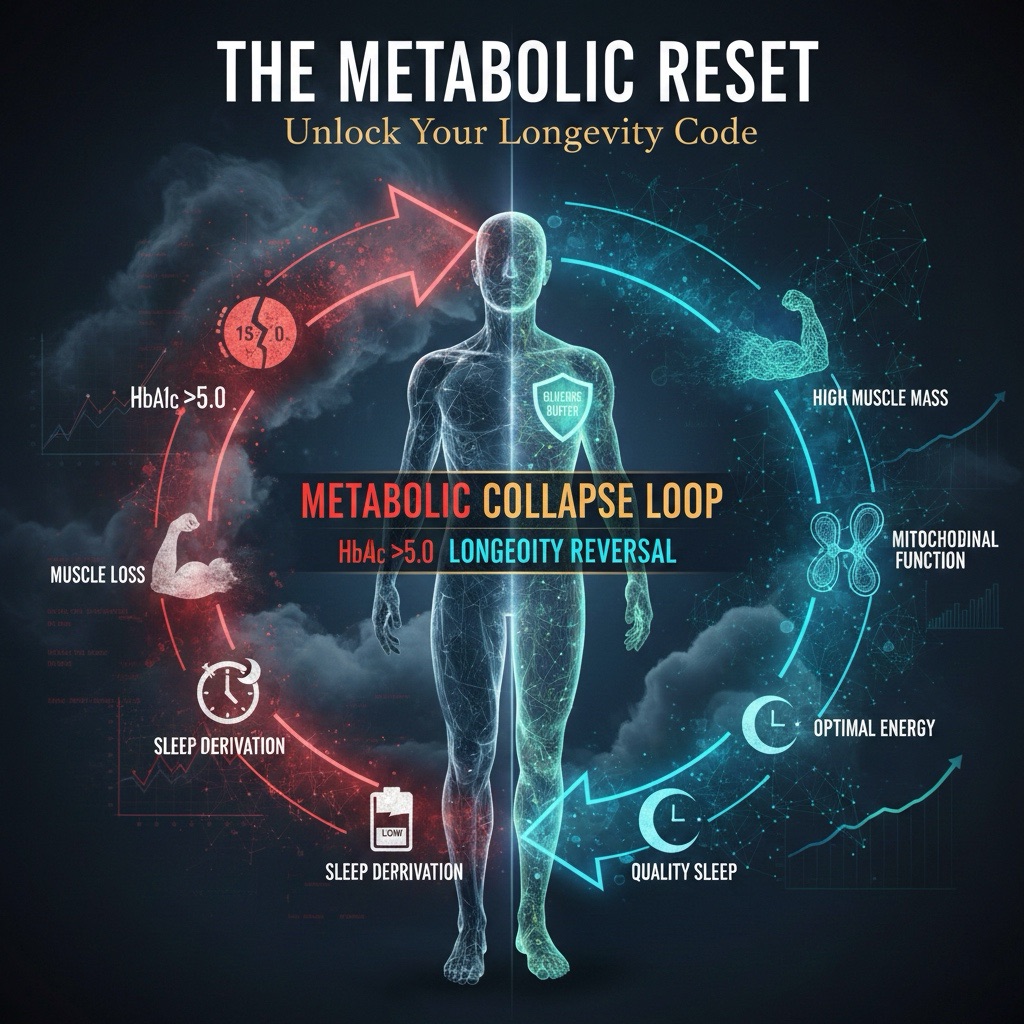
If insulin is the messenger knocking on the door and glucose is the fuel waiting outside, then the mitochondria within your cells represent the furnace burning that fuel.
Historically, conventional metabolic medicine assumed that elevated blood glucose stemmed from a dysfunctional messenger (insulin). Cutting-edge redox science reveals a different reality: in many cases, the intracellular furnace is already choked with metabolic debris, generating immense “electron backpressure.” To preserve their survival, cells are forced to bolt the door from the inside.
This phenomenon is known as cellular redox imbalance.
1. The Metabolic Taxis: Understanding NAD+ and NADH
Within your cells, two primary coenzymes transport energy electrons:
- NAD+: An “empty taxi” tasked with picking up high-energy electrons released during nutrient catabolism.
- NADH: A “full taxi” that transports those electrons to the mitochondrial Electron Transport Chain (ETC) to synthesize ATP.
In a metabolically flexible, healthy organism, these biochemical shuttles circulate at high velocity, constantly oscillating between oxidized (NAD+) and reduced (NADH) states.
The moment this ratio falls out of equilibrium—most commonly when NADH builds up while empty NAD+ taxis vanish—cellular metabolism grinds to a halt.
2. Energy Surcharge: The Gridlock on the Electron Transport Chain
When caloric intake vastly outpaces muscular energy expenditure (particularly diets rich in refined sugars coupled with saturated fats), cells become flooded with excess NADH.
When the mitochondrial Electron Transport Chain cannot process this overwhelming deluge of electrons, dangerous electron backpressure ensues:
- Superoxide burst: Electrons leak out prematurely from Complexes I and III, generating massive amounts of reactive oxygen species (ROS).
- Protective shutdown: To prevent free radicals from destroying cellular structures and DNA, the cell initiates an emergency defense—severing downstream insulin receptor signaling.
This explains postprandial glucose spikes. It is not fundamentally a pancreatic failure; it is the mitochondria shouting: “Do not send any more fuel inside; we are about to rupture!”
3. Severe Caloric Restriction: Starvation-Induced System Freeze
Intriguingly, extreme caloric deficits and prolonged starvation induce an identical breakdown of redox equilibrium.
When cellular energy is severely depleted, electron transport velocity slows down drastically, disrupting delicate oxidation-reduction signaling pathways.
Under these circumstances, cells enter a hypometabolic conservation state. They actively refuse peripheral glucose uptake, reserving scarce circulating glucose exclusively for obligate organs like the brain.
This clarifies why eating below basal metabolic rate (BMR)—as detailed in “The Less You Eat, the Higher Your Blood Sugar? The Metabolic Paradox of Survival Mode”—provokes paradoxical hyperglycemia. The underlying issue is that your mitochondria have lost the redox flexibility needed to switch fuel substrates.
4. When the NADH/NAD+ Ratio Collapses, Blood Glucose Becomes the Victim
When the intracellular NADH/NAD+ ratio remains chronically elevated (insufficient free NAD+), several downstream disruptions occur:
- Glycolytic arrest: Without NAD+, glyceraldehyde 3-phosphate dehydrogenase cannot function, arresting glucose breakdown.
- Suppressed beta-oxidation: Fat oxidation is severely impaired, leaving lipid intermediates trapped inside myocytes.
- Lactate accumulation: You experience persistent muscular fatigue and soreness even in the absence of strenuous exercise.
In summary: your blood sugar cannot decline because your intracellular electron transport system is completely locked.
5. How to Restore Cellular Redox Homeostasis
Repairing this sub-cellular machinery requires more than merely cutting dietary carbohydrates; you must actively stimulate electron flow:
- Create a sustainable energy deficit without starvation: Moderate aerobic and resistance exercise rapidly oxidizes NADH back to NAD+, clearing the electron traffic jam.
- Cold exposure: Cold showers or cold ambient temperatures trigger mitochondrial uncoupling (thermogenesis), acting as a powerful redox scavenger.
- Circadian rhythm management: Endogenous NAD+ synthesis via the salvage pathway (NAMPT) is strictly regulated by core clock genes. Sleep deprivation decimates morning NAD+ levels, inducing acute insulin resistance.
- Micronutrient optimization: Ensure adequate intake of B vitamins (precursors to NAD+) and Coenzyme Q10 to keep the Electron Transport Chain functioning smoothly.
Conclusion
Blood glucose metrics are merely an external readout; the sub-cellular redox equilibrium within your cells holds the true master key to metabolic health and longevity.
Rather than fixating solely on starving the bloodstream of glucose outside the door, fix the burning furnace inside. When mitochondrial electron flow is restored, glucose will naturally have a clear pathway to be utilized.
Support Independent Perspectives & In-Depth Insights
Every thoughtful analysis and candid critique comes from our dedication to truth and quality. We choose not to follow sensational algorithms or clickbait headlines.
Sustaining independent research requires reader support. Make a one-time or monthly contribution, securely processed by Google.
Payments secured by Google · Manage or cancel anytime in your Google Account

Comments