

Due to the strengthened awareness of personal information protection in recent years — the Republic of China has even specially enacted a Personal Information Protection Act — many information display systems for lotteries, competitions, hospital queue numbers, and so on have begun to load applications that mask identity information. For example, “Vedfolnir” would become “VedfOlnir.”
However, the author has seen some flaws in system design in quite a few places, such as the name-masking fallacy to be introduced today.
This is an activity the author saw while browsing MOMO shopping. After tallying the spending amounts within a certain period, it lists the top-ranked (highest-spending) people in order.
Please refer to the image below. The person ranked 28th also has one character of their name masked, but it is obvious that almost anyone in the Chinese-speaking world can guess which character is masked.
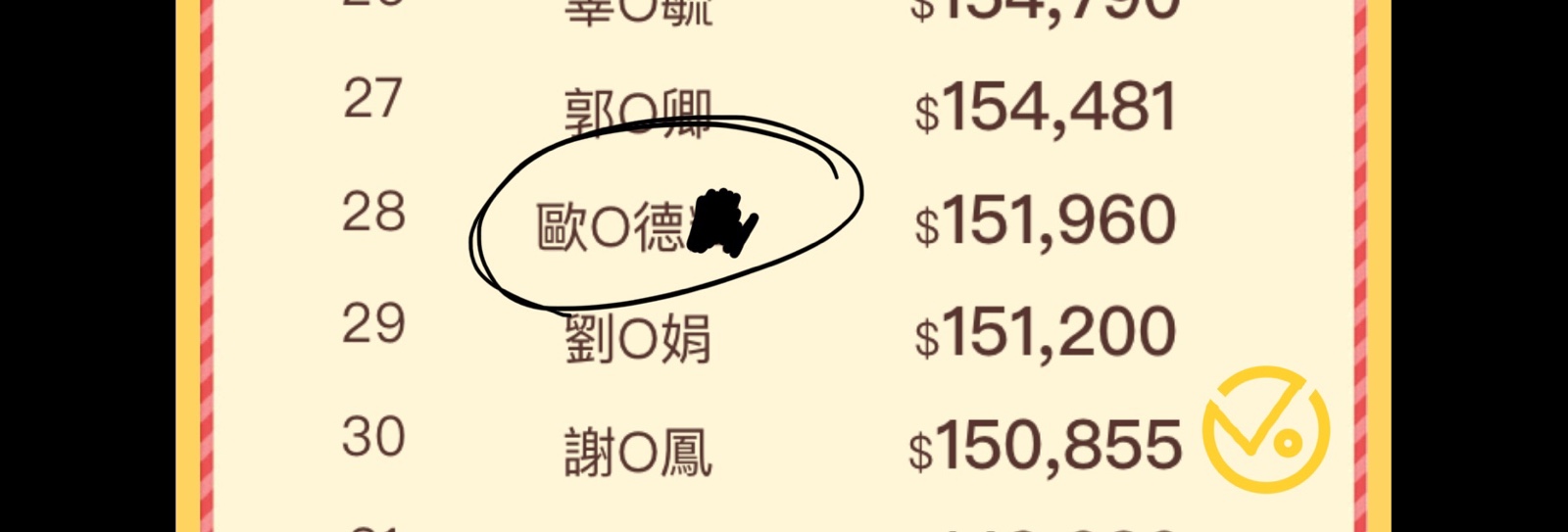
Flaw in identity information masking
When engineers design software, they may use sequential counting to the second character as the basis for masking, but they overlook that some surnames actually have two characters — the “Ouyang” above is the best example.
In fact, at such times, the design thinking of the software should adopt a procedure of masking the second-to-last character. In this way, even for a name with only two characters, it can still achieve the purpose of masking the surname and protecting personal information.
Support Independent Perspectives & In-Depth Insights
Every thoughtful analysis and candid critique comes from our dedication to truth and quality. We choose not to follow sensational algorithms or clickbait headlines.
Sustaining independent research requires reader support. Make a one-time or monthly contribution, securely processed by Google.
Payments secured by Google · Manage or cancel anytime in your Google Account



Comments