
Online shopping has firmly established itself as an unstoppable commercial trend. It is not only steadily replacing brick-and-mortar neighborhood shops, but even domestic e-commerce players are feeling the squeeze from overseas giants (especially from mainland China). All that remains to bridge the divide are smoother logistics channels and payment gateways. Naturally, whoever masters these two bottlenecks will unlock massive market opportunities.
At this stage, although the domestic online retail market maintains a substantial size, internal competition is intensifying as major corporate conglomerates pour capital into securing their foothold. As a result, retailers deploy diverse strategies to attract shoppers, revolving primarily around three foundational business models:
- Offering faster delivery speeds (such as ASAP Lightning Shopping touting 5-hour delivery, even with a limited catalog);
- Offering greater variety and more interesting inventory (PChome Online and Yahoo Shopping tied for first place);
- Offering more aggressive discount pricing (each platform having its own strengths and shortcomings);
- The bonus factor: memorable branding.
Among these, offering the most attractive discounts reliably captures the greatest consumer attention.
However, given price transparency on the web, prices for mainstream and popular items rarely differ significantly across sites (supported by price-comparison aggregators or price-match guarantee mechanisms). This is particularly true for brands that strictly enforce minimum advertised pricing—most famously Apple Inc. Therefore, attracting shoppers when listed prices are identical has become a pivotal battleground.
For instance, United Daily News Group’s UDN Shopping offers three distinct savings mechanisms: shopping credits, discount coupons, and reward points. Meanwhile, Fubon’s MOMO Shopping provides discount coupons alongside bonus points.
While navigating these varied promotional structures can leave newcomers bewildered, mastering them is the secret to scoring remarkable bargains. In contrast to complex coupon systems, platforms like PChome and Yahoo Shopping tend to implement direct limited-time markdowns on selected items.
For example, when purchasing an Apple iPad Air (16GB Wi-Fi), I ordered through MOMO to leverage a NT$1,200 coupon discount (rivaling Apple’s official educational pricing). Meanwhile, I bought the original Apple wireless Bluetooth keyboard on UDN Shopping. Sourcing items across different platforms solely to maximize discounts for a single setup made for quite an engaging shopping adventure.
How to Claim UDN Discount Coupons
UDN Shopping distributes coupons generously. New members receive a generous batch upon registration, as do members during their birthday month. While most consist of NT$100 or NT$150 vouchers, fortunate shoppers can also land NT$500, NT$1,000, or even NT$2,000 promotional coupons.
Interestingly, aside from automatic system drops, certain UDN coupons require proactive claiming by shoppers.
For example, official event pages frequently feature buttons such as “Click to Claim NT$500 Coupon” or “Click to Claim NT$1,000 Coupon,” which credit the vouchers to your account upon clicking.
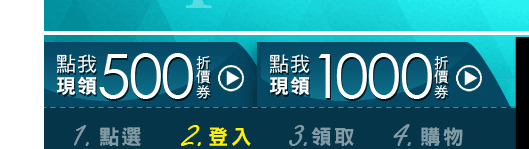 Figure 1: Claiming event coupons with a click.
Upon clicking, UDN’s interface displays a confirmation window verifying that the coupon has been credited to your account.
A quick note: UDN’s system limits how frequently coupons can be claimed within short intervals, so it is best to check whether you truly need the voucher before claiming.
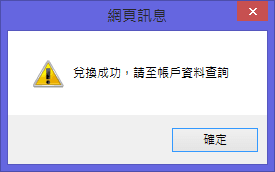 Figure 2: Redemption confirmation popup.
Keep in mind that coupons collected from campaign pages are typically bound to specific product categories. For instance, Figure 1 depicts a DSLR camera promotional campaign, meaning the claimed NT$500 and NT$1,000 coupons can only be applied under “Consumer Electronics > DSLR Cameras.” They cannot be redeemed toward small home appliances or regular 3C accessories. In contrast, birthday gifts and new member welcome coupons are generally applicable across most store categories.
To review available coupons and their applicable product scopes, check your account dashboard.
As shown in Figure 3, visiting your UDN account profile reveals an “Account Info” module containing three sub-categories: “Shopping Credit Details”, “Coupon Details”, and “Reward Points Details”.
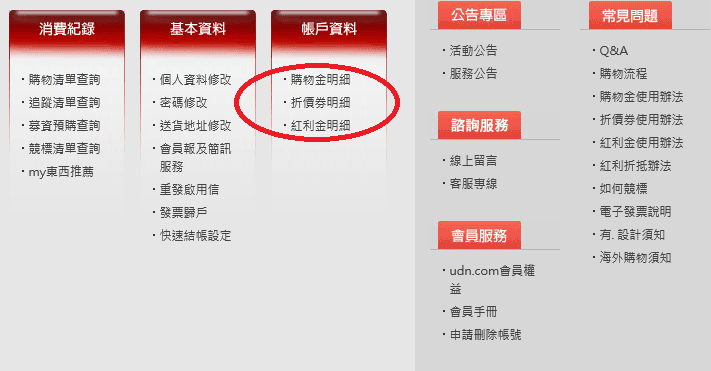 Figure 3: Account information dashboard.
Taking Coupon Details as an example:
Navigating into the coupon details page reveals all unused, active coupons, including welcome bonuses and event vouchers.
Welcome gift coupons, though smaller in denomination (NT$150), are marked as “Site-wide Coupons”, meaning they apply across virtually all catalog items. Conversely, specialized “Category Coupons”, despite carrying values up to NT$1,000, are restricted to designated categories, which can be reviewed by clicking the coupon title. (Another category not pictured here is the “Single-Product Coupon”, valid exclusively on a specific item.)
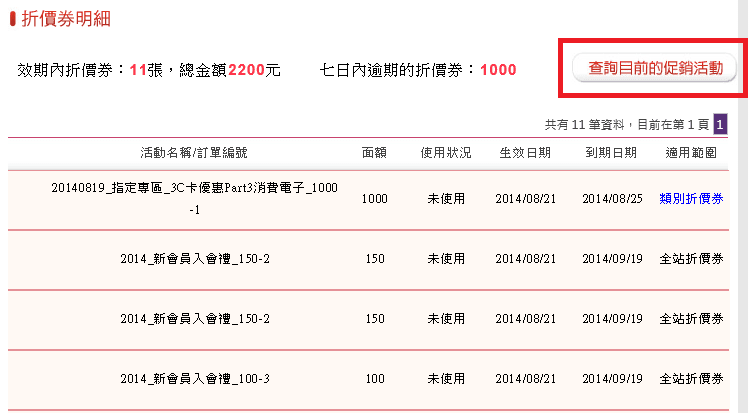 Figure 4: Active coupon list and promotional events.
Notice the “View Current Promotional Campaigns” button in the upper right of Figure 4. Clicking this opens a directory of ongoing official promotions. Periodically browsing these campaigns allows you to spot matching savings (and perhaps descend down an endless shopping rabbit hole).
Applying Discount Coupons at Checkout
During the checkout process, the system automatically presents qualifying discount coupons for shoppers to select.
Proceeding to checkout after filling your shopping cart takes you to the order summary screen to verify items and subtotals.
If an item qualifies for coupon deductions, a “Promotions” selection appears at the bottom. The “Coupon Deduction” dropdown displays all eligible vouchers.
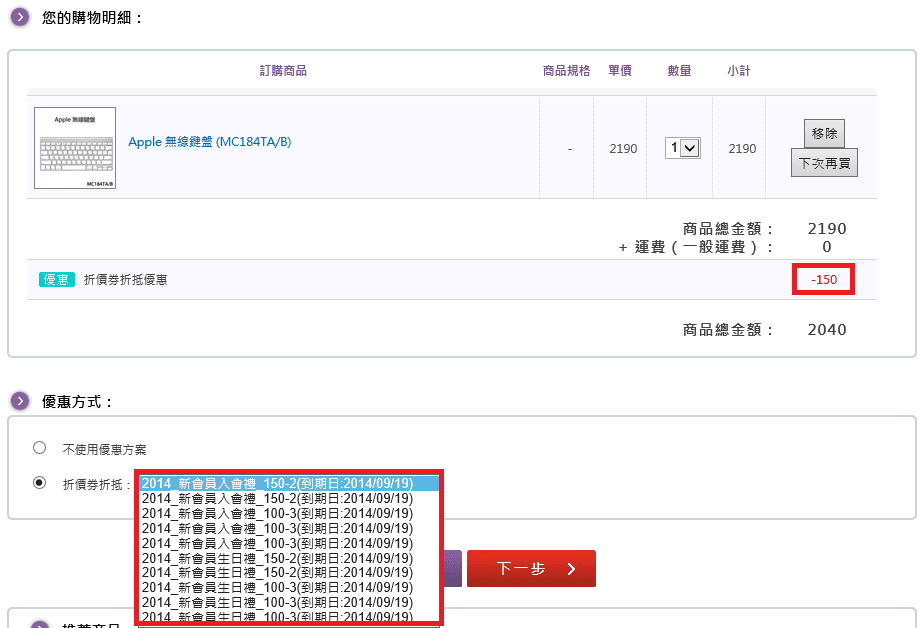 Figure 5: Applying a coupon during checkout.
Additionally, UDN features a standalone “Shopping Credits” mechanism. (Reward points are omitted here, as UDN primarily issues them via corporate partnerships rather than standard retail shoppers).
Shopping credits offer generous discounts, commonly starting at NT$500 without category restrictions. They are awarded through seasonal campaigns, repeat purchase rebates, or unannounced “VIP Exclusive Benefits” distributions.
The primary limitation with shopping credits is a cap restricting deductions to a maximum of 20% of the total checkout order, making them best suited for higher-ticket purchases.
Platform Coupon Observations and Summary
In terms of generosity, UDN’s coupon “terms of use” feel distinctly more consumer-friendly.
While MOMO Shopping offers comparable promotions, a significant number of its listings include disclaimers stating “Promotional Item, Not Eligible for Coupons,” frequently leading to frustrating dead ends during shopping.
While UDN also flags items ineligible for coupons, these restrictions are generally limited to low-margin items under NT$799, making qualifying items much easier to identify (and shopping credits or reward points can still be applied).
Further Reading
- Yahoo Kimo Shopping: Exclusive Coupon Directory.
- Fubon MOMO Shopping: Coupon Search Portal.
- UDN Shopping: Member Coupon Redemption.
Support Independent Perspectives & In-Depth Insights
Every thoughtful analysis and candid critique comes from our dedication to truth and quality. We choose not to follow sensational algorithms or clickbait headlines.
Sustaining independent research requires reader support. Make a one-time or monthly contribution, securely processed by Google.
Payments secured by Google · Manage or cancel anytime in your Google Account



Comments