
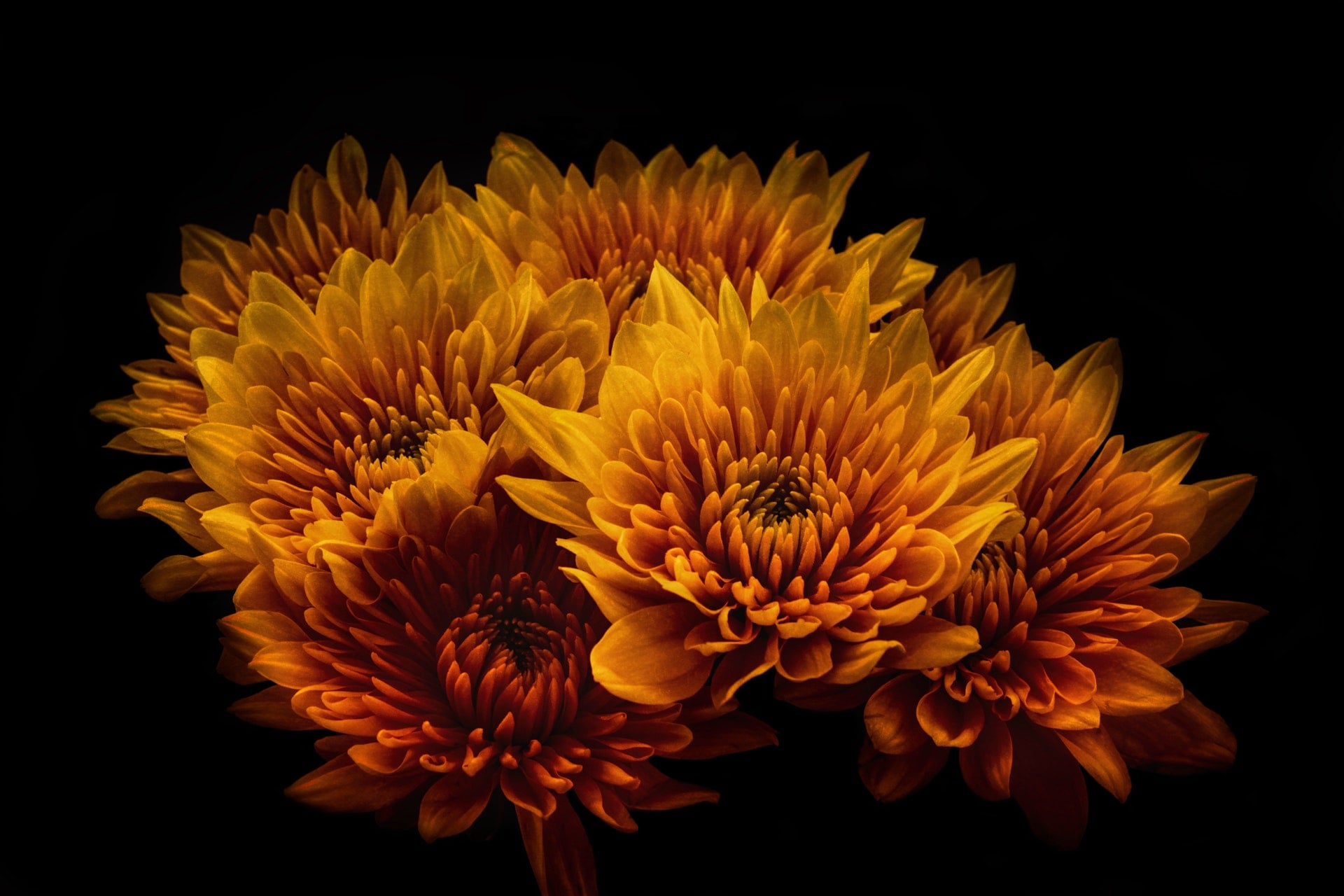
Macro photography is one of the most fascinating yet most frustrating fields for many photography enthusiasts pursuing light and shadow detail. With dedicated macro lenses (such as the Nikon 105mm f/2.8 Micro or Canon 100mm f/2.8L Macro), we can magnify the crystals of a flower’s stamen, an insect’s compound eye, or the gear texture of a mechanical watch to a true 1:1 life-size ratio.
However, when you bring the lens within a few centimeters of the subject, brutal optical physics limitations immediately erupt:
- Razor-thin depth of field: At 1:1 magnification, the sharp depth of field at f/2.8 is often less than 1 mm. To keep the subject fully sharp, photographers usually must stop down to f/11, f/16, or even f/22, which causes light transmission to plummet.
- Long lens barrel blocking light: Most professional macro lenses have barrels longer than 10 cm. The camera’s built-in pop-up flash—or even a regular external hot-shoe flash—will have its forward light abruptly cut off by the protruding lens barrel, casting a large, jarring black shadow on the subject and ruining half the photo.
Therefore, the core requirement of a dedicated macro lighting system is that it must be able to direct light precisely to the front of the lens, provide flexible angle adjustment and delicate light-ratio control, and still offer mobility for handheld outdoor shooting.
Common macro fill-light solutions on the market fall into three major camps. Today, J. LIN STUDIO provides a systematic comparison of their pros and cons.
1. In-Depth Comparison of Three Major Macro Flash Lighting Systems
| System Type | Representative Products | Light Quality and Dimensionality | Mobility and Weight | Suitable Applications |
|---|---|---|---|---|
| Twin Flash Head System | Nikon R1C1, Canon MT-26EX-RT, Yongnuo YN-24EX | Excellent, freely adjustable left-right light ratio, distinct layering | Lightweight, mounts directly on the lens front | Insect ecology, flower photography, dental clinical records |
| Ring Flash | Canon MR-14EX II, Metz MS-1, Sigma EM-140 DG | Even with no dead angles, but flatter light quality lacking shadow layering | Best, extremely compact | Dental oral photography, forensic identification, industrial parts inspection |
| Bracket System (Macro Bracket) | Manfrotto 330B twin-flash bracket + two hot-shoe flashes | Soft and versatile, can add larger diffusers | Heaviest, forward-shifted center of gravity tests arm strength | Studio still life, jewelry and watches, budget users reusing old flashes |
2. Twin Flash Design: The Gold Standard for Professional Ecology and Medicine
Twin flash is currently the highest-rated macro lighting solution with the strongest three-dimensional imaging. Its structure mounts a dedicated adapter ring on the lens filter thread, with a small flash head clipped on each side; the heads can rotate 360 degrees along the ring track and tilt up and down for fine angle adjustment.
1. The Legendary King: Nikon R1C1 Wireless Close-Up Speedlight Kit
If you walk into the operating rooms of major teaching hospitals or high-end dental clinics, you’ll find doctors almost uniformly using the standard setup of “Nikon DSLR + 105mm Micro + Nikon R1C1.”
- God-tier configuration: Includes two SB-R200 wireless remote flashes plus an SU-800 infrared commander controller mounted on the camera hot shoe.
- Unconstrained lighting: The SB-R200 is triggered entirely by wireless signals; besides mounting on the lens front, it can be detached at any time and placed behind as rim light. The left and right flashes can be precisely set to 1:1, 1:2, or 1:4 light ratios, preserving an extremely natural sense of light and shadow dimensionality while providing precise fill light, faithfully rendering the delicate sheen of dental occlusal surfaces or insect carapaces.
2. The Red-Ring Warrior: Canon Macro Twin Lite MT-26EX-RT
Canon’s flagship twin-light for advanced users, with a maximum guide number of GN 26 (both heads firing), a high-brightness white LED focusing lamp, and stable 2.4GHz radio transmission. Its powerful output makes it a heavy-duty tool for field macro bird, frog, and insect photography.
3. Budget-Friendly Options:
- Yongnuo YN-24EX (GN 24): Supports Canon E-TTL, priced at about one-third of the original brand—the top choice for budget ecology enthusiasts trying twin flash.
- Meike MK-MT24 (GN 10): A 2.4G wireless twin-flash design imitating the Nikon R1C1, compact in size.
- Olympus STF-8: A macro twin flash built for the Micro Four Thirds system, with extreme dust-proof, splash-proof, and weather-resistant performance.
3. Ring Flash (Ring
Support Independent Perspectives & In-Depth Insights
Every thoughtful analysis and candid critique comes from our dedication to truth and quality. We choose not to follow sensational algorithms or clickbait headlines.
Sustaining independent research requires reader support. Make a one-time or monthly contribution, securely processed by Google.
Payments secured by Google · Manage or cancel anytime in your Google Account


Comments