

Last night on Facebook, I stumbled upon a news report about a 13-year-old girl surnamed Wei who deployed a software tool imported from Japan known as a “group-nuking bot.” In an instant, she wiped out and disbanded a LINE group of prospective buyers that an online seller had spent months gathering.
This meant the online seller, who believed she had built her own dedicated direct-sales channel, had her revenue stream severed overnight. Furious, the merchant, surnamed Wang, filed a formal legal complaint. Police subsequently referred the 13-year-old girl to the juvenile court for prosecution under the Criminal Code for offenses against computer security.
You read that right: a 13-year-old is facing formal criminal charges, carrying a statutory maximum penalty of up to five years in prison (under Article 359; as a minor, she is referred directly to the juvenile court).
The relevant legal articles (Offenses Against Computer Security) are listed at the end of this article for anyone interested. Today, however, we won’t debate whether the girl’s actions met all statutory elements of a crime (which also depends on LINE’s terms regarding automated macros). Instead, I want to document an essential lesson from this incident: how to manually kick out the annoying “ringleader” behind spam groups.
- The LINE Group-Nuking Bot
- Step-by-Step Guide: Manually Removing Members from a LINE Group
- Conclusion
- Criminal Code: Key Articles on Offenses Against Computer Security
The LINE Group-Nuking Bot
In this incident, the girl used a “group-nuking bot” developed in Japan. By introducing a virtual user controlled by a programmatic script and leveraging LINE’s native member management features, the bot could purge all participants from a group chat in milliseconds.
The fundamental reason any member can kick others out is that standard LINE group chats lack dedicated administrator roles. Permissions are completely egalitarian: every member has equal authority to invite new users or remove existing ones.
This open permission architecture gave rise to automated group-clearing tools. In reality, such bots simply automate native platform functions at machine speed, doing nothing more than what an ordinary user could do by hand.
In short, removing group members is an authorized, native LINE function. The nuking bot is merely a macro script that automates sequential removals at lightning speed, leaving the original group creator with zero time to react.
Once every single member is removed, the chat group automatically dissolves—which is precisely why the online merchant was left so outraged.
However, since member removal is an inherent LINE feature, let’s walk through how to do it manually.
If a contact’s account gets hijacked and starts blasting spam, or if a junk bot promoting pirated software and shady videos drags you into an unwanted group, you can kick them right out without hesitation.
Step-by-Step Guide: Manually Removing Members from a LINE Group
Step 1: Refer to Figure 1 below and open the chat window of the target group.
Step 2: Tap the white drop-down arrow/menu button in the upper-right corner of the chat window (indicated by the red box).
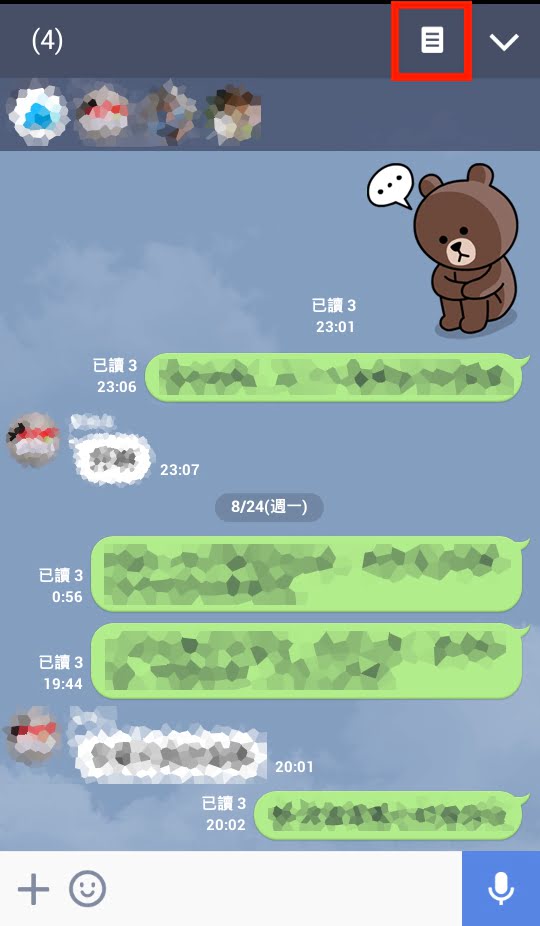 Figure 1: Group chat window.
Step 3: Refer to Figure 2. In the menu drawer, navigate to the “Members” tab (indicated by the red box).
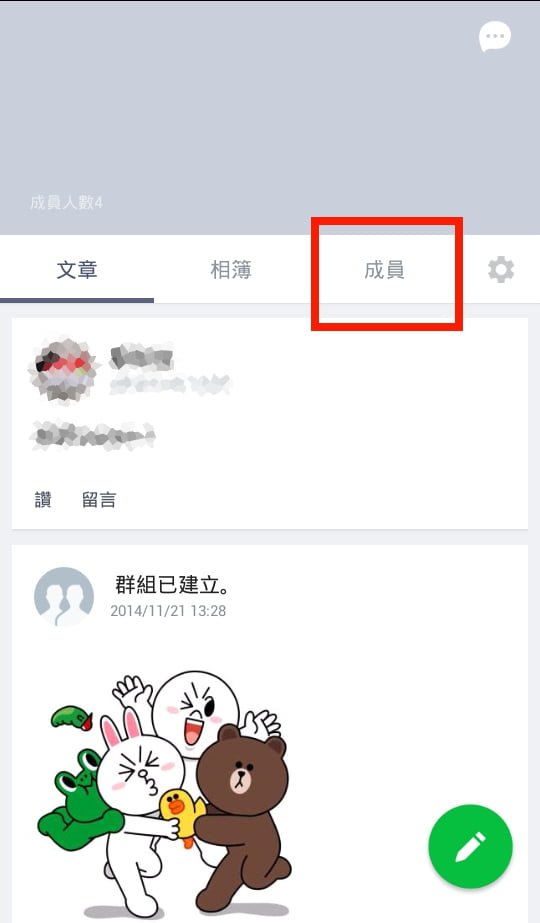 Figure 2: Group management drawer.
Step 4: Refer to Figure 3. Inside the Members list, tap the “Edit” button on the right (indicated by the red box).
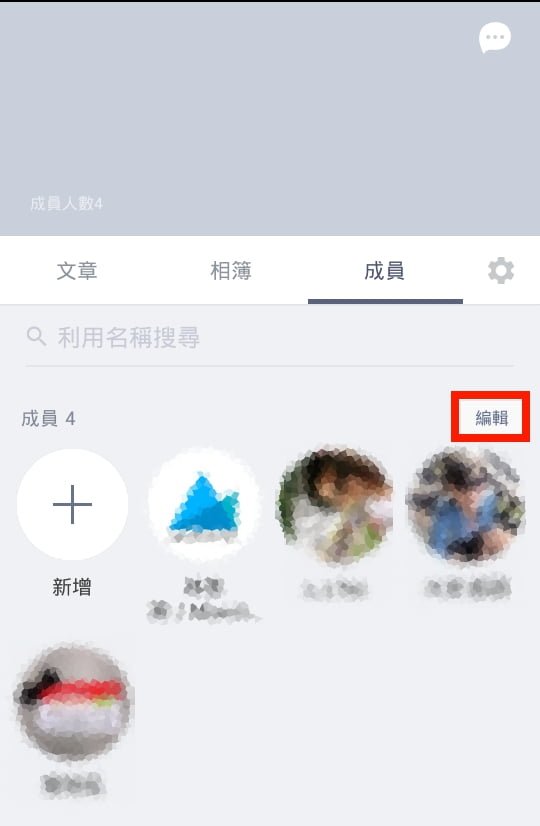 Figure 3: Members page.
Step 5: Refer to Figure 4. On the member editing screen, every participant will be listed with a “Remove” button next to their name. Tapping “Remove” kicks that participant out of the group immediately.
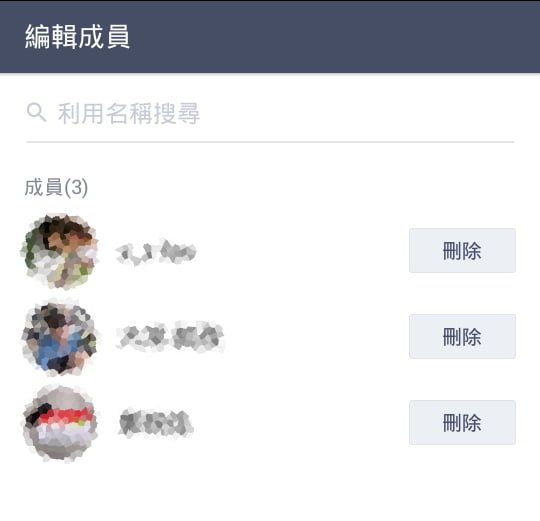 Figure 4: Edit members interface with remove buttons.
Conclusion
Without relying on automated scripts, manually kicking users one by one leaves you vulnerable to counter-kicks. However, when dealing with pesky, unattended spam promotion groups, manual removal works remarkably well.
Find whoever posted the unsolicited ads—that’s your ringleader. Kick them out immediately.
As for whether using an automated bot constitutes a criminal offense against computer security, it is a fascinating legal debate. If this case proceeds to trial, the court’s judgment will establish a significant landmark precedent.
In my view, Articles 358, 361, and 362 are largely inapplicable here. The crux lies in whether the elements of “altering electromagnetic records” (Article 359) and “interfering with another’s computer” (Article 360) are met, given that member removal is an authorized feature granted to all participants by LINE’s platform design.
Nevertheless, establishing “causing damage to others” appears relatively straightforward (though whether the merchant’s method of harvesting contacts was lawful could also become a key point of defense).
In fact, LINE has long offered an official commercial solution: LINE@. Legitimate registered businesses can apply for official business accounts.
Operating through an official business account not only enhances enterprise credibility, but it also completely eliminates the risk of rogue members kicking customers out. Even in the event of an unauthorized compromise, proving commercial damages is far more substantiated than relying on an ad-hoc personal chat group for serious business.
Criminal Code: Key Articles on Offenses Against Computer Security
- Article 358: Any person who, without cause, enters another’s computer or related equipment by inputting another’s account credentials and password, bypassing security measures, or exploiting system vulnerabilities shall be sentenced to imprisonment for not more than three years, short-term detention, or a fine of not more than NT$100,000, or both.
- Article 359: Any person who, without cause, acquires, deletes, or alters the electromagnetic records of another’s computer or related equipment, thereby causing damage to the public or others, shall be sentenced to imprisonment for not more than five years, short-term detention, or a fine of not more than NT$200,000, or both.
- Article 360: Any person who, without cause, interferes with another’s computer or related equipment through computer programs or other electromagnetic means, thereby causing damage to the public or others, shall be sentenced to imprisonment for not more than three years, short-term detention, or a fine of not more than NT$100,000, or both.
- Article 361: A person who commits an offense under the preceding three articles against a computer or related equipment belonging to a government agency shall have their penalty increased by up to one half.
- Article 362: Any person who produces a computer program specifically designed for committing offenses in this Chapter and supplies it to themselves or others for committing such offenses, thereby causing damage to the public or others, shall be sentenced to imprisonment for not more than five years, short-term detention, or a fine of not more than NT$200,000, or both.
- Article 363: The offenses specified in Articles 358 through 360 shall be prosecuted only upon complaint.
Support Independent Perspectives & In-Depth Insights
Every thoughtful analysis and candid critique comes from our dedication to truth and quality. We choose not to follow sensational algorithms or clickbait headlines.
Sustaining independent research requires reader support. Make a one-time or monthly contribution, securely processed by Google.
Payments secured by Google · Manage or cancel anytime in your Google Account

Comments