
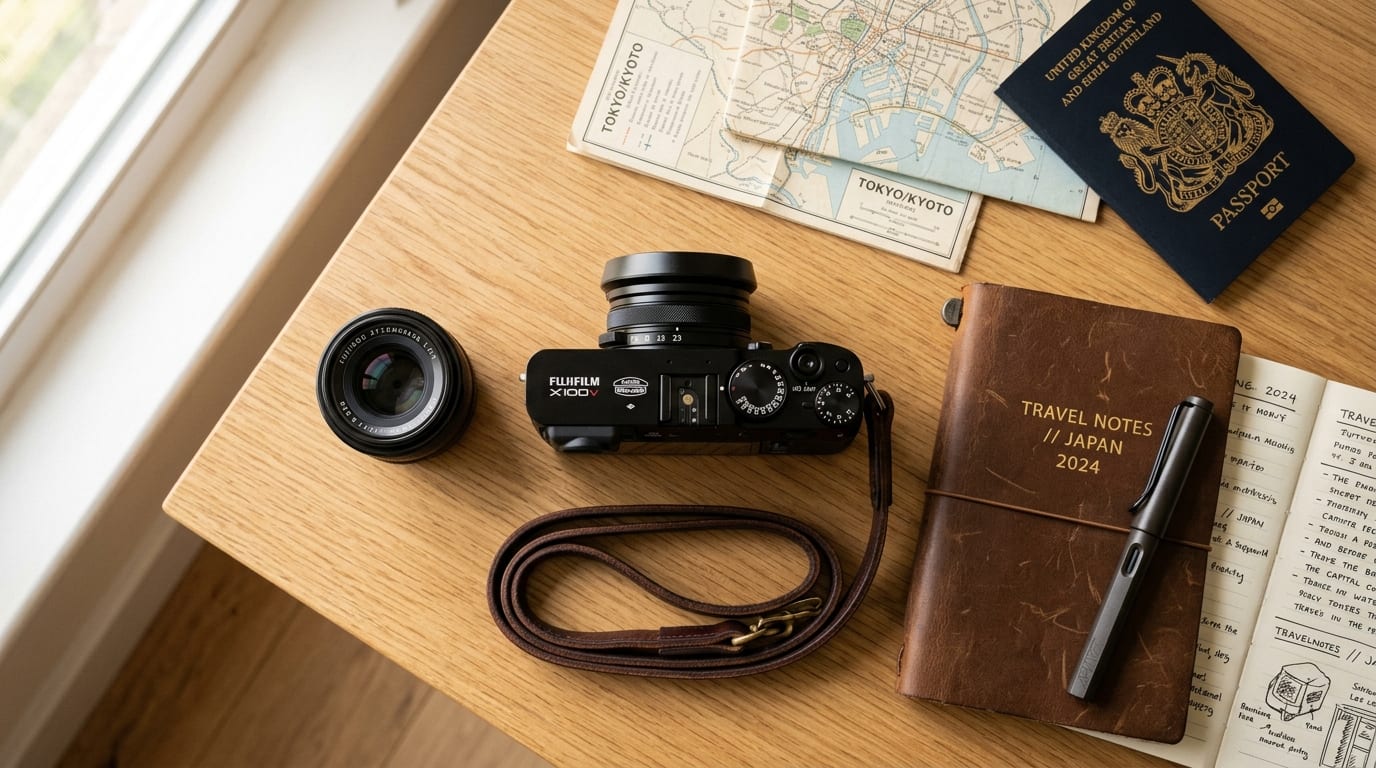
Even though smartphones are ubiquitous and computational multi-lens photography grows more capable by the day, the fundamental laws of optical physics—physical sensor size (“a larger sensor conquers all”) and the optical light throughput of lenses—create an uncompromising hardware boundary. Dedicated digital cameras (whether traditional DSLRs, mirrorless systems, or large-sensor premium compacts) firmly retain their indispensable place in photography, far from being completely displaced by smartphones.
For example, when Taiwan-based ASUS recently launched a new camera phone touting the marketing slogan that “40% of photos can replace a mirrorless camera,” seasoned photographers in my circle smiled knowingly, eager to ask the product planners: “Just which subpar mirrorless camera did you test against?” (Laughs)
Yet when beginners excitedly walk into a camera specialty store and see the shelves lined with countless models, sensor sizes, and lens lineups, choice paralysis quickly sets in. Today, let’s use a grounded “5-step selection method” to quickly identify the perfect camera tailored to your lifestyle.
Step 1: Ask Yourself What You Actually Want to Photograph (Subjects Dictate Camera Attributes)
The biggest pitfall when buying a camera is simply asking, “Which camera is the best?” Every camera is engineered with distinct design philosophies. Clarifying your primary subjects ensures every dollar is well spent:
| Primary Subject | Key Performance Needs | Recommended Camera Category |
|---|---|---|
| Travel snapshots, dining, daily lifestyle | Compact and lightweight, articulating selfie screen, fast Wi-Fi / Bluetooth transfer | 1-inch sensor premium compact, lightweight mirrorless |
| Family, running toddlers, and active pets | Top-tier autofocus and subject tracking (Eye AF), high burst shooting frame rates | Mid-to-high-end APS-C or full-frame mirrorless |
| Breathtaking landscapes, sunrise/sunset, long exposures | High dynamic range, high resolving power, excellent weather sealing and dust/splash resistance | Full-frame DSLR or high-end mirrorless |
| Portraits, shallow depth-of-field bokeh | Large-aperture lens ecosystem, flattering skin tone color rendition, large sensor format | Full-frame body paired with a 50mm or 85mm f/1.4 prime lens |
If 80% of your usage involves dining out with friends or strolling through ramen shops on vacation abroad, hauling a bulky 1-kilogram full-frame DSLR kit usually results in leaving it sealed away collecting dust in a dry cabinet after just two outings.
Step 2: What Size and Weight Can You Realistically Tolerate?
There is a timeless adage in the photography community: “The best camera is the one you actually take with you.”
The camera market primarily divides into three camps, each with distinct trade-offs between bulk and agility:
- Large-Sensor Compacts (Bridge / Point-and-Shoot): Examples include the Sony RX100 series and Ricoh GR series. Compact enough to slip into a coat or jeans pocket and equipped with a 1-inch or APS-C sensor, their image clarity and low-light purity far exceed smartphones. Ready to shoot instantly, they are ideal for everyday street photography and effortless travel documentation.
- Mirrorless Cameras: By stripping out the internal mirror box and optical pentaprism of traditional DSLRs and replacing them with electronic viewfinders (EVFs) for real-time previewing, body thickness and weight are drastically reduced—all while retaining the flexibility of interchangeable lenses. Today, the mainstream market has decisively pivoted toward mirrorless systems.
- Traditional Digital SLRs (DSLRs): Such as the Nikon D series or Canon EOS double-digit/single-digit lines. They offer zero-latency real-world views through optical viewfinders (OVFs), a reassuringly hefty handgrip, and phenomenal battery endurance (a single charge can yield well over a thousand shots). However, their mass and footprint present the heaviest physical challenge for everyday carry.
Step 3: Define a Sensible Budget and Baseline Technical Specs
When planning your budget, never spend your entire allotment solely on the camera body!
The Golden Budget Rule: If your total budget is $1,500, allocate roughly $800 to $900 toward the camera body, reserving the remaining $600 to $700 for quality lenses, high-speed memory cards, spare batteries, protective filters, and a dry box. Lenses hold their resale value far better than bodies and exert an even greater influence on optical rendering than generational body upgrades.
When evaluating specifications, establish these “essential baselines”:
- Sensor Size: If budget permits, go straight to “Full Frame”; for the sweet spot of price-to-performance and portability, pick “APS-C”; for everyday documentation, do not dip below “1-inch”.
- Autofocus and Stabilization: Does the body feature 5-axis in-body image stabilization (IBIS)? Does it provide swift human and animal eye-tracking autofocus? These features dramatically boost your hit rate when shooting handheld under dim indoor lighting.
- Articulating Screen: A tilting or fully articulating vari-angle screen saves you from awkwardly sprawling on muddy ground when framing low-angle puppy shots or reaching over crowds.
Step 4: Seek Real-World Sample Photos, Not Polished Studio Demos
Once you have narrowed your options down to two or three contenders, avoid relying exclusively on promotional imagery from official manufacturer galleries. Those sample images are crafted by elite commercial photography crews utilizing high-end studio lighting setups under strictly controlled environments with elaborate post-processing—unrepresentative of casual daily output.
The Most Reliable Verification Method:
Visit photo-sharing platforms like Flickr or 500px, search for the exact camera model paired with the lens you intend to purchase (such as Nikon D750 + 24-120mm or Sony A6300 + 16-50mm), and inspect raw, uncurated snapshots uploaded by everyday photographers on overcast afternoons, inside dim bistros, or during night market walks (complete with EXIF data). If the out-of-camera color science, dimensional pop, and noise levels appeal to you without aggressive editing, that performance is genuinely trustworthy.
Step 5: Where to Buy? In-Hand Ergonomics and Retail Evaluation
A camera is a precision instrument intimately bound to ergonomics. No matter how dazzling the spec sheet appears, if the grip is too shallow, leaving your fingers cramped, or if button layouts feel awkward and menu navigation is unintuitive, using it will feel cumbersome every day.
Before swiping your credit card, visit a brick-and-mortar camera specialty store:
- Test the In-Hand Grip: Hold the camera with one hand for 30 seconds to assess whether the weight distribution feels balanced, whether your pinky has a dedicated resting spot, and if the shutter release action is smooth and responsive.
- Inspect Menu Architecture: Try adjusting ISO, aperture, and focus points to evaluate whether physical dials and menu shortcuts match your operational instincts.
- Official Retail Imports vs. Gray Market (Parallel Imports):
- Authorized Official Imports: Typically carry a 10% to 20% price premium, but come with domestic manufacturer warranties and complimentary sensor cleaning services. Furthermore, authorized units preserve stronger resale value and liquidity on the secondary market.
- Gray Market Units: Deliver attractive upfront savings, but warranty coverage depends entirely on individual retailer integrity. If complex component repairs necessitate shipping back to overseas headquarters, downtime can be lengthy. For high-precision flagship bodies, authorized domestic warranty units are strongly recommended; for mature third-party prime lenses, parallel imports can be a savvy budget-saving choice.
Conclusion: Find the Camera You Truly Want to Carry Outside
There is no universally flawless camera—only the tool that harmonizes seamlessly with your current lifestyle.
Never shoulder a bulky, exorbitant flagship rig merely for prestige, nor compromise on dated gear with image quality trailing modern smartphones simply to cut costs. Follow these five steps to narrow down your options, and find that companion whose very presence in your hands makes you eager to step out the front door and capture the beauty of fleeting light and shadow.
Support Independent Perspectives & In-Depth Insights
Every thoughtful analysis and candid critique comes from our dedication to truth and quality. We choose not to follow sensational algorithms or clickbait headlines.
Sustaining independent research requires reader support. Make a one-time or monthly contribution, securely processed by Google.
Payments secured by Google · Manage or cancel anytime in your Google Account


Comments