
As the DPP government continues its policy of pinning the nation’s energy on solar and wind power (effectively coal and gas), the power shortage issue keeps fermenting domestically, and our daily electricity bills keep climbing. Electricity now costs more than double what it did when I was a student.
Even Kuo Jyh-huei, who succeeded Wang Mei-hua as the new Minister of Economic Affairs, blurted out shocking remarks telling people to install fewer air conditioners and that cheap electricity makes people waste power. It is reminiscent of the scene in the movie where life time is used as trading currency, with a group of respectable people lavishly throwing a banquet.
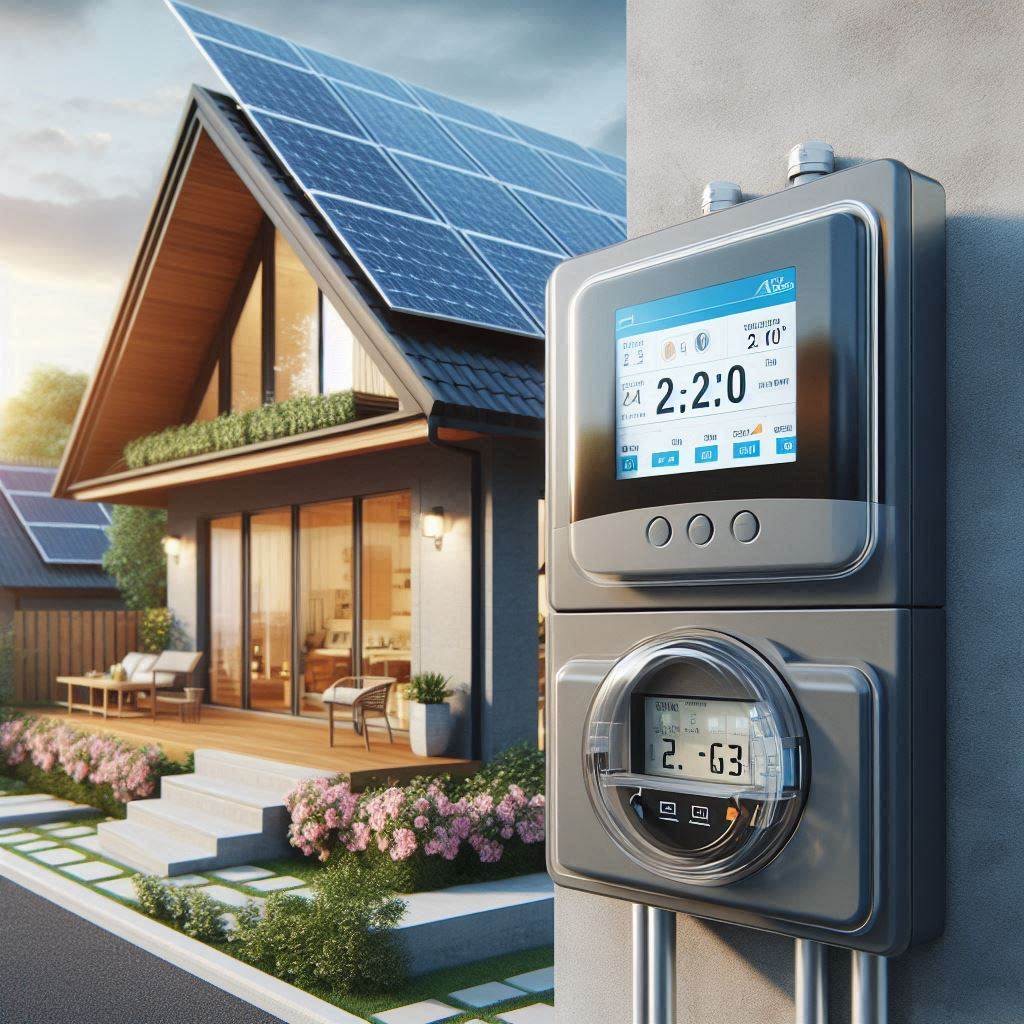
As a result, some people have turned to Taiwan Power Company to apply for the new smart meter (also called a digital meter) to enjoy the slight discounts brought by time-of-use pricing1. (Reference 1 mentions that smart meters have a minimum usage threshold, so be sure to ask clearly before actually installing one.)
Differences Between Mechanical and Smart Meters
Traditional mechanical meters (magnetic float watt-hour meters) could only be read by Taipower staff visiting your home every two months. They would subtract the previous record to get the current usage and all the electricity fees payable.
Smart meters, with their built-in networking, can achieve remote meter reading. They even provide multiple function displays (see the function codes listed in the table below), letting users understand their usage patterns more clearly.
Basic Introduction to Taipower’s Three Types of Meters
Taipower divides meters into mechanical and digital. Currently there are three types available to the public:
- Magnetic float (magnetic suspension) watt-hour meter: manual reading.
- Electronic meter: manual reading, time-of-use pricing, firmware updates, demand response.
- Smart meter: remote reading, remote time-of-use program updates, remote firmware updates, event reporting, theft detection.
A reminder here: because each meter model is contracted by Taiwan Power Company ⚡️ at different times to different manufacturers, including Tatung, Chung Hsing Electric, and AcBel Polytech, all of which may be producers.
Therefore, the following codes are for reference only and do not necessarily fully match the specifications of your brand — when even the codes each go their own way, we can see how absurd the government tender decision-making model is.
Smart Meter Function Codes
On a smart meter, you can use the function codes shown on the screen to view various data and indices.
Below are some common function codes and their corresponding data, including:
01 Displays the date of the meter reading
02 Displays the time of the meter reading
03 Battery usage time
04 Metering program usage time
05 Date of last meter reset to zero
06 Maximum demand date: shows the date the maximum demand occurred since the last reset
07 Maximum demand time: shows the time the maximum demand occurred since the last reset
08 Meter multiplier
09 Total usage index: (Total usage index - previous period total usage index) x meter multiplier = effective kWh
10 Peak effective index: after subtracting the previous period index and multiplying by the meter multiplier, this is the current period peak usage (the sum of items 10, 18, and 22 should equal item 9; actual indices may differ by 0-2)
11 Peak demand indication: includes two decimal places; multiplied by the meter multiplier, this is the current peak maximum demand since the last reset
12 Peak previous period demand index
13 Peak current period demand index: (13) - (12) = (11), often with a 0.01 error
18 Off-peak effective index: after subtracting the previous period index and multiplying by the meter multiplier, this is the current period off-peak usage
19 Off-peak demand indication: includes two decimal places; multiplied by the meter multiplier, this is the current off-peak maximum demand since the last reset
20 Off-peak previous period demand index
21 Off-peak current period demand index: (21) - (20) = (19)
22 Saturday semi-peak effective index: after subtracting the previous period index and multiplying by the meter multiplier, this is the current semi-peak usage since the last reset
23 Saturday semi-peak demand indication: includes two decimal places; multiplied by the meter multiplier, this is the current semi-peak maximum demand since the last reset
24 Saturday semi-peak previous period demand index
25 Saturday semi-peak current period demand index: (25) - (24) = (23)
27 Demand interval (minutes): Taipower uses a 15-minute average demand, so you can see how long until the next demand cycle
28 Demand reset count: basically once per period, but adjusting the contract capacity resets it one more time
30 Reactive meter index: subtract the previous period index and multiply by the meter multiplier = reactive kWh
Power factor = effective kWh / sqrt (effective kWh squared + reactive kWh squared)
50 Last program date
90 Number of times neutral line current was too high
These function codes help us quickly view and analyze electricity usage from the smart meter screen.
For example, use code 09 to view the total usage index, or use codes 10, 18, 22 to view the peak effective index. This information helps us quickly understand power consumption patterns and take relevant power-saving measures.
References
Support Independent Perspectives & In-Depth Insights
Every thoughtful analysis and candid critique comes from our dedication to truth and quality. We choose not to follow sensational algorithms or clickbait headlines.
Sustaining independent research requires reader support. Make a one-time or monthly contribution, securely processed by Google.
Payments secured by Google · Manage or cancel anytime in your Google Account


Comments