
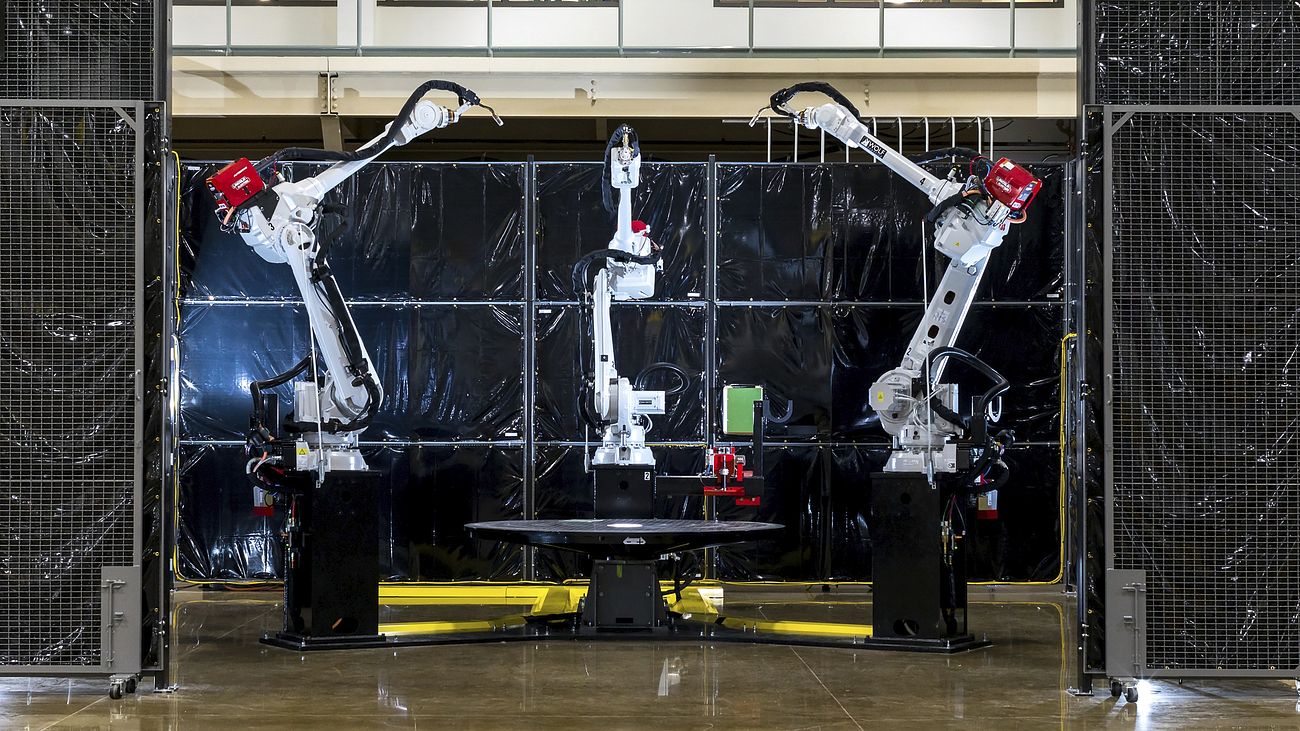
The adoption of automation technology is growing worldwide, representing not only technological progress but also major changes in economic and social structures.
According to the latest 2023 data, the ten countries with the highest density of automated robots are revealed, among which several Asian and European countries stand out. Below is the ranking of these countries (based on the ratio of robots per 10,000 employees):
- South Korea 🇰🇷: 1,000
- Singapore 🇸🇬: 670
- Japan 🇯🇵: 399
- Germany 🇩🇪: 397
- People’s Republic of China (PRC) 🇨🇳: 322
- Sweden 🇸🇪: 321
- Hong Kong 🇭🇰: 304
- USA 🇺🇸: 274
- Slovenia 🇸🇮: 249
- Switzerland 🇨🇭: 240
Behind these numbers lie the influence of many factors, including a country’s economy, education, and technology. South Korea has powerful technology companies such as Samsung and Hyundai, which actively invest in the research, development, and application of robotics. Its high robot density reflects the country’s strong competitiveness in manufacturing.
As Asia’s financial center, Singapore not only attracts global companies but also vigorously develops high-tech industries. However, it is worth noting that although robot density is high, this may also lead to changes in the labor market and shifts in skill demand.
In these countries, such as Japan and Germany, high robot density reflects their advantages in automated manufacturing and precision technology. The rise of the People’s Republic of China has given it a place in the global automation field, but it also faces challenges of transformation and skills training.
Places such as Hong Kong, the United States, and Switzerland, although having relatively high robot density, place more emphasis on the development of the service sector and high-end technology. The investment of these countries in AI and robotics reflects their efforts in innovation and technology.
However, the rise of automation is not without challenges. Society has raised new questions about the job changes and human resource needs brought about by automation. These countries are striving to find a balance to ensure that the development of automation technology does not cause excessive imbalance in the labor market and mass unemployment.
Whether it is the advantages or the challenges of automation, these countries are actively exploring solutions to ensure that technological development and social interests are combined.
Through the analysis of the degree of automation in these countries, we can better understand the impact of automation on the global economy and society, and have a clearer prediction of future trends.
Whether it is the highly developed South Korea or the rapidly rising mainland China, the progress of global automation will bring infinite possibilities for future technological and social development.
Support Independent Perspectives & In-Depth Insights
Every thoughtful analysis and candid critique comes from our dedication to truth and quality. We choose not to follow sensational algorithms or clickbait headlines.
Sustaining independent research requires reader support. Make a one-time or monthly contribution, securely processed by Google.
Payments secured by Google · Manage or cancel anytime in your Google Account




Comments