
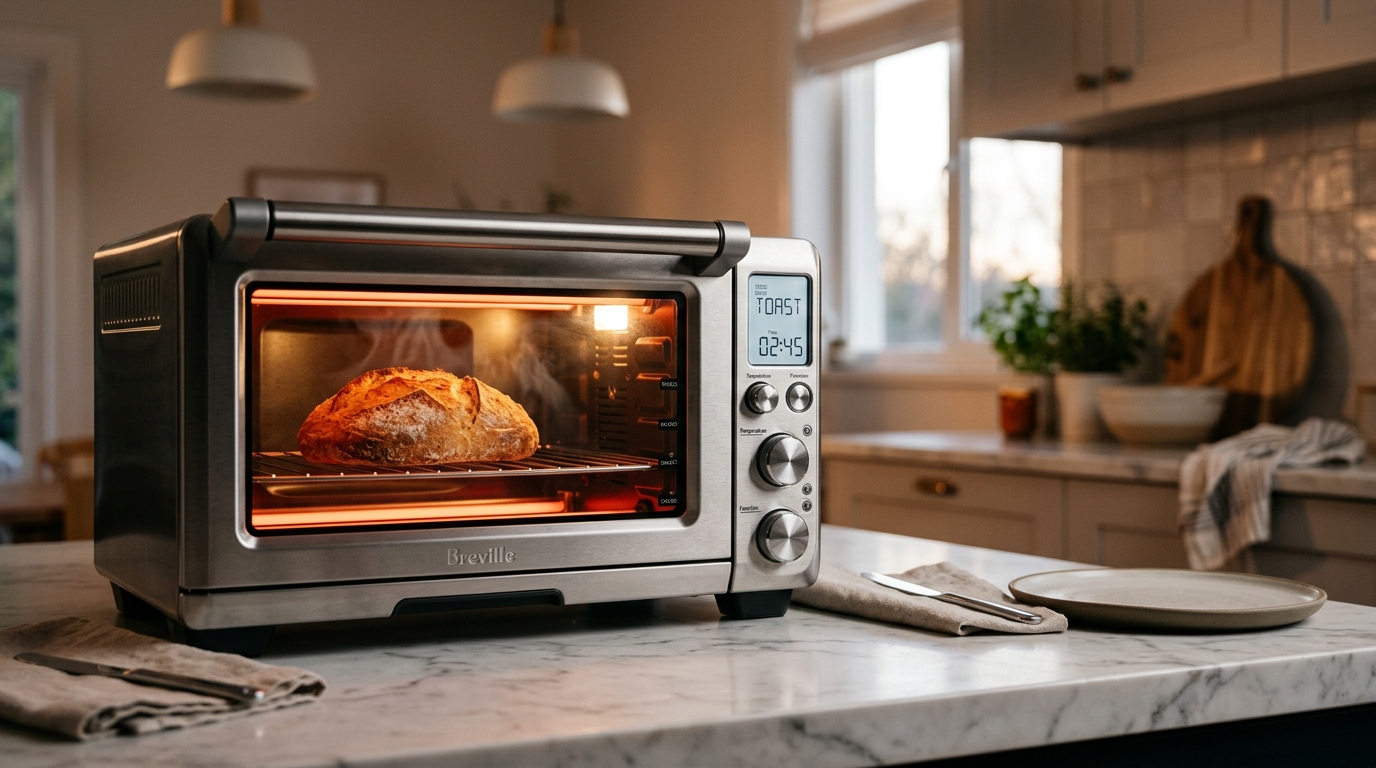
With the pace of modern urban life and the popularity of artisanal baked goods, the compact and fast-heating toaster oven has become one of the most frequently used appliances in contemporary kitchens. Whether it is quickly toasting a slice of shokupan toast with a crisp crust and fluffy crumb in the morning, reheating croissants and fried snacks after work, or baking simple gratins and crème brûlées on weekends, a countertop toaster oven handles it with ease.
However, many buyers encounter a dilemma when comparing heating elements: what is the fundamental difference between the two dominant market technologies—traditional metal sheathed heating tubes and infrared quartz tubes (also marketed as light-wave or far-infrared graphite tubes)? Which offers superior temperature uniformity? Which delivers better texture?
This article provides a comprehensive analysis across thermal physics, heating curve characteristics, energy efficiency, operational lifespan, safety protocols, and culinary suitability to help you make an informed kitchen appliance investment.
1. Technical Principles and Structural Differences
The thermodynamic process of cooking food inside an oven relies on three mechanisms: thermal conduction, convection, and radiation. Metal tubes and infrared quartz lamps differ drastically in how they deploy these mechanisms.
┌────────────────────────────────────────────────────────┐
│             Traditional Metal Sheathed Tube            │
│  [Ni-Cr Alloy Wire] ➔ [MgO Insulation] ➔ [Metal Sheath]│
│         (Primarily relies on convection and conduction)│
└────────────────────────────────────────────────────────┘

┌────────────────────────────────────────────────────────┐
│             Infrared Quartz / Halogen Tube             │
│  [Tungsten / Graphite Filament] ➔ [High-Transmittance] │
│         (Directly emits penetrating infrared radiation)│
└────────────────────────────────────────────────────────┘
1. Metal Sheathed Heating Tubes
- Internal Construction: A nickel-chromium (Ni-Cr) or iron-chromium-aluminum resistance wire serves as the central core, tightly packed inside high-density magnesium oxide (MgO) insulating powder, sealed in an outer corrosion-resistant metal sheath (such as SUS304 stainless steel or Incoloy alloy).
- Heat Transfer Dynamics: Electric current heats the internal resistance wire first, transferring heat through the MgO powder to the outer tube wall, which then slowly warms the cavity air and food via thermal convection and long-wave infrared radiation.
- Physical Characteristics:
- Appearance: Silver-white or matte gray metal tubes, commonly arranged in U-shaped, M-shaped, or dual linear paths.
- Surface Temperature: Typically
300°C – 500°C. - Luminescence: Emits a faint, dull red glow under power; possesses high thermal inertia.
2. Infrared Quartz Heating Tubes
- Internal Construction: A tungsten filament, carbon fiber, or graphite ribbon is encased inside a heat-resistant quartz glass tube, filled with inert gas or sealed under vacuum. When powered, the filament spikes to incandescent temperatures within milliseconds.
- Heat Transfer Dynamics: Quartz glass provides high optical transmittance for specific infrared wavelengths. The emitted near-infrared (NIR) and far-infrared (FIR) rays penetrate cavity air directly into the surface layer of food, exciting polar water molecules through resonance and converting radiant light energy directly into thermal kinetic energy.
- Physical Characteristics:
- Appearance: Clear, milky-white, or amber quartz glass tubes through which the glowing filament is clearly visible.
- Filament Temperature: Instantaneous operating temperature reaches
800°C – 1200°C. - Luminescence: Emits a bright, warm amber or orange-white glow instantly, delivering true instant-on heating.
2. Comprehensive Heating Performance Comparison
These distinct thermodynamic profiles dictate cook times and final culinary textures.
1. Key Performance Metric Comparison
| Comparison Metric | Metal Sheathed Tube | Infrared Quartz Tube |
|---|---|---|
| Preheat Time | Slower (5 to 8 minutes to reach equilibrium) | Extremely fast (illuminates in 0.2s, reaches heat in 1–2 min) |
| Energy Conversion Efficiency | Approx. 70% – 80% (heat absorbed by tube wall) | Reaches 85% – 95% (radiant energy strikes food directly) |
| Heat Transfer Mechanism | Progressive: air convection + long-wave conduction | Explosive: penetrating electromagnetic infrared radiation |
| Thermal Response Time | Sluggish (pronounced thermal hysteresis) | Highly responsive (powers off instantly, heats immediately) |
| Cavity Temperature Uniformity | Excellent (relies on ambient air convection balance) | Directional (intensity drops with distance from tube) |
| Food Heating Behavior | Penetrates gradually from outside in | Flash-sears exterior, locking in internal core moisture |
2. “Gradual Gentle Bake” vs. “Instant High-Heat Moisture Lock”
- Metal Tubes — Outside-In Thermal Permeation: Because metal tubes warm gradually and operate at moderate surface temperatures, heat has ample time to conduct inward. This gentle temperature gradient ensures that denser foods (such as thick-cut pork chops, roasted chicken, or delicate chiffon cakes) cook through to the center before the exterior over-browns.
- Infrared Tubes — Instantaneous Surface Maillard Reaction: Infrared radiation is concentrated. When toasting bread, an infrared element evaporates surface moisture within sixty seconds to produce golden crisping (caramelization and the Maillard reaction) before interior crumb moisture can escape. This achieves the luxurious “crisp exterior, soft moist interior” texture celebrated by premium Japanese countertop toasters.
3. Culinary Suitability Scenarios
The ultimate value of any kitchen appliance lies in how well it aligns with your everyday cooking menu.
┌─────────────────────────────────┐   ┌─────────────────────────────────┐
│     Best for Metal Elements     │   │    Best for Infrared Elements   │
│   • Delicate pastries and cakes │   │   • Rapid toast, croissants, baguettes│
│   • Thick roasts and whole chicken│ │   • Cheese gratins & surface browning│
│   • Slow uniform defrost & bake │   │   • Re-crisping fried appetizers │
│   ➔ Trait: Gentle, stable, even │   │   ➔ Trait: Blazing, crisp, fast │
└─────────────────────────────────┘   └─────────────────────────────────┘
1. Dishes Best Suited for Metal Heating Tubes
- Delicate Pastry and Cake Baking: Sponge cakes, cookies, and madeleines demand stable, uniform cavity temperatures. Intense directional infrared radiation risks blistering and scorching cake tops while the batter underneath remains undercooked.
- Dense Cuts Requiring Gentle Cooking: Thick bone-in chops, roasted root vegetables, and slow-braised casseroles benefit from steady convection that tenderizes fibers.
- Multi-Stage Precision Low-Temperature Baking: Holding sustained low temperatures between 100°C and 150°C for slow roasting or dehydration.
2. Dishes Best Suited for Infrared Quartz Tubes
- Morning Bread and Pastry Refreshing: When rushing to work, an infrared toaster requires virtually zero preheating, turning out golden toast in two to three minutes.
- Surface Browning and Gratins: Macaroni and cheese gratins, crème brûlée caramelization, and yakitori glazes form rich, blistered crusts rapidly under infrared light.
- Re-crisping Leftover Fried Foods: Takeout fried chicken, french fries, and tempura shed excess oil and regain fresh-out-of-the-fryer crunch within minutes without drying out internal meat.
4. Durability, Safety, and Cleaning Guidelines
Kitchen appliances endure water vapor, grease splatters, and thermal shock daily. Hardware resilience is paramount.
1. Safety and Physical Durability Comparison
| Dimension | Metal Sheathed Tube | Infrared Quartz Tube |
|---|---|---|
| Impact Resistance | Extremely high (robust metal casing) | Moderate to low (quartz glass can shatter on impact) |
| Thermal Shock Resistance | Outstanding (unaffected by sudden water splashes) | Vulnerable (cold water splashes on hot glass risk cracking) |
| Grease Flare-Up Risk | Low (surface temps 300–500°C) | Moderate to high (filament exceeds 800°C; grease drips ignite) |
| Average Service Life | 2,000 – 3,000 operational hours | 1,000 – 1,500 hours (impacted by on/off cycling) |
| Replacement Cost | Economical and widely standardized | Higher cost for proprietary branded quartz lamps |
2. Maintenance and Care Guidelines
5. Buying Checklist: Which Model Fits Your Kitchen?
Profile A: Choose Metal Elements If:
- You regularly bake cakes, artisan sourdough, cookies, and pastries.
- You have young children or pets and prioritize impact-resistant, shatterproof hardware.
- You seek exceptional longevity and low-maintenance reliability for a five-to-ten-year workhorse.
- You primarily cook substantial family meals and roasted meats.
Profile B: Choose Infrared Quartz Elements If:
- 90% of your usage involves toasting sandwich bread, bagels, croissants, or reheating takeout.
- You are an active urban professional or apartment dweller who cannot spare eight minutes waiting for preheating.
- You crave intense surface blister and crunch across gratins, broiled skewers, and fried snacks.
- Counter space is compact, and you want maximum heating speed per square inch.
The Hybrid Compromise: Dual-Element Configurations
For those with flexible budgets, modern premium countertop ovens feature a compelling third approach—hybrid dual-element architectures:
- Upper Infrared Quartz Lamp: Provides instantaneous radiant energy to blister cheese and toast top crusts.
- Lower Metal Stainless Steel Tube: Emits stable convection heat from below without vulnerability to falling crumbs or dripping grease.
- Convection Fan Assist: Circulates cavity air forcefully, eliminating hot spots associated with directional infrared rays.
This hybrid configuration unites the rapid speed of infrared radiation with the gentle stability of metal elements, representing the most versatile solution on the modern kitchen appliance market.
Conclusion
Neither heating technology is universally superior; each excels in distinct culinary roles. Metal sheathed tubes behave like a patient craftsman, fostering even, thorough heat penetration, while infrared quartz lamps act as precision light beams that flash-crisp surfaces while locking core moisture within.
Identify the five dishes you prepare most frequently, choose the heating core tailored to those meals, and your countertop toaster oven will become an indispensable culinary asset!
Support Independent Perspectives & In-Depth Insights
Every thoughtful analysis and candid critique comes from our dedication to truth and quality. We choose not to follow sensational algorithms or clickbait headlines.
Sustaining independent research requires reader support. Make a one-time or monthly contribution, securely processed by Google.
Payments secured by Google · Manage or cancel anytime in your Google Account



Comments