
Throughout 2023 and early 2024, Wall Street analysts and tech commentators persistently posed a pointed question to Tim Cook: In the escalating AI arms race dominated by Microsoft, OpenAI, and NVIDIA, had Apple fallen behind?
On June 10, 2024, at the Worldwide Developers Conference (WWDC24) in Cupertino, California, Apple offered an unmistakable, meticulously engineered response: the official launch of Apple Intelligence.
Rather than chasing generalized, multi-hundred-billion-parameter cloud chatbots, Apple rooted its strategy in deep personal context and uncompromising architectural privacy, charting a distinctly pragmatic, on-device trajectory.
1. Redefining AI: Personal Context Over Encyclopedic Generalities
Most public LLMs understand the nuances of quantum chromodynamics, but possess zero awareness of when your spouse’s flight lands, where your passport photo was saved, or which attachment your manager referenced in yesterday’s email.
Apple Intelligence addresses precisely this cognitive gap:
- System-Wide Deep Integration: Woven into iOS 18, iPadOS 18, and macOS Sequoia, the system parses unstructured data across Photos, Mail, Messages, Calendar, and Notes.
- Cross-App Semantic Orchestration: Asking Siri to “find the podcast PDF Sarah texted me yesterday and email the summary to my accountant” automatically executes across multiple application silos.
- Writing Tools: Contextual proofreading, tone rewriting (Professional, Friendly, Concise), and document summarization integrated into any native text input field.
- Genmoji and Image Playground: Allows users to dynamically generate custom expressive emojis on the fly via text prompts.
2. Dual-Engine Architecture: Edge Silicon and Private Cloud Compute
Apple engineered an elegant balance between edge hardware constraints and frontier computational demands:
- On-Device Neural Engine: Approximately 80% of routine workflows (notification prioritization, email digests, photo cleanup) run locally via a custom 3-billion-parameter (3B) model executed entirely within Apple Silicon’s Neural Engine—consuming zero cellular bandwidth and ensuring total cryptographic isolation.
- Private Cloud Compute (PCC): For heavier generative synthesis, requests route dynamically to dedicated Apple Silicon cloud clusters. The architectural breakthrough lies in its security:
- Data runs strictly inside volatile Random Access Memory (RAM) without touching persistent storage (stateless processing).
- Once the response completes, data is instantaneously purged.
- Apple engineers have zero administrative backdoor access, and server software images are published for continuous external cryptographic verification by independent security researchers.
3. Siri Re-architected After a Decade
First introduced in 2011, Siri frequently faced criticism for rigid responses. Under Apple Intelligence, Siri underwent a structural rebuild:
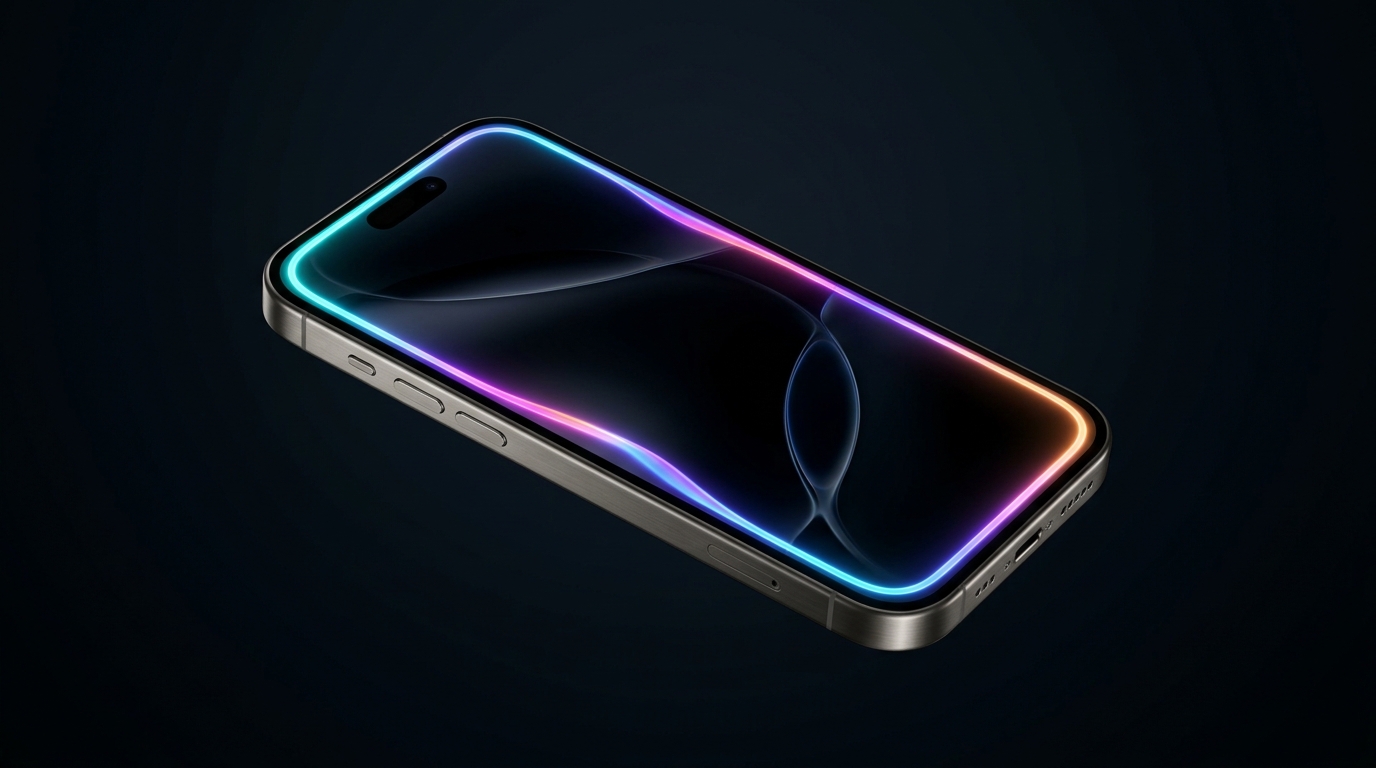
- Luminous Edge UI: Activating Siri causes an elegant, fluid ambient glow to trace the perimeter of the display.
- Seamless Text-to-Speech Switching: Double-tapping the home bar summons a discreet keyboard interface for quiet environments.
- Conversational Resiliency: Tolerates natural verbal stumbles, mid-sentence self-corrections, and preserves conversational thread state across interactions.
- On-Screen Awareness: Enables Siri to understand and manipulate visible UI elements directly (e.g., “Add this address to contact”).
4. Hardware Moats and the Upgrade Super-Cycle
Commercially, Apple Intelligence executed a classic platform upgrade strategy:
- Advanced on-device models require high neural throughput, restricting availability to the A17 Pro (iPhone 15 Pro series) and later, alongside M-series iPads and Macs.
- This limitation created a powerful economic catalyst driving millions of legacy device owners toward contemporary hardware upgrades.
Apple Intelligence demonstrated that the apex of consumer AI may not lie in sprawling chat windows, but in invisible, delightful intelligence deeply integrated into the everyday rhythms of life.
Support Independent Perspectives & In-Depth Insights
Every thoughtful analysis and candid critique comes from our dedication to truth and quality. We choose not to follow sensational algorithms or clickbait headlines.
Sustaining independent research requires reader support. Make a one-time or monthly contribution, securely processed by Google.
Payments secured by Google · Manage or cancel anytime in your Google Account


Comments