
She spent a reviled life waiting for a client who would never return. This aging woman of enduring grace, whose real name was Yukiko Nishioka, walked the streets of Yokohama as a prostitute for decades.
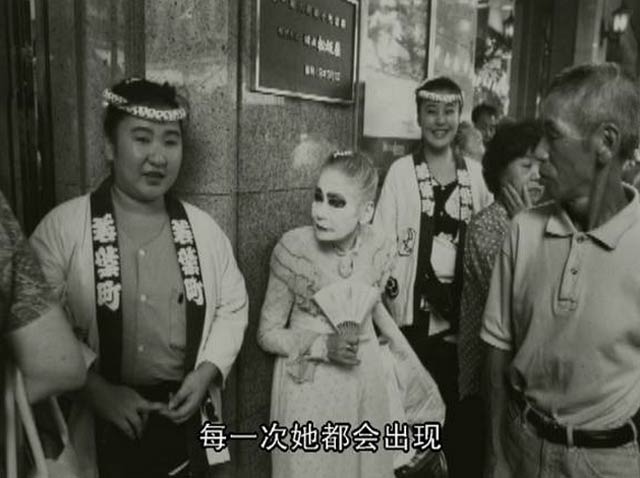
Every day, she painted her face with thick white powder like a geisha, wore a Rococo-style white frilled dress, neatly combed her silver hair, and dragged behind her the only luggage she possessed.
By day, she drifted through the city streets; by night, she slept in building hallways, until she suddenly vanished in 1995.
Yokohama Mary: Sixty Years on the Streets
“Everyone will eventually leave this world; please live this life with a free heart.”
Mary’s steps were unsteady. She often missed her footing and nearly stumbled into the mud, risking dirtying her pure white lace gown. She even harbored a superstitious belief that the dress somehow shielded her from harm, just like the thick, mask-like white powder painted across her face.
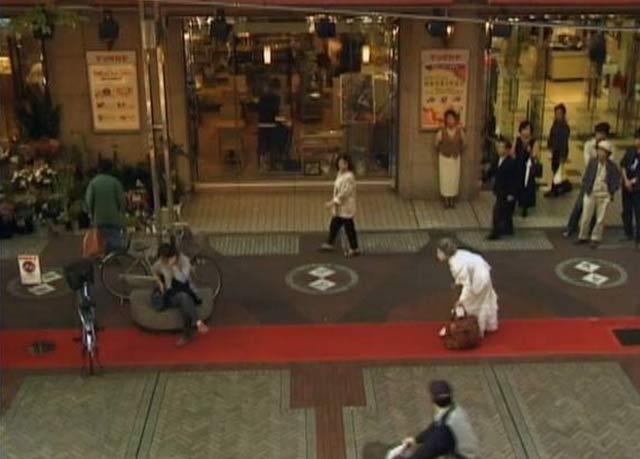
The streets of Yokohama bustled with passersby as usual. She could no longer remember whether she was eighty-two or eighty-three. As always, not a single customer approached her today. She was old, her back was hunched, yet she always held her chest high. She carried all her meager belongings with her, having deposited her spare clothes elsewhere. She recalled herself from sixty years ago—graceful in profile, wearing spectacles, high heels, a white gown, long white gloves, and carrying an elegant long-handled white parasol.
In that very winter, her figure suddenly vanished from the streets of Yokohama…
 Yokohama Mary - Street Documentary
The First Half of Mary’s Life
Serving the Nation as a “Comfort Woman”
Relentless Allied bombings had left the island nation in ruins. As far as the eye could see, there was nothing but concrete rubble and twisted steel skeletons that looked like grotesque monsters. If one were lucky, they might come across mangled flesh and blood—remnants that could no longer even be called corpses. In the wind blowing toward her, there was only choking dust and the despair of the Japanese people.
Mary did not know what she should do.
Her father had died during the war, and her younger brother had seized the entire family estate—betrayals that chilled her to the core.
When the war ended, the men were thoroughly defeated, but the women were still fighting for survival.
“Become a New Woman — Foreign Affairs Club hiring female clerical staff. Board, lodging, and clothing provided. High income. Women aged 18 to 25 only.” — On September 20, 1945, this advertisement caught her eye.
Her post-war homeland lay in ruins. In Japan at that time, even men could not find jobs, let alone women. The moment a recruitment advertisement appeared, the unemployed rushed in droves. On that single day, thousands came to apply. Within three months, as many as 60,000 women applied across the country.
Mary was one of them.
Mary had no idea what the advertisement’s actual job entailed. Backed by the government and openly advertised in national newspapers, she trusted it without suspicion.
Her subsequent fate became a page of Japanese history that people to this day are reluctant to mention.
At first glance, it seemed no different from an ordinary recruitment advertisement. However, the agency behind it was the Recreation and Amusement Association (RAA), co-founded by the Tokyo Metropolitan Police Department under the Japanese government.
Day and night, American soldiers chewed gum as they queued outside. Inside the rooms, the women were treated like cattle, completely denied the freedom to refuse. “On the busiest day, one had to serve 55 clients. Any feeling of being human was completely gone.”
Due to the rampant spread of venereal diseases among American troops, in 1946 the Supreme Commander for the Allied Powers (SCAP) demanded that the Japanese government shut down all comfort stations on the grounds that “open prostitution is an affront to democratic ideals.”
 Yokohama Mary - Street Documentary
Thus, bearing wounds and scars across their bodies and souls, these comfort women were cast out onto the streets without any compensation. Perhaps from the moment they entered this trade, the Sun Goddess Amaterasu they revered had already abandoned them, leaving them to slowly sink into hell and quietly fend for themselves.
Deprived of any livelihood or means of survival, these women had no choice but to continue in the sex trade. They were called “panpan” girls. They stood along both sides of streets frequented by American troops, wearing heavy, cheap lipstick and revealing dresses, striking alluring poses to sell their bodies for a meager living.
With their flesh and tears, they paid off their nation’s debts.
 Yokohama Mary - Street Documentary
Sixty Years on the Streets
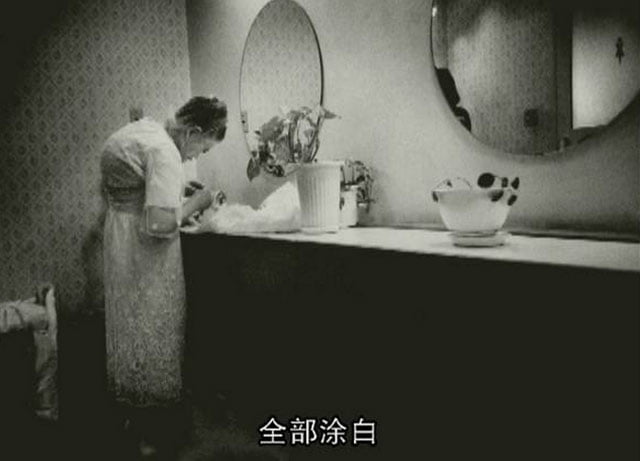
On the streets of Yokohama, Mary was an unforgettable figure. Her face was always covered in a thick layer of grease-free white powder, worn like a mask she never took off. Every day, she walked through the streets with her chin held high; many assumed she was mentally ill, or a ghost.
People only knew she was a “panpan” girl. No one knew her real name; they called her Yan-Yan, Miss Mary, or Her Majesty the Queen. Later, people simply called her Yokohama Mary.
Mary spoke good English, knew how to paint, and played the piano. She had always chosen her clients—most of the time, she only accepted military officers, particularly well-off officers, which implied a comfortable life. Mary rarely spoke to strangers, always walked with her head held high, and dressed in vintage-style gowns.
Mary walked the streets of Yokohama constantly, always dressed like an aristocratic lady. Sentimental literati writing romantic or tragic melodramas would never include such a woman in their stories; at most, she was merely a frayed edge of an era.
 Yokohama Mary - Street Documentary
Standing on the streets soliciting for sixty years, arrested twenty-two times—time was like a blade, and an aging Mary eventually lost all business. Yet she continued to stand on the streets of Yokohama, her long white gown and signature chalk-white face never changing.
Mary, an 83-year-old active street prostitute, became a symbol, a woman who once existed but vanished, an urban legend.
She had always maintained her pride. At every stage of her life, she never flattered those in power, nor did she bow to the overbearing. A wealthy lady, seeing her loneliness, once offered to treat her to tea. Mary coldly replied: “Who are you? I don’t know you. Go away! Go! Go!”
Only later did the lady realize this was Mary’s way of showing consideration: Mary feared that having tea together would cause bystanders to mistake the lady for a prostitute.
As she grew older, the aloof and proud “Queen” still wore heavy white powder and bizarre, intense makeup, holding her chest high. It seemed as though wearing this mask was enough to block out the world’s contemptuous gaze, allowing her to live with dignity and self-possession.
Rumor had it that her cosmetic powder was from Shiseido.
Doing a job and earning an honest wage—she felt she could stand proudly in this city, honoring the duty of a courtesan.
“There was no other choice. In those years, who cared about you? Who would feed you? One had to survive. No matter what others say, as long as your heart remains clean, that is all that matters,” an aging “panpan” woman once sighed.
Yet Mary was so conspicuous that many people felt afraid or repulsed when they saw her.
In the eyes of “respectable” high society, Mary was avoided like the Grim Reaper or an evil spirit. She was regarded as a disgrace, and no one wanted to touch anything she had handled. Many establishments in Yokohama barred her from entry—just like any other day, Mary arrived at a cramped salon on the street corner. Before she even stepped inside, she heard a woman from the Kuwata family, hair covered in curlers, shouting loudly: “Say, Tagiyoshi-san, if that vile woman keeps coming here to get her hair done, we won’t come anymore.”
The salon owner happened to turn around, caught sight of Mary at the door, and apologized: “Ah, I am truly sorry, but from now on, you cannot come here anymore.”
Mary bowed calmly, asking with a touch of disappointment: “Is it really not possible anymore?”
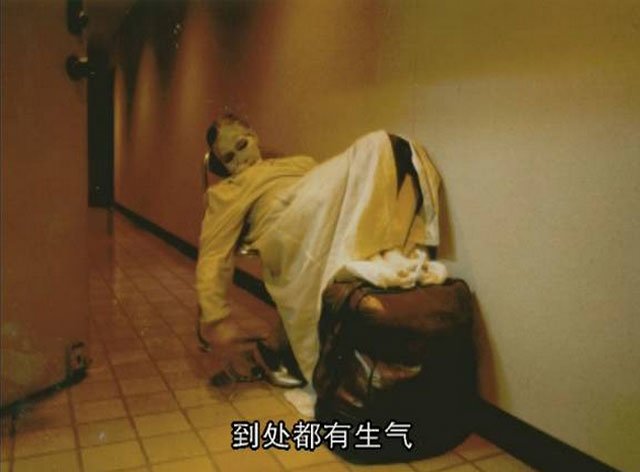 Yokohama Mary - Street Documentary
Upon receiving a firm confirmation, without complaining or protesting, she simply expressed regret: “I see. Very well then,” and quietly departed.
The world is not as utterly hopeless as one might imagine; while there were those who humiliated her, there were naturally those who treated her with kindness.
Every day, she wandered around a fixed street corner. When tired, she rested in the lobby of an office building, where a battered chair belonged to her, inscribed with Chinese characters: “I love you.”
At night, she slept in the hallway of that building, curled up in that chair with her feet resting on her bag.
No one ever evicted her.
Although she could only lodge in the building’s hallway, she still treasured her dignity and never accepted charity. Ganjiro, a singer who wanted to help her, could only place money in red envelopes, saying each time he handed it over: “Miss Mary, please take this to buy some flowers.”
In coffee shops, other patrons complained: “We might end up using the same cups she drank from!” The shop owner could not bear to drive Mary away, so he specially bought a beautiful cup just for her, saying: “You are Her Majesty the Queen; you ought to use the prettiest cup in the house.”
Mary would often happily order: “Give me a cup of coffee in my cup!”
The owner of a perfume shop, formerly a dancer, always remembered the way Mary gazed at a perfume bottle—as if falling in love, gazing lingeringly, cherishing a bottle of perfume with reluctant tenderness.
The photographer who persistently took portraits of her was filled with sympathy and respect: “I was truly afraid that if I didn’t keep shooting, she would vanish one day, so I tried my best to capture every shot well.”
Mary wrote letters, and rumor had it she even penned an autobiography; her handwriting was exceptionally delicate and neat. In letters to her family, she lamented that she had achieved nothing in the big city and had let them down, promising that once she made a name for herself, she would return properly.
She also sent postcards to those who treated her kindly, signing them with her real name. She mailed small gifts to the building owner, even if it was just a towel. In such humble ways, she expressed her gratitude.
“If I am a prostitute, then I will always be a prostitute. As a prostitute’s duty, I will continue doing it to the end,” Mary once remarked.
Such was the pride of a fallen woman.
Outcasts of an Era
The person closest to Mary was Ganjiro.
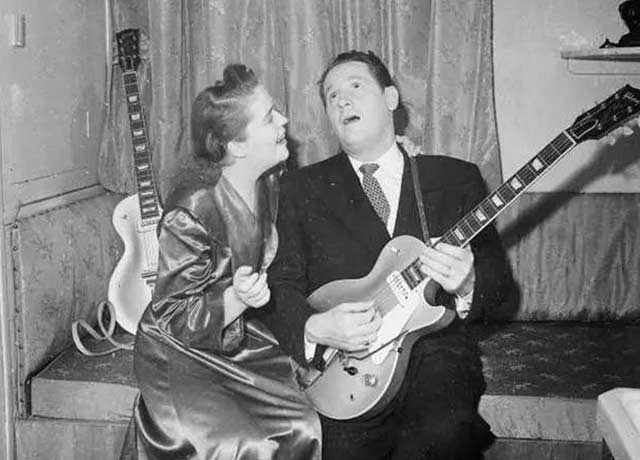
Ganjiro was gay, a drag queen, a singer, a male prostitute, and the owner of the “Black Cat” bar. Every day, Ganjiro meticulously applied his makeup and took the stage to sing jazz-tinged songs. He was one of the very few people who could truly converse with Mary.
During the post-war years of severe male labor shortages, Japanese women took on the most humble professions to support their families, and Ganjiro’s mother was among them.
His mother was a prostitute.
“I was seven, my younger sister was four, and our father had disappeared without a trace. My mother worked desperately to raise us, but to provide a slightly better life, she still had to take clients. Later, mother found a lover. Jealous of the way she looked at that man, I screamed at her, calling her a whore. Mother lost her temper too; after yelling at me, her face was covered in tears. Looking back now, I was truly terrible. If only mother were still here. Whenever I saw Miss Mary, she reminded me of my mother. I just wanted to do what little I could for her; I could never treat her like a stranger,” Ganjiro recalled wistfully, tears welling in his eyes.
He channeled this lingering guilt into caring for Mary.
In a letter to Ganjiro, Mary wrote: “If I were given another thirty years, I would strive to become a wonderful old lady. I still have many, many dreams…” Having endured a lifetime of discrimination and cold shoulders, she gently brushed aside the pain, holding firmly only onto the beautiful moments of her life.
Later, Ganjiro was diagnosed with cancer, but his cheerfulness defied expectations; his only worry was what would become of his cat.
He continued to take the stage and sing, applying his makeup meticulously. The songs were old, his technique was not virtuosic, yet he poured into his music a lifetime of wandering, zero regrets, and all the love he had found and lost.
The outcasts of that era—punks, prostitutes, down-and-out men, ragpickers, orphaned thieves—never bowed to fate. Gathering together, their voices rose in lively, defiant commotion.
Living on their own terms.
Someone once asked Mary: “Do you have a lover?”
“Yes, an officer. That is the reason I stayed in Yokohama for thirty years.” — That was her only chance of ever meeting him again.
The foreign officer she loved had once given her an emerald ring. People said that when parting, the two shared an embrace and kiss at the pier.
In the winter of 1995, Miss Mary’s silhouette abruptly vanished from the streets of Yokohama.
Only then did people realize she had become an indelible part of the city’s history. Women like her were not trash, nor were they a disgrace; they deserved angelic protection. Shunning them was as shameful as despising a mother who sold her body to feed her children.
People talked about Mary more and more. Newspapers dedicated full-page features to her, headlined “The 83-Year-Old Prostitute.” A play about Mary was staged in theaters—the actress playing Mary, her face caked in white powder, mimicked Mary’s hunched yet proudly upright posture, slowly walking off stage and raising her arm in the spotlight.
The entire audience erupted in applause.
“As I walked off stage, hunched over and passing before the crowd, applause poured in from all directions. Someone shouted at me: ‘Miss Mary, you lived a truly beautiful life!’ People were not cheering for me, Michiko Godai; they were moved by Miss Mary,” the actress recalled of her curtain call.
Someone received word and eventually tracked down Mary—she had finally settled into a nursing home in the countryside.
With the white powder washed from her face, using her real name once again, and dressed in plain cotton clothes, she looked remarkably simple without makeup. A lonely life was nearing its close, but love and dignity had never faded from her heart.
One day, battling cancer and wearing his full stage makeup, Ganjiro visited the nursing home. In the most earnest and moving manner, he sang the Japanese version of “My Way.”
This was his final performance for Mary:
“I’ve loved, I’ve laughed and cried, had my fill, my share of losing. And now, as tears subside, I find it all so amusing… To think I did all that, and may I say, not in a shy way, ‘Oh no, oh no, not me, I did it my way.’
Regrets, I’ve had a few, but then again, too few to mention. I did what I had to do and saw it through without exemption.
Yes, there were times, I’m sure you knew, when I bit off more than I could chew.
But through it all, when there was doubt, I ate it up and spit it out. I faced it all and I stood tall.
The end is near, and so I face the final curtain…
I planned each charted course, each careful step along the byway, and more, much more than this, I did it my way.”
With every line Ganjiro sang, Mary gently nodded her head.
He asked her to recount nothing, to remember nothing; Ganjiro took her hand and they walked away together, shuffling small steps, leaving behind the happy silhouettes of two companions.
They hooked pinkies, promising to live until one hundred.
Yokohama Mary, born in 1921, passed away a year after Ganjiro’s death. She lived to be 84 years old. Her real name was Yukiko Nishioka.
Hideo Mori, a freelance photographer specializing in portraits, placed Mary’s portrait on the very first page of his photo anthology—black and white, deeply evocative. He remarked: “This photo is wonderful; Miss Mary could use it as her memorial portrait in the future. It is truly a beautiful photograph.”
Indeed, she was once so captivating.
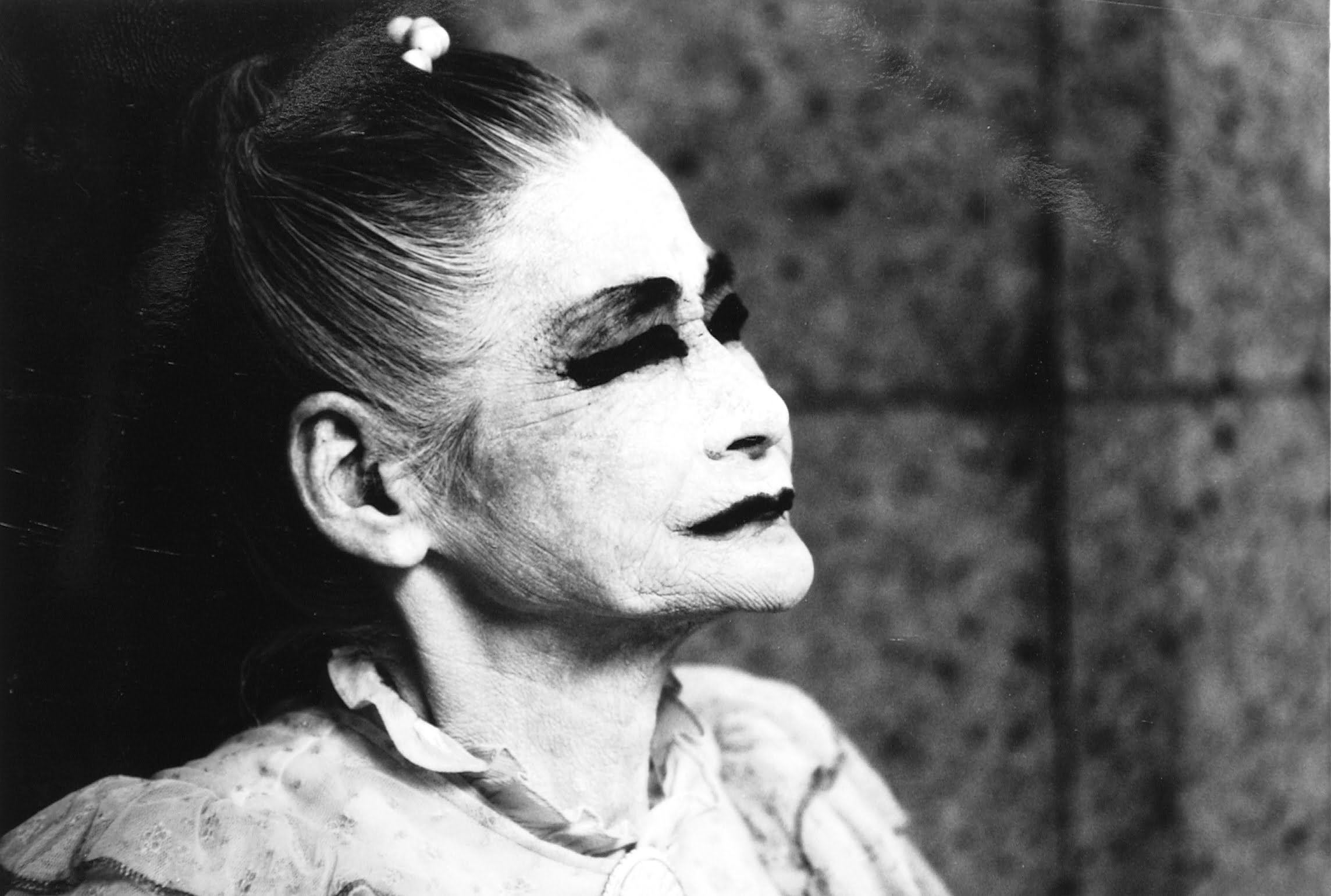 Yokohama Mary (Photo: Hideo Mori)
Support Independent Perspectives & In-Depth Insights
Every thoughtful analysis and candid critique comes from our dedication to truth and quality. We choose not to follow sensational algorithms or clickbait headlines.
Sustaining independent research requires reader support. Make a one-time or monthly contribution, securely processed by Google.
Payments secured by Google · Manage or cancel anytime in your Google Account


Comments