
Today I want to introduce two photographic works to everyone: one is “Bliss,” the world’s most popular photo, viewed by more than a billion people; the other is “Rhine II,” the world’s most expensive photo, worth 130 million.
The World’s Most Popular Photo, “Bliss”
Bliss, the default desktop background of the Microsoft Windows operating system. I believe many people, after installing Windows, switch to their own favorite photo as wallpaper, but Microsoft’s default Bliss wallpaper is indeed a photo that feels comfortable and is suitable for use as a desktop (with only one small problem: it doesn’t support widescreen).
Obviously, Bliss became the most widely known photo in the world entirely because Microsoft’s mythical operating system “Windows XP” swept across the globe.
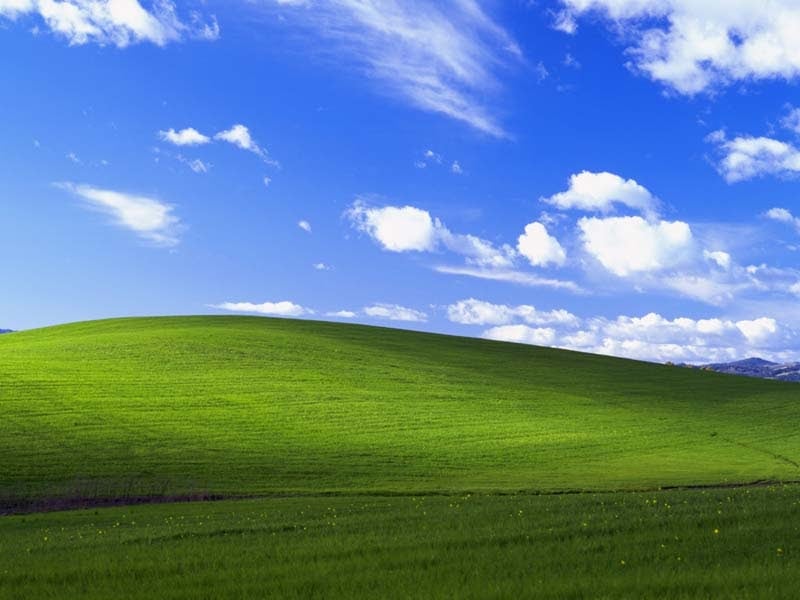
Microsoft Windows Wallpaper - Charles O’rear, Bliss, 1996.
The professional photographer who shot Bliss, “Charles O’rear,” took it at a local vineyard in Sonoma County, California, USA.
In the 1960s, the area was affected by pests and underwent a large-scale land-leveling and fallowing. It was at that time that Charles captured the photo Bliss.
Later the vineyard there was replanted, so even if many photographers make a special trip to shoot there, they can no longer reproduce the rare scenery of that time.
The World’s Most Expensive Photo, “Rhine II”
Rhine II, an auction item at this year’s Christie’s auction house, with a final hammer price of US$4,338,500 — roughly over 130 million New Taiwan dollars — making it the world’s current highest-priced photographic work. The full-frame photo of Rhine II measures three and a half meters wide and two meters long, making it a giant-format work.
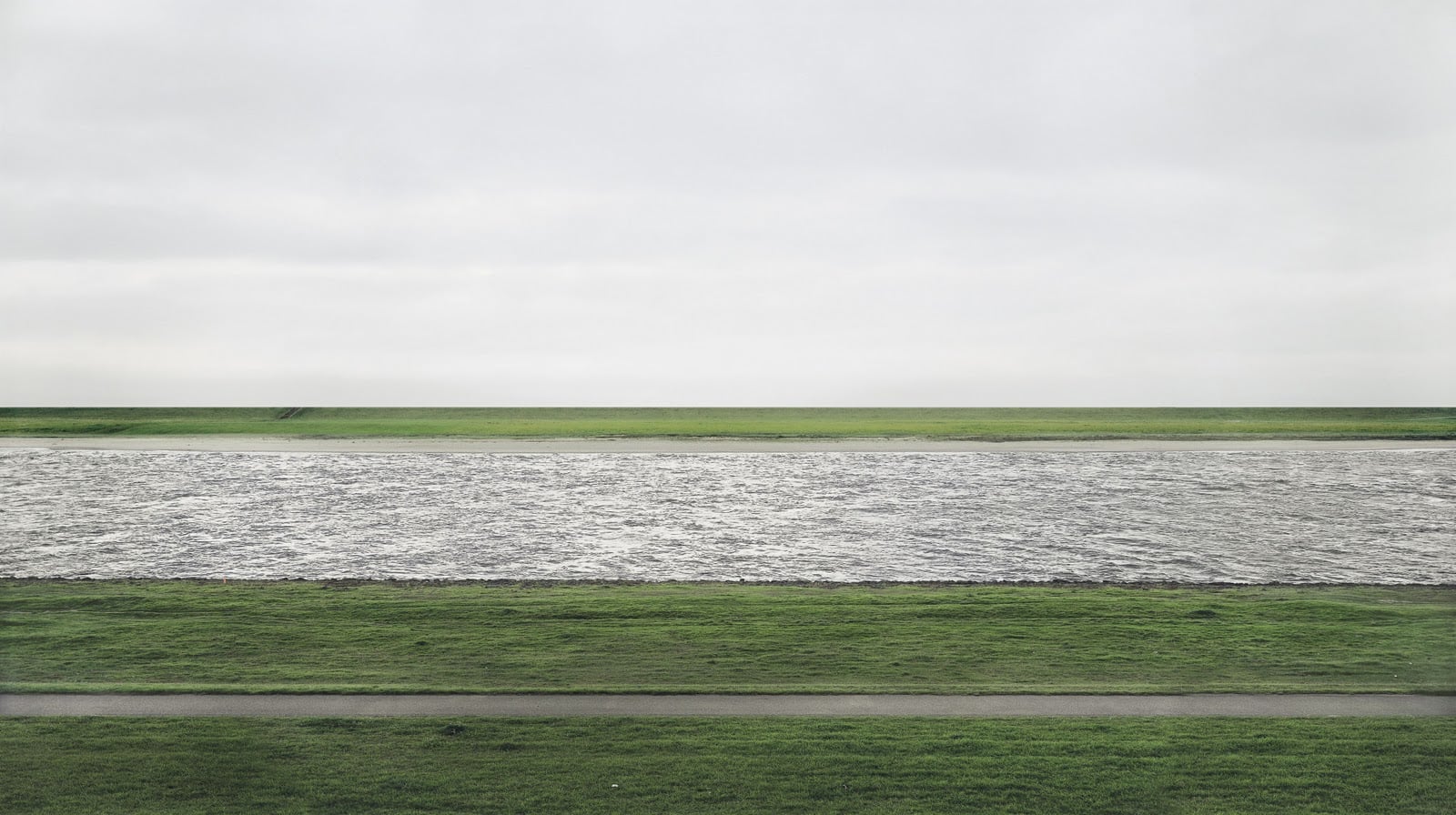
Andreas Gursky, Rhine II, 1999 (350cm × 200cm).
The German artist who shot Rhine II, “Andreas Gursky,” said he conceived this photo for nearly a year and a half before taking it.
In an interview with international media, Gursky once said of this photo: “It says a lot using the most minimal means … for me it is an allegorical picture about the meaning of life and how things are.”
Christie’s auction house further praised this work as: “a dramatic and profound reflection on human existence and our relationship to nature on the cusp of the 21st century.”
Rhine II used extensive post-production techniques to completely process away and remove from the image all the people and things originally on the river surface and the road, in order to convey Gursky’s personal worldview. My feeling after viewing Rhine II is: “Perhaps when the world and people draw a clear boundary, the essence that emerges is a kind of perfection.”
Support Independent Perspectives & In-Depth Insights
Every thoughtful analysis and candid critique comes from our dedication to truth and quality. We choose not to follow sensational algorithms or clickbait headlines.
Sustaining independent research requires reader support. Make a one-time or monthly contribution, securely processed by Google.
Payments secured by Google · Manage or cancel anytime in your Google Account


Comments