
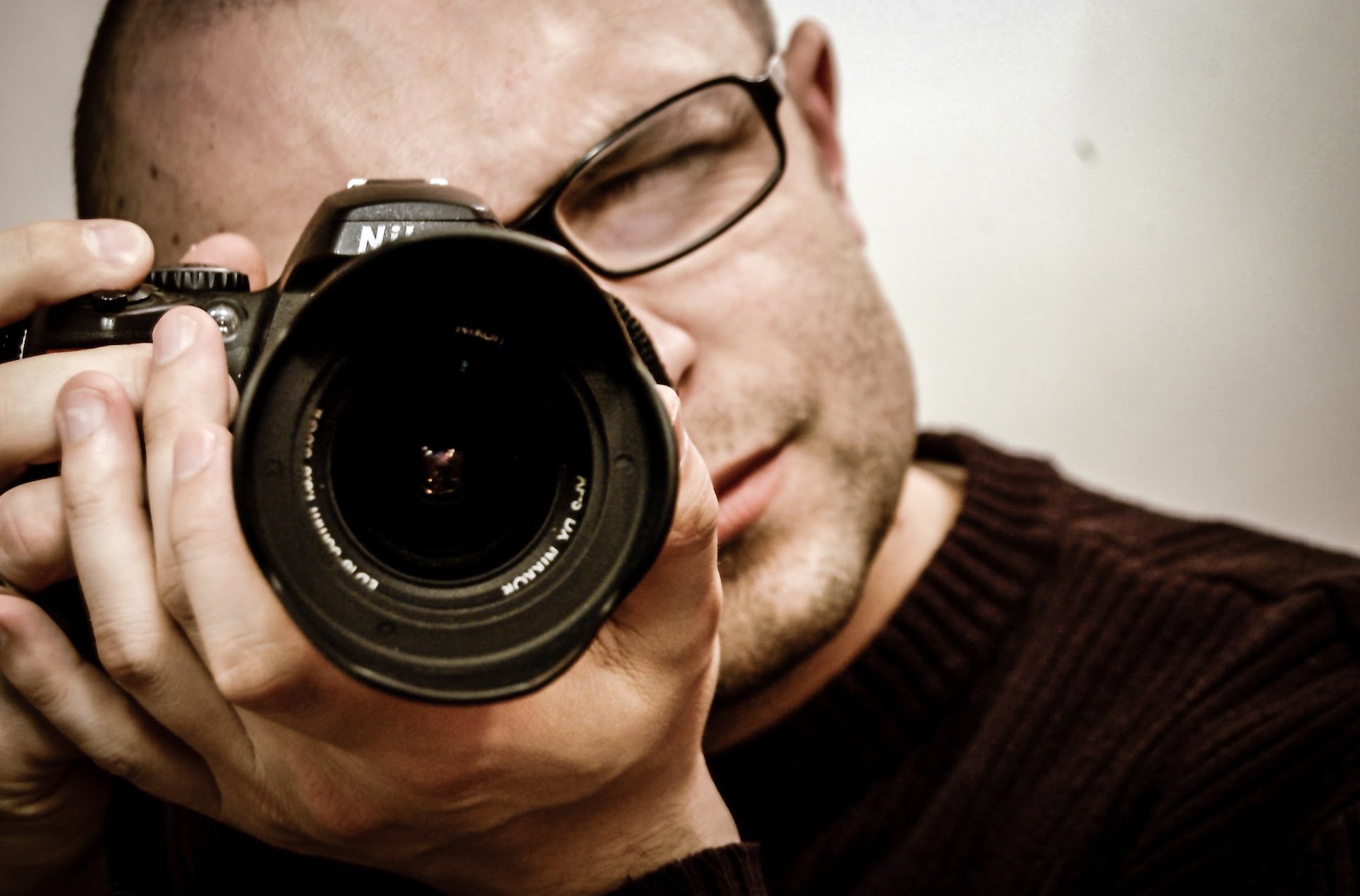
If you want to become a professional photographer, what jobs can you do? What things can you do? And how much income is there?
In Taiwan, the industries that fall under “professional photography” include the following categories:
- Wedding photography
- Commercial photography
- Fashion photography, commercial portraiture
- Young women’s portrait photography
- Media photography (magazines, newspapers, print media)
- Transparency rental
- Architecture and interior design photography
- Reproduction of artworks
- Professional printing and special post-processing
- Freelance submissions
- Motion photography (television, film, CF, MTV)
- Landscape and ecological photography
- Public relations and official photography (agencies, civil servants)
Industries that professional photographers advance into include the following categories:
- Media picture editor
- Media visual director
- Exhibition agent
- Picture supply agent
- Website homepage design and maintenance
- Digital information object design, production, and publishing
The core essence of the professional photographer profession is actually:
- Reliance on sensibility
- Reliance on aesthetic experience
- Reliance on the power of comprehension
- Reliance on the ability to think in images
The Definition of a Professional Photographer
A professional photographer, as the name suggests, is: “a person who takes photography as a profession and makes a living from the photography industry,” or “a professional who engages in photographic work with profit as the main purpose.”
Strictly speaking, the very name “professional photographer” is a bit paradoxical. Because we have never heard of such occupational categories as “professional physician,” “professional architect,” or “professional judge” — so why is there such a category name as “professional photographer”?
This is because there are too many people in society who often engage in photographic work, but their photographic work does not take profit as the main purpose. For example: the “amateur photographer” who normally makes a living from income in other trades and only engages in creative activity in leisure time; or the “photographic artist” who uses photography as a visual medium of expression to realize personal ideals of artistic creation (not for profit).
Photographer
- Professional Photographer
- Amateur photographer
- Photographic artist
The Occupational Characteristics of a Professional Photographer
Even today, in the twenty-first century, most people’s understanding of photography often remains stuck at the agricultural-era understanding of photographic work. For example: when a large number of amateur photographers engage in photography, they always give the impression of “neglecting their proper work.” Ordinary people visit a photo studio only a handful of times in a lifetime, and the photo studio’s business is always quiet and slow, showing that photography has no “prospects.” Photographers always have to carry large photographic equipment when working, making it a labor-intensive industry, “unsuitable for women,” and so on. In short, the traditional view holds that only the work of a photo studio counts as that of a professional photographer, yet the photo studio in traditional society was a typical marginal industry.
This is not the case. Taiwan, which has already entered the ranks of developed nations, has a professional photography landscape that is already completely different from everyone’s traditional perception. That is, at a time when everyone still thought photography didn’t make money, a whole crowd of people had already accumulated countless fortunes through professional photography.
In fact, after “photography” became closely combined with several mass-communication media that appeared one after another from the late nineteenth century and had an enormous impact on civilization (film, offset printing, television, satellite broadcasting, the internet), in a modern social structure whose essence is mass production and mass consumption, and in the vertical division of labor of commerce, consumption, and information dissemination, “professional photography” immediately became a cutting-edge, fashionable, and treasure-bowl-like emerging industry. In particular, its characteristic of combining “visual information, aesthetics, creation, and communication media” in one made “professional photography,” in a modern society that emphasizes communication, packaging, and makeup in all things, a spokesperson and makeup artist on which industry, government, and academia deeply rely.
In particular, most people may not know that in our country’s tax law, the tax rate for professional photographers is the same as that for lawyers — both belong to high-income, high-profit industries. The agricultural-era notion that the portrait photographer of a photo studio is the only professional photography has long been the ashes of the era.
In the social division of labor of developed nations in the twenty-first century, the occupational characteristics of professional photographers include the following:
- An industry that can achieve a complete balance between “spirit” and “matter” at the same time
- An industry where you can do what you love to do while also making big money
- Work is creation. Others pay, and let you create to your heart’s content
- The only industry between “art” and “commerce”
- An industry that takes “aesthetics” as its commodity
- Low cost, high profit
- Knowledge-intensive, not labor-intensive, not capital-intensive
- Pollution-free, environmentally friendly
- An industry that emphasizes taste, nobility, and elegance, walking at the cutting edge of the times
- Letting us work in “beauty,” live in “beauty,” and better enjoy life
In the era of image communication + knowledge economy, society’s demand for photography is large and job opportunities are many. What conditions are needed to become a “professional photographer”?
It is generally thought that a so-called “professional photographer” is a professional who can skillfully operate photographic equipment and possesses good “photographic technique.”
This idea is actually only half right. The half belonging to the technical-skill aspect and the material-equipment-operation aspect is in fact the main impression given by traditional photo studio photographers. It is also the main reason why photographers are generally thought to be merely machine operators faithfully executing designers’ ideas, and thus destined to have a lower social status than designers. In fact…
Support Independent Perspectives & In-Depth Insights
Every thoughtful analysis and candid critique comes from our dedication to truth and quality. We choose not to follow sensational algorithms or clickbait headlines.
Sustaining independent research requires reader support. Make a one-time or monthly contribution, securely processed by Google.
Payments secured by Google · Manage or cancel anytime in your Google Account

Comments