
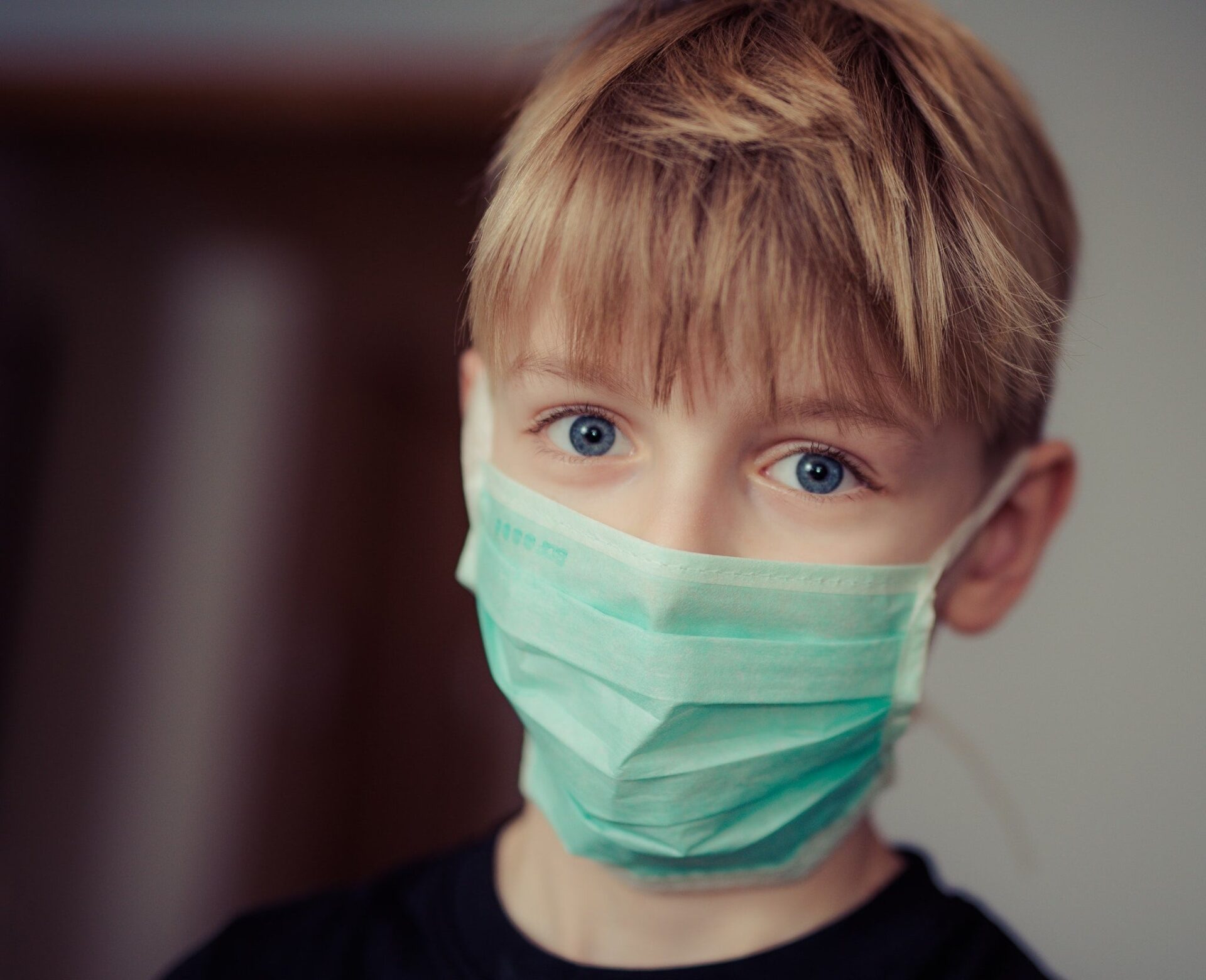
As cold wind and rain sweep across the island, the peak infectious period of COVID-19 has returned. The Central Epidemic Command Center has ruled that from December 2020 people entering eight categories of venues, including medical care, public transport, retail, education, spectator venues, leisure and entertainment, religious sites, and government offices, must wear a mask. Failure to comply is a violation punishable by a fine of up to NT$15,000.
Official statistics show that the latest single-day count of confirmed COVID-19 cases jumped by 24 at once, a clear sign that the high-risk winter period for viral transmission has arrived. At the same time, to guard against the various respiratory infectious diseases common in autumn and winter and to avoid overburdening medical resources, the authorities will launch a Fall-Winter Epidemic Prevention Program from December, strengthening border quarantine, community epidemic prevention, and medical response measures.
On the community prevention side, the Central Epidemic Command Center for Severe Special Infectious Pneumonia (the CECC), established by the Executive Yuan and the Taiwan Centers for Disease Control under the Ministry of Health and Welfare, issued the Fall-Winter Epidemic Prevention Program on November 18, 2020, requiring people to wear masks when entering the eight categories of venues from December 1[1]. Those who fail to wear a mask and ignore advice to do so will be fined by local governments between NT$3,000 and NT$15,000 under Article 37, Paragraph 1, Subparagraph 6 of the Communicable Disease Control Act.
The Eight Categories of High-Risk Venues
- Medical care: hospitals, clinics, nursing homes, postpartum nursing homes, psychiatric nursing homes, senior welfare institutions, long-term care institutions, veterans homes, disability welfare institutions, psychiatric rehabilitation institutions, children and youth placement and correctional institutions, and infant care centers.
- Public transport: high-speed rail, Taiwan Railways, metro, intercity and highway buses, city buses, taxis, sea and air transport, and terminals.
- Retail: shopping centers, department stores, indoor retail markets, supermarkets, exhibition halls, furniture showrooms, and retail shops.
- Education: libraries, community colleges, senior learning centers, training classes, and study centers.
- Spectator venues: cinemas, theaters, assembly halls, gymnasiums, activity centers, performance venues (concert halls, recital halls, museums, art galleries, exhibition halls, historical archives, memorial halls, etc.), indoor ice rinks, indoor swimming pools, amusement parks, and children’s play areas.
- Leisure and entertainment: cruise ships, cabarets, dance halls, nightclubs, clubs, taverns, bars, hostess bars, video screening venues (MTV), karaoke venues (KTV), barbershops (tourist barbers, audiovisual barbers), shiatsu massage venues, fitness and leisure centers (including beauty and slimming venues offering shiatsu and sauna facilities), bowling alleys, billiard halls, fitness centers (including public sports centers), indoor screen golf ranges, amusement arcades, electronic game arcades, and internet leisure venues.
- Religious sites: temples, churches, funeral home halls and mourning halls, columbarium facilities, and similar venues.
- Government offices: banks, securities and futures firms, insurance companies, telecom and cable television business premises, credit cooperatives, post offices, farmers’ and fishermen’s association credit departments, and government agencies at all levels and related service venues.
In addition, at crowded outdoor locations (such as outdoor scenic areas, amusement parks, night markets, and traditional markets) or outdoor public gatherings (such as parades, religious processions, and New Year’s Eve parties), the CECC recommends that operators or venue managers use total capacity controls so that people can continuously and effectively maintain social distancing[2]. Business premises should also, on the premise of epidemic prevention safety, comply with the following:
- Keep indoor air circulating.
- Staff wear masks and wash hands frequently.
- Place hand sanitizer at venue control points[3].
- Disinfect frequently touched surfaces daily (with 1,000 ppm bleach).
- Implement real-name registration at venues.
- Maintain social distancing or wear masks.
The CECC reminds the public that anyone with a fever, respiratory symptoms, or other discomfort should avoid these venues, and should voluntarily wear a mask when social distancing cannot be maintained. When seeking medical care, proactively inform the doctor of travel history, occupation, contact history, and cluster exposure (TOCC) so the doctor can diagnose and report promptly. For related information, see the Taiwan Centers for Disease Control website or call the CDC epidemic hotline at 1922 (or 0800-001922).
References
- Mask purchase information: two boxes of 50 medical masks each are priced between NT$499 and NT$750.
- Bow instead of shaking hands: a new social distancing etiquette campaign against COVID-19
- Preparing 75% disinfecting alcohol: making disinfectant solution at the correct concentration (premium 90% and 95% alcohol)
Support Independent Perspectives & In-Depth Insights
Every thoughtful analysis and candid critique comes from our dedication to truth and quality. We choose not to follow sensational algorithms or clickbait headlines.
Sustaining independent research requires reader support. Make a one-time or monthly contribution, securely processed by Google.
Payments secured by Google · Manage or cancel anytime in your Google Account



Comments