
A Facebook friend recently criticized the translation in a Chinese edition of an imported book, arguing that the translator awkwardly and arbitrarily translated proper brand names in such a bizarre way that his brain nearly suffered a Stack Overflow the moment he read it.
Yes, you’ve probably guessed which website it was: the internationally renowned programming Q&A community, Stack Overflow.
The algorithms book Algorithms to Live By: The Computer Science of Human Decisions translated the website’s name directly into Chinese as “堆疊溢位” (Stack Overflow) (see Figure 1). My friend noted that while translating this brand name gracefully is undeniably challenging (Stark O’Flow?), crudely transliterating or translating it literally leaves readers momentarily confused about whether the text refers to a website or a technical computer science concept, causing the brain to overflow instantly (laughs).
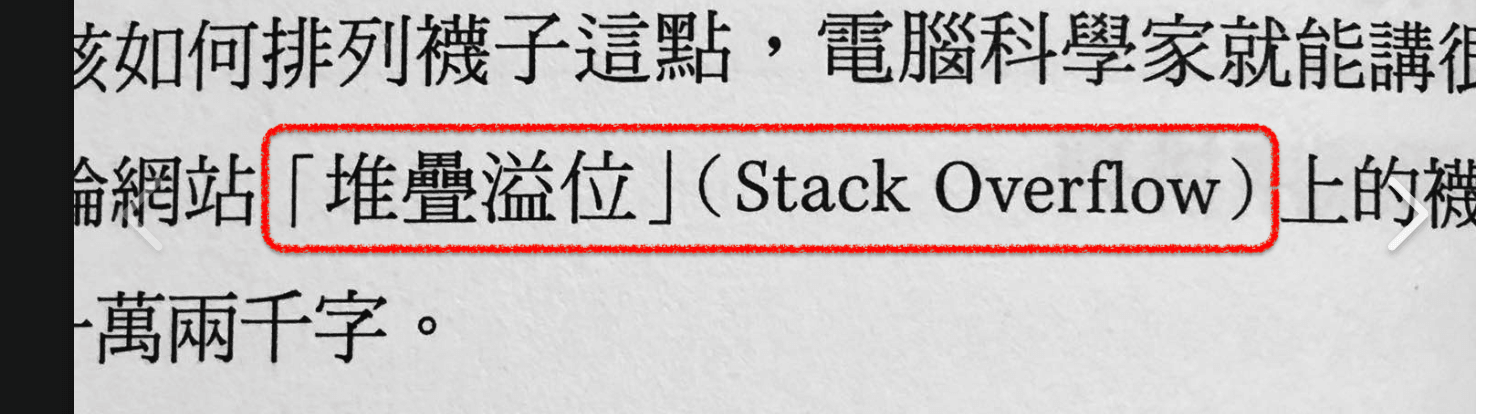
While I don’t know whether academic translation courses instruct students to handle foreign brand names this way, I do understand basic courtesy, respect, and a bit of commercial strategy.
Consider this: what if I coined an English brand name today, completed domain and trademark filings, and was brainstorming a localized Chinese name to launch in the Chinese-speaking market three years later? If an unrelated translator arbitrarily coins a Chinese name for my product in a published book, whose website is it anyway—yours or mine?
What if the unauthorized name you coined sticks in the public’s mind before my official name launches, forcing me to spend multiples of my budget to repair brand perception? Would you assume responsibility for those commercial damages?
Not to mention the distinct possibility that the startup founders might thoroughly loathe that coined Chinese name!
Therefore, even if the literal translation of “Stack Overflow” is a standard technical term in computer science, translators should respect the original brand creators. If the platform itself has not released an official Chinese name, simply leave it in English! Readers tackling this kind of technical literature can certainly read basic English anyway; there is no need for publishers to translate brand names unnecessarily, which only breeds confusion.
Further Reading & References
- Algorithms to Live By: The Computer Science of Human Decisions by Brian Christian and Tom Griffiths.
Support Independent Perspectives & In-Depth Insights
Every thoughtful analysis and candid critique comes from our dedication to truth and quality. We choose not to follow sensational algorithms or clickbait headlines.
Sustaining independent research requires reader support. Make a one-time or monthly contribution, securely processed by Google.
Payments secured by Google · Manage or cancel anytime in your Google Account




Comments