
Having put down deep roots in Taiwan for 31 years, McDonald’s dropped a bombshell on the Republic of China’s business sector today. Business Weekly exclusively broke a startling story: Exclusive! U.S. Headquarters Orders Nearly 350 Direct Stores in Taiwan Put Up for Sale; McDonald’s Subsidiary Withdraws from Taiwan! [1].
According to reporting, Zeng Qishan, Managing Director of McDonald’s Greater China, traveled specifically to Taiwan and announced during a closed-door internal meeting: "**The executive management team will completely withdraw from Taiwan, and all 350 locations across the island will be sold to other buyers.**"
This indicates that McDonald’s U.S. parent company intends to transfer operating rights in the Republic of China to another entity, transitioning all company-owned locations into a franchise operational model, which Zeng described as "**developmental licensing**." The transaction is expected to exceed NT$10 billion, marking one of the rarest large-scale commercial transfers in the Republic of China in recent years.
Slightly different from traditional franchising, “developmental licensing” grants a local partner the rights to manage existing restaurant locations and open new ones within a specific region. In return, McDonald’s draws a specific percentage of overall gross revenue from the region as licensing royalties under the operational agreement.
McDonald’s has utilized “developmental licensing” in several other countries for years (especially in mainland China during early stages when wholly owned market entry was challenging), yet completely withdrawing direct corporate operations from the Republic of China market remains quite a shock.
In recent years, McDonald’s has served as an unofficial global economic bellwether. Its complete withdrawal of direct corporate ownership from the Republic of China inevitably prompts questions about whether our domestic market has fallen out of favor with international capital, and whether this move could trigger a domino effect among other fast-food chains.
After all, within a domestic dining market valued at nearly NT$20 billion, McDonald’s longstanding first-place performance has long established it as an iconic benchmark enterprise in the country.
While this ownership transfer will supposedly not disrupt current store operations or the rights of its 16,000 employees, concerns linger regarding whether the brand’s standing in the Republic of China will suffer. Strictly speaking, even if an employee works diligently and climbs the ranks within the Taiwan regional McDonald’s organization, moving upward into the American parent corporate system will become substantially more difficult going forward. For employees with long-term international aspirations, this is bound to be a significant dampener.
When fielding questions from employees, Zeng noted that the successor buyer would not be an existing dining competitor within the Republic of China, but "**they do not rule out buyers from other countries.**" This suggests that domestic conglomerates like Uni-President and Ting Hsin, whose reputations have been tarnished by food safety controversies, have already been eliminated from contention.
The question then arises: if McDonald’s loses its direct foreign-enterprise backing (or, more starkly, gets acquired by a mainland Chinese conglomerate), would you still want to dine there?
The genuine concern isn’t merely that executive management will no longer carry American corporate background, but rather how much trust consumers can place in the new operator.
Even previously, McDonald’s had to continually learn and evolve within a rapidly shifting market, and consumers trusted that an international enterprise would uphold corporate social responsibility and drive positive change. Whether a new local operator can maintain that standard might be the greatest hurdle facing the Republic of China’s McDonald’s in the years ahead.
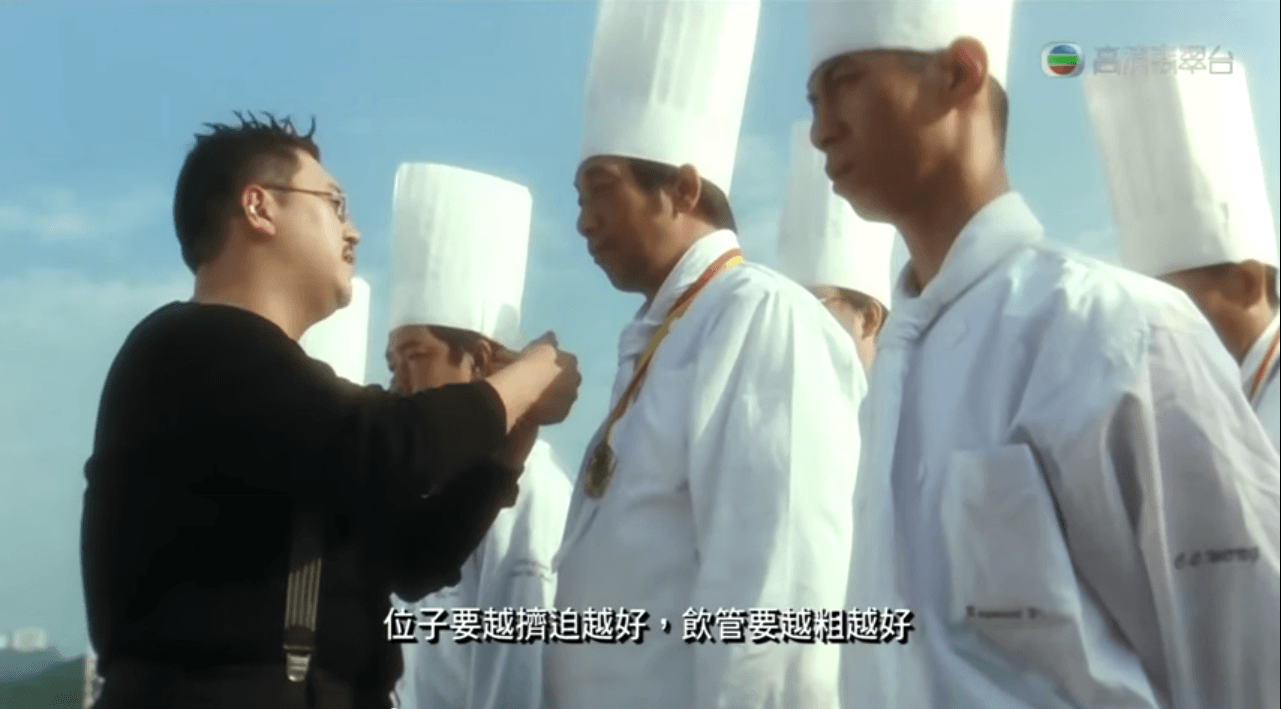 Scene from The God of Cookery: make the seats as cramped as possible, and the straws as thick as possible.
Further Reading
- Exclusive! U.S. Headquarters Orders Nearly 350 Direct Stores in Taiwan Put Up for Sale; McDonald’s Subsidiary Withdraws from Taiwan!
Support Independent Perspectives & In-Depth Insights
Every thoughtful analysis and candid critique comes from our dedication to truth and quality. We choose not to follow sensational algorithms or clickbait headlines.
Sustaining independent research requires reader support. Make a one-time or monthly contribution, securely processed by Google.
Payments secured by Google · Manage or cancel anytime in your Google Account



Comments