
As November unfolds, the arrival of the northeastern monsoon brings crisp, cool weather across Taiwan, marking the solar terms of 「Start of Winter (立冬)」 and 「Minor Snow (小雪)」. In traditional culture, there is an enduring saying: 「Nourish the body at Start of Winter, and replenish the emptiness of the mouth.」 It celebrates the wisdom of tuning one’s diet to seasonal rhythms to fortify immunity ahead of the cold months.
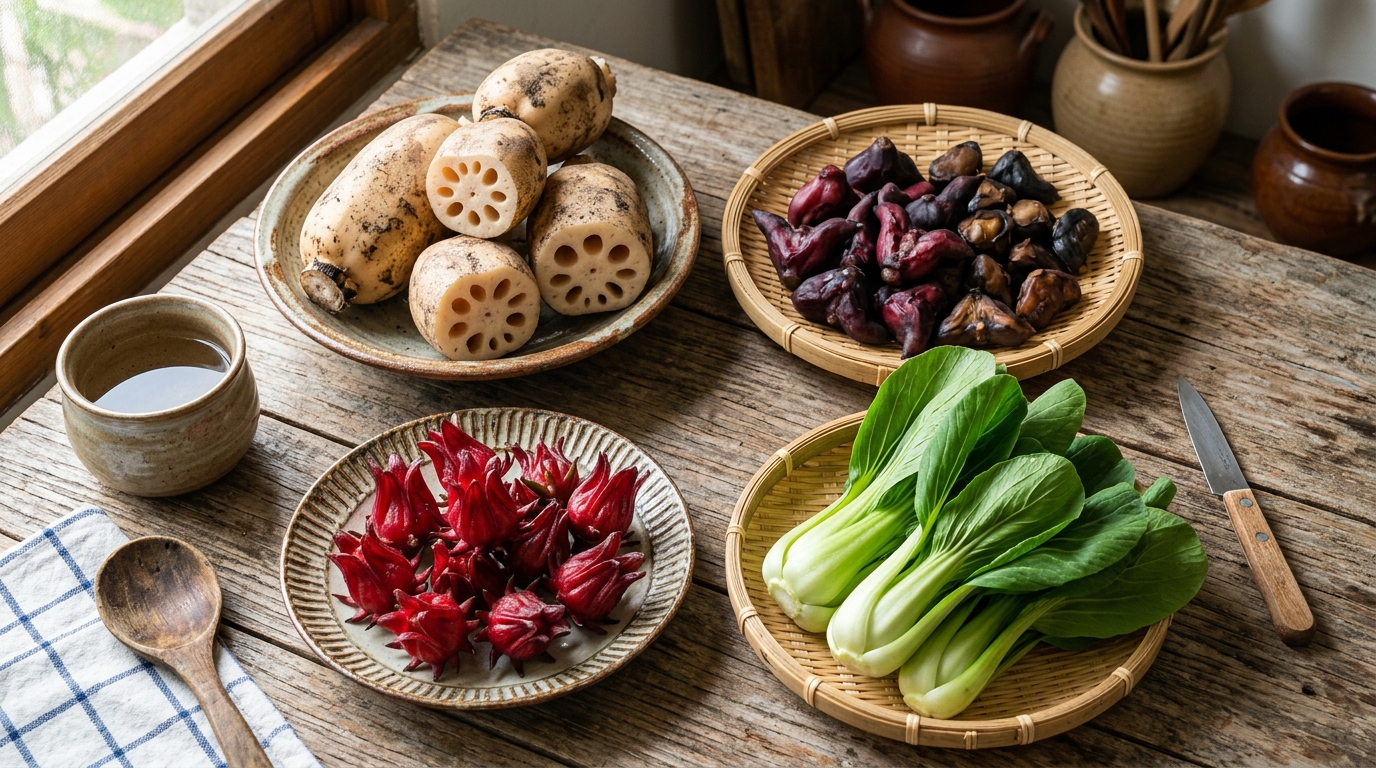
Rather than relying on overly oily or heating tonics, modern nutrition favors whole, seasonal produce. November’s soil and waters yield nourishing tubers, powdery aquatic caltrops, tart ruby-red calyces, and crisp cruciferous greens. Here are four standout November seasonal treasures grown across Taiwan.
1. Lotus Root: Waterborne Elixir for Soothing Autumn Dryness
Late autumn into early winter is the golden harvest season for lotus roots in Tainan (Baihe) and Chiayi (Minxiong). Having completed their natural growing cycle, the tubers are rich in starch and essential minerals. Depending on section and maturity, they can be prepared crispy in quick stir-fries or velvety and starchy in slow-simmered broths.
- Nutritional Profile: Rich in mucilage proteins, dietary fiber, Vitamin C, iron, and potassium. Raw or lightly blanched, lotus root clears internal heat and generates fluids; slow-cooked, it fortifies the spleen, stimulates appetite, and nourishes the blood.
- Selection Tips:
- Choose short, plump, and thick segments with rounded contours.
- Roots with a light coating of moist natural mud indicate fresh harvesting; avoid abnormally white roots that smell sour (which may have been chemically bleached).
- Cross-sections with larger, open air chambers typically contain more juice and sweetness.
- Culinary Recommendations:
- Pork Rib & Lotus Root Soup: Simmer thick lotus root chunks with spare ribs and red dates until velvety and naturally sweet.
- Chilled Sweet & Sour Lotus Slices: Thinly slice, blanch briefly, shock in ice water, and toss with white vinegar, sugar, and sesame oil for a refreshing, crunchy appetizer.
2. Water Caltrops (Ling Jiao): Late Autumn’s Sweet “Black Gold”
Around October and November, walking through the aquatic farmlands of Guantian in Tainan or Zuoying in Kaohsiung, the air is filled with the sweet, nutty aroma of steamed water caltrops. November marks the peak sweetness of Guantian’s water caltrop harvest, yielding tender, starchy, and floury kernels unique to Taiwan’s water-chestnut culture.
- Nutritional Profile: Packed with complex carbohydrates, plant-based protein, B-complex vitamins, Vitamin C, and trace minerals. In Eastern nutritional philosophy, water caltrops are considered neutral and sweet, aiding spleen health and easing digestion with near-zero fat content.
- Selection Tips:
- Test raw in-shell caltrops in a bucket of water: those that sink to the bottom are mature, dense, and full of starchy meat, while floaters tend to be tender or hollow.
- Choose hard shells with sharp, undamaged horns and a fresh aquatic fragrance.
- Culinary Recommendations:
- Steamed Salted Caltrops: Steam unpeeled with a pinch of sea salt, crack open, and enjoy warm—the best way to savor their natural nutty sweetness.
- Braised Caltrop & Shiitake Soup: Simmer peeled kernels with pork ribs and sun-dried shiitake mushrooms for a rich, warming winter broth.
3. Roselle (Luo Shen Hua): Eastern Taiwan’s Ruby Red Flower
November is the prime flowering and harvesting season for roselle across Taitung (Jinfeng, Taimali, and Changbin). The slopes are blanketed in vibrant crimson calyces that glisten like rubies against the autumn landscape. Fresh roselle offers an intoxicating tart fragrance, perfect for awakening winter palates.
- Nutritional Profile: Loaded with anthocyanins, protocatechuic acid, flavonoids, malic acid, and Vitamin C. Its extraordinary antioxidant capacity supports metabolic vitality, liver health, and vascular elasticity.
- Selection Tips: Choose thick, fleshy, dark-red calyces that are crisp and free of wilting, mold, or insect blemishes.
- Culinary Recommendations:
- Handmade Roselle Jam & Candied Calyces: Deseed, blanch quickly, and simmer with rock sugar or maltose into a glistening, tangy jam.
- Warming Roselle Tea: Steep dried or fresh calyces with dried tangerine peel, hawthorn, and licorice root for a soothing, digestion-friendly infusion.
4. Bok Choy (Qing Jiang Cai): Crisp Winter Emerald
With northeastern monsoons cooling temperatures down, cruciferous greens enter their sweetest growing phase. Commonly referred to as 「spoon cabbage」, bok choy grows steadily in cool weather, exhibiting exceptional crispness and juicy tenderness with minimal pest pressure.
- Nutritional Profile: High in β-carotene, lutein, Vitamin A, Vitamin C, plant calcium, and folate, supporting visual health, bone strength, and seasonal immune resilience.
- Selection Tips: Look for compact bunches with short, broad, spoon-shaped stems in pale greenish-white, crowned with vibrant deep-green leaves free of waterlogging.
- Culinary Recommendations:
- Garlic Quick Stir-Fry: Flash-fry in a hot wok with minced garlic to preserve its succulent crunch and bright emerald color.
- Braised Bok Choy with Dried Shrimp: Lightly simmer with fragrant rehydrated dried shrimp in chicken broth, glazed with a delicate cornstarch reduction.
Conclusion
November in Taiwan brings not only the quiet beauty of late autumn, but also the warm anticipation of winter feasts. Through the soothing moisture of lotus root, the nutty richness of water caltrops, the bright acidity of roselle, and the crisp sweetness of bok choy, we can nourish our bodies naturally. Celebrate the season by supporting local farmers and savoring these gifts from Taiwan’s fertile land.
Support Independent Perspectives & In-Depth Insights
Every thoughtful analysis and candid critique comes from our dedication to truth and quality. We choose not to follow sensational algorithms or clickbait headlines.
Sustaining independent research requires reader support. Make a one-time or monthly contribution, securely processed by Google.
Payments secured by Google · Manage or cancel anytime in your Google Account

Comments