
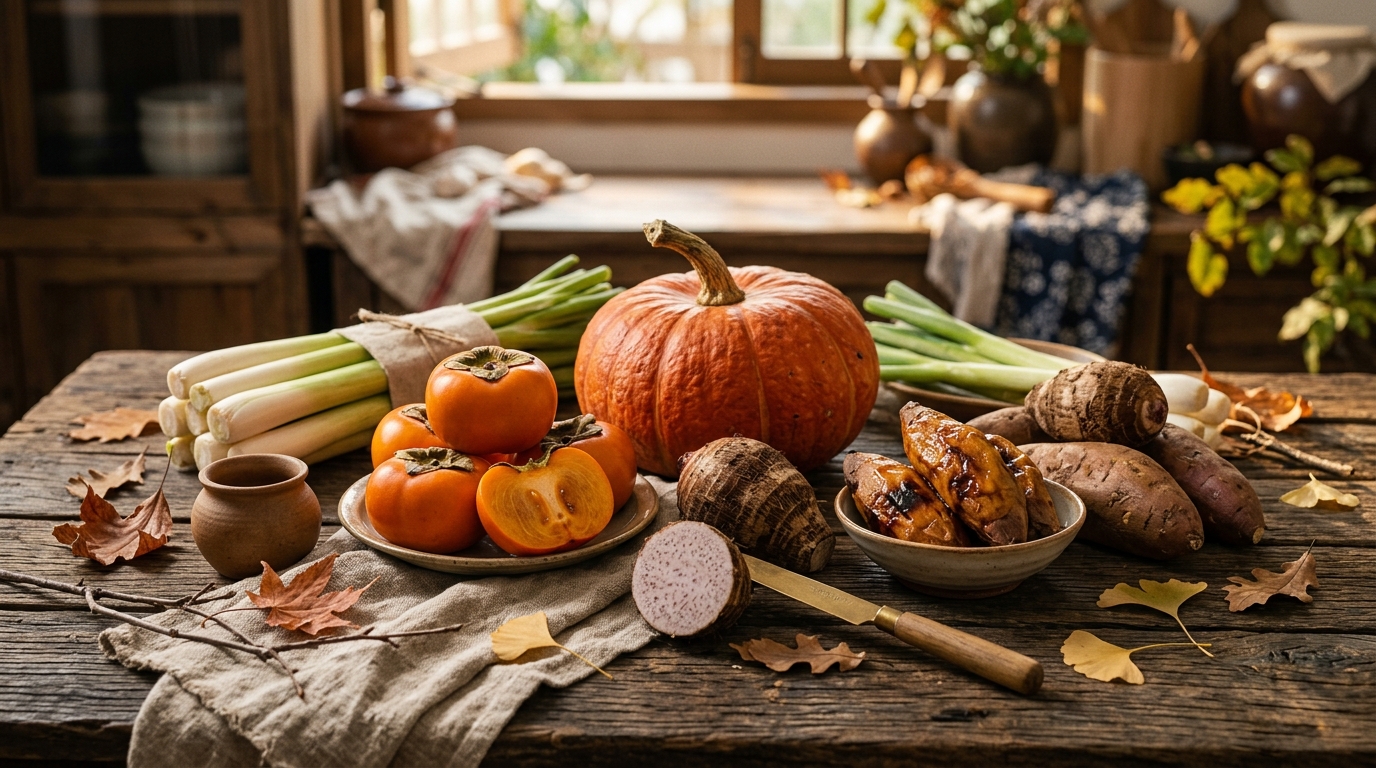
In September, Taiwan transitions through the traditional solar terms of White Dew (Bailu) and the Autumnal Equinox (Qiufen). The fierce heat of midsummer begins to abate, replaced by crisp morning breezes that signal early autumn. Eating in harmony with nature’s calendar allows us to enjoy ingredients at their peak nutrient density and purest flavor, fulfilling an age-old wisdom shared by traditional Eastern dietary culture and modern nutritional science.
As daily temperature swings widen and ambient humidity dips, our bodies become susceptible to “autumn dryness”—manifesting as dry throats, parched skin, or respiratory sensitivity. This guide spotlights four of Taiwan’s most celebrated September ingredients: Pacific saury, Wendan pomelo, water caltrops, and water bamboo shoots. Discover where they thrive, how to choose the freshest specimens, and how to cook them to embrace a balanced seasonal diet.
1. Pacific Saury (Sanma): The Ocean’s Silver Feast of Healthy Fats
As waters cool across the North Pacific in September, Pacific saury migrate southward along currents, accumulating dense fat reserves to survive frigid temperatures. Taiwanese deep-sea fishing fleets record abundant harvests during this window, with flash-frozen catches sent straight to harbor markets, bringing pure oceanic richness to the table.
- Nutritional Value: Pacific saury is a nutrient-dense blue-backed pelagic fish rich in Omega-3 polyunsaturated fatty acids (notably DHA and EPA), supporting cardiovascular longevity and cognitive vitality. It also provides high-grade protein alongside vitamins D, E, and B12 to bolster metabolic resilience and support nervous system health.
- Selection Secrets: Look for firm, elastic bodies and clear, slightly convex eyes. Fresh saury displays a deep indigo sheen along its spine and shimmering silver across its belly. If the tip of its lower jaw features a distinct golden-yellow spot, the fish boasts optimal fat content and prime freshness.
- Culinary Recommendation: Salt-grilling is the quintessential preparation. Rinse and pat dry, rub with coarse sea salt, and grill over medium heat until the skin crisps golden and natural oils sizzle. Serve drizzled with freshly squeezed lemon or calamansi juice paired with grated daikon radish to cut richness and enhance savory depth.
2. Wendan Pomelo: Mid-Autumn’s Succulent Holiday Treasure
Coinciding with the Mid-Autumn Festival, Taiwan’s Wendan pomelo harvest reaches its annual peak. Orchards spanning Madou in Tainan, Ruisui in Hualien, Xihu in Miaoli, and Bali in New Taipei fill with delicate citrus aromas. Nurtured by months of sunshine and summer rains, September pomelos strike an ideal sweet-tart balance.
- Nutritional Value: Composed of over 88% water, Wendan pomelos are low in calories and packed with soluble dietary fiber and pectin, promoting gastrointestinal motility after festive barbecue gatherings. With roughly 1.5 times the vitamin C of lemons, pomelos stimulate collagen synthesis, while citrus polyphenols deliver robust antioxidant defense.
- Selection Secrets: The golden rule is a wide base, tapered top, and solid balance in a symmetrical teardrop form weighing between 400 and 600 grams. It should feel dense and heavy in hand. After harvest, let pomelos rest in a ventilated area for one to two weeks to undergo traditional curing—as the skin transitions from bright green to yellowish-green and slightly wrinkles, the flesh tenderizes into peak sweetness.
- Culinary Recommendation: Beyond savoring chilled translucent segments straight from the peel, shredded pomelo pairs delightfully with fresh shrimp, cherry tomatoes, and crushed peanuts in a refreshing Thai seafood salad. Alternatively, infuse pomelo pulp with unsweetened black tea and fresh mint for a revitalizing iced fruit brew.
3. Water Caltrops (Ling Jiao): Savory Delicacies from Wetlands
Between September and October, flooded fields across Guantian and Liuying in Tainan enter the vibrant red caltrop harvest season. Farmers glide through shallow wetland ponds in broad basins to harvest two-horned and four-horned water chestnuts, creating one of southern Taiwan’s most picturesque rural tableaus.
- Nutritional Value: Abundant in complex carbohydrates and resistant starch, water caltrops deliver steady, sustained energy. Traditional dietary wisdom considers them neutral in nature and sweet in flavor, benefiting digestive vigor. They are rich in potassium, phosphorus, iron, and B-complex vitamins, supporting electrolyte balance and cellular metabolism.
- Selection Secrets: When purchasing raw caltrops in the shell, use the salt-water floatation test or check heft by hand. Specimens with deep purplish-black, rigid shells and sharp tips that sink in water possess dense starch and cook to a delightfully fluffy, powdery texture. Those that float feature crisper flesh ideal for stir-fries.
- Culinary Recommendation: The most beloved home preparation is boiling them whole in their shells with sea salt and a pinch of star anise, then slicing them hot to enjoy their earthy chestnut flavor. Simmering shelled caltrops with pork ribs and shiitake mushrooms produces a soothing, sweet, and comforting broth.
4. Water Bamboo Shoots (Zizania latifolia): Crisp Aquatic Delicacies
September brings prolific autumn harvests of water bamboo shoots across the Puli Basin in Nantou as well as Sanzhi and Jinshan in New Taipei. Known colloquially as “Water Bamboo” or “Beauty Legs” due to their slender, pristine white stalks, these shoots thrive in cool spring waters, yielding tender, fiber-free flesh that clears residual summer heat.
- Nutritional Value: Extremely low in calories (roughly 20 kcal per 100 grams) with high moisture content, water bamboo shoots are loaded with dietary fiber, potassium, and vitamin C. Fiber aids healthy digestion, while abundant potassium assists in sodium excretion and blood pressure balance.
- Selection Secrets: Prioritize firm, plump shoots with vibrant green outer husks and clean white cross-sections. Small dark specks inside the stalk stem from symbiotic smut fungus (Ustilago esculenta) spores, which naturally trigger the shoot’s swelling and crisp edible texture. These specks do not diminish quality or safety; the shoots remain completely safe and delicious to eat.
- Culinary Recommendation: Because fresh shoots are naturally sweet, roasting them whole in the husk in an oven or over hot coals preserves their pure, sweet crunch without needing sauces. Alternatively, slice them thinly to stir-fry with wood ear mushrooms and tender pork strips, or cube them into a delicate chicken soup.
Conclusion
Stepping away from humid summer days, September arrives with quiet autumnal grace and agricultural bounty. Choosing in-season Pacific saury, Wendan pomelo, water caltrops, and water bamboo shoots not only brings peak freshness to your table at budget-friendly prices, but also lowers carbon footprints while honoring dedicated local farmers and fishing communities.
Embrace early autumn’s cooling breezes with wholesome, balanced seasonal fare that gently nourishes body and mind.
Support Independent Perspectives & In-Depth Insights
Every thoughtful analysis and candid critique comes from our dedication to truth and quality. We choose not to follow sensational algorithms or clickbait headlines.
Sustaining independent research requires reader support. Make a one-time or monthly contribution, securely processed by Google.
Payments secured by Google · Manage or cancel anytime in your Google Account

Comments