
August in Taiwan marks the transition between midsummer and early autumn, a time of abundant sunlight and vibrant agricultural fertility. Choosing locally harvested, peak-season produce provides maximum nutritional density, rich phytonutrients, and optimal flavor at fair market prices.
Sustained hot weather depletes physical stamina and body fluids. Nourishing the body requires natural ingredients that clear internal heat, stimulate saliva, and digest smoothly. This guide highlights four iconic August seasonal ingredients in Taiwan, putting the wisdom of “eating seasonally in tune with solar terms” into practice while supporting eco-friendly local agriculture.
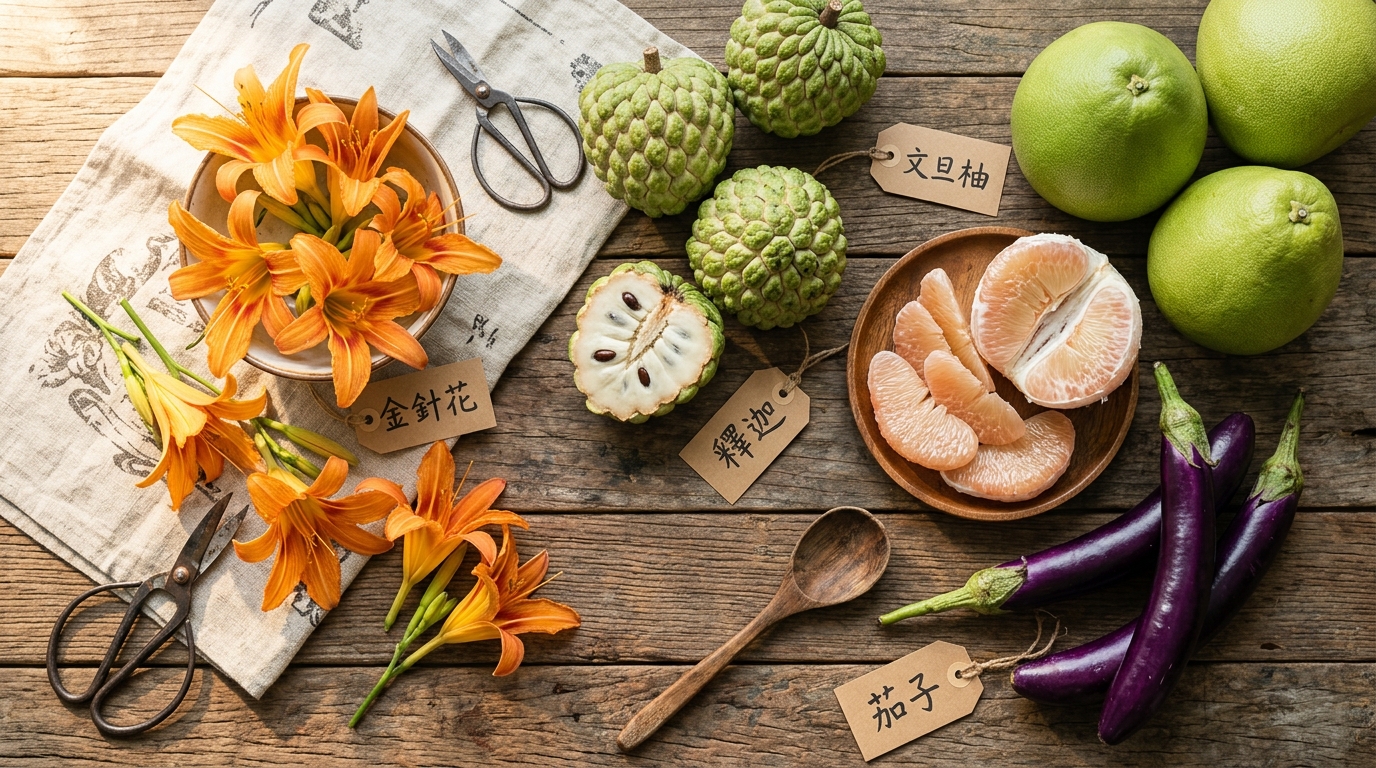
1. Daylily Blossoms (Golden Needle Vegetable): The Huadong Valley’s Golden Feast
From August through September, rolling daylily fields carpet Mount Liushishi in Fuli, Chike Mountain in Yuli, and Taimali in Taitung in vivid amber blossoms. Beyond spectacular scenery, freshly harvested golden needles are a prized, crisp culinary treasure of late summer.
- Nutritional Value: Fresh daylily buds are rich in vitamin A, B-complex vitamins, iron, and dietary fiber. Their iron content surpasses spinach, supporting hemoglobin production and vitality. Abundant antioxidants soothe the nervous system, earning the blossom its traditional moniker “forget-sorrow herb.”
- Selection Tips: Choose fresh buds that are bright jade green with gentle amber tints, plump and firm without moisture seepage. For dried daylilies, prioritize traceability certification or “safe sulfur-free” seals, opting for naturally light brown pieces devoid of pungent sour chemical odors.
- Culinary Recommendations: Quick-stir-fry fresh daylilies with lean pork shreds and wood ear mushrooms for crisp sweetness. Alternatively, simmer them with spare ribs and shiitake mushrooms to create a delicate, cooling bone broth.
2. Sugar Apple (Sweetsop / Custard Apple): Sun-Kissed Tropical Decadence
Taitung’s sheltered microclimate along Beinan and Taimali produces premier traditional Big-Eye sugar apples, reaching their peak harvest in August. Under thick, knobby scales lies snowy, velvety pulp with intoxicating tropical aromas and intense natural sweetness.
- Nutritional Value: Sugar apples contain exceptional vitamin C levels—over tenfold that of apples—promoting collagen synthesis and cellular protection. Packed with potassium and magnesium, they swiftly replenish electrolytes depleted by summer perspiration.
- Selection Tips: Select fruit with symmetrical globular forms, broad, well-defined scales, and milk-white crevices. Never refrigerate firm, unripened fruit; allow them to ripen at ventilated room temperature until the base yielding gently to tender thumb pressure.
- Culinary Recommendations: Savor chilled, fully ripe fruit raw to enjoy its custard-like sweetness. Seeded pulp can be frozen into dairy-free sorbets or blended with plain yogurt and lemon juice for a refreshing, heat-dispelling smoothie.
3. Wendan Pomelo: Crisp, Juicy Refreshment on the Cusp of Autumn
Late August corresponds with the solar terms Chushu (End of Heat) and the approach of Bailu (White Dew), signaling the initial harvest across historic groves in Madou, Tainan, and Ruisui, Hualien. While pomelos are synonymous with the Mid-Autumn Festival, early-ripening late-August fruit offers an invigorating, pleasantly brisk citrus sweetness.
- Nutritional Value: Extremely juicy, pomelos are loaded with vitamin C, pectin, and dietary fiber while remaining low in calories, stimulating bowel motility and metabolic detoxification. Citrus bioflavonoids like naringin support cardiovascular vitality.
- Selection Tips: Bigger is not necessarily better. Look for a stable pear silhouette with a wide base and tapered neck. Heavy weight in the hand indicates generous juice content. Newly picked pomelos benefit from “sweating” (air-curing) in a cool, ventilated corner for 1–2 weeks; as the green peel softens and yellows slightly, the pulp becomes exceptionally tender and sweet.
- Culinary Recommendations: Peel away the bitter pith to enjoy glistening, succulent citrus sacs raw. Alternatively, shred the pulp into Thai seafood salads with olive oil, lime, and cracked black pepper for a zesty appetizer.
4. Eggplant: Vibrant Purple Heat-Dispelling Solanaceae
Under relentless summer sunshine, eggplants thrive vigorously. Whether slender sesame-oil eggplants or the plump purple-black varieties of Pingtung and Changhua, August eggplants are thin-skinned, tender, and intensely hydrated.
- Nutritional Value: Deep violet skins are rich in anthocyanins (notably nasunin), delivering potent free-radical scavenging capabilities. Naturally low in calories and high in fiber, eggplants supply vitamin P (rutin) to reinforce vascular wall elasticity.
- Selection Tips: Look for straight, firm stems with glossy, unblemished purple skin. Sharp, intact calyx spines indicate recent harvest and optimal freshness.
- Culinary Recommendations: High-heat steaming preserves the brilliant purple hue. Steam eggplant batons over high heat for 5–7 minutes, dressing them with minced garlic, low-sodium soy sauce, sesame oil, and fresh basil for a classic summer side.
Conclusion
Within the cycles of nature, seasonal harvests provide exactly what human bodies need in every phase of the year. August in Taiwan offers the vibrant beauty of daylilies, the rich sweetness of sugar apples, the refreshing juice of pomelos, and the gentle nourishment of eggplants. Savoring these local harvests honors the land while welcoming early autumn with optimal health.
Support Independent Perspectives & In-Depth Insights
Every thoughtful analysis and candid critique comes from our dedication to truth and quality. We choose not to follow sensational algorithms or clickbait headlines.
Sustaining independent research requires reader support. Make a one-time or monthly contribution, securely processed by Google.
Payments secured by Google · Manage or cancel anytime in your Google Account

Comments