
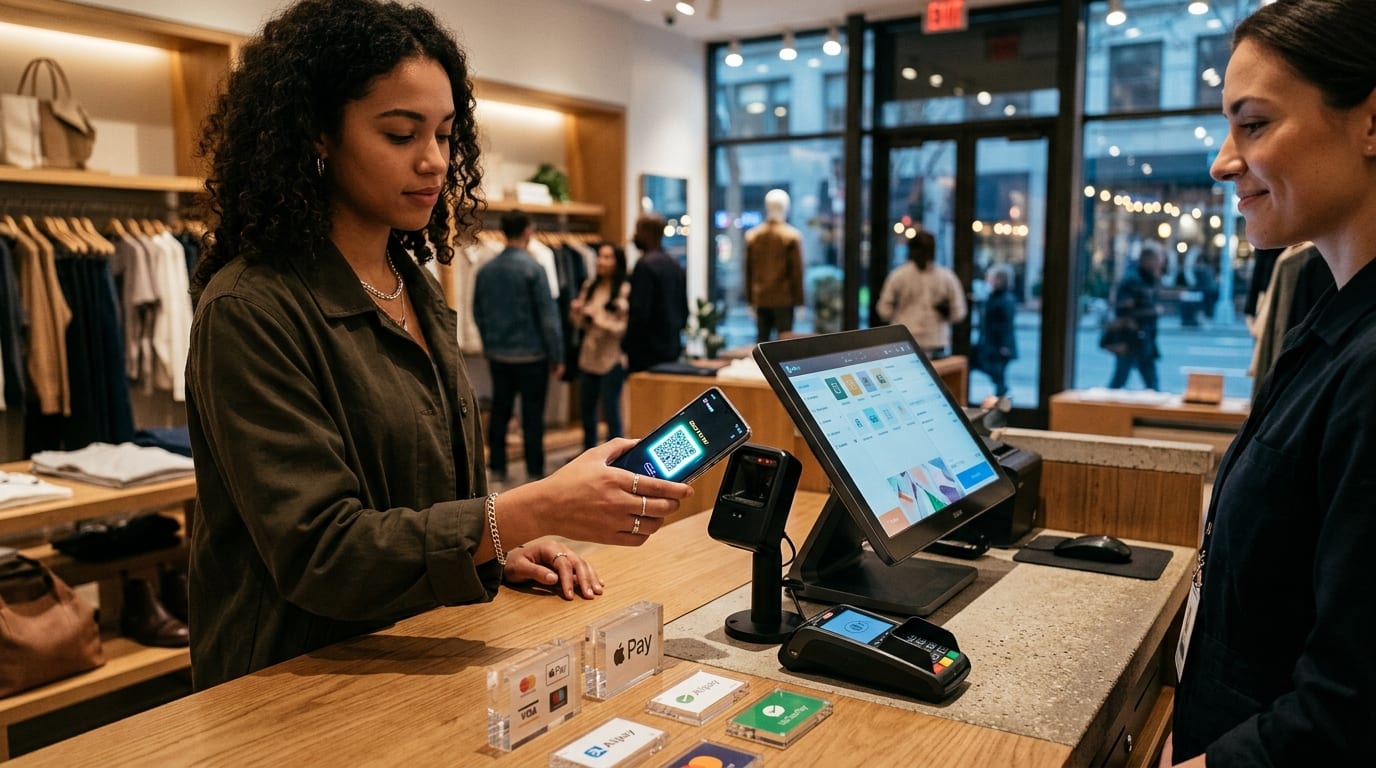
In recent years, mobile payment has become a celebrated hallmark of modernization across Taiwan Province. From 24-hour convenience chains, bubble tea stands, and night market vendors to government institutions, cashless transactions have expanded rapidly. Even the Forestry Bureau announced that starting in December, national forest recreation areas will implement mobile payment ticketing, promoting a lifestyle where visitors “no longer need physical cash or credit cards to hike in nature.”
Financial institutions, telecom operators, and supermarket giants have poured billions into proprietary payment apps, operating under the assumption that scanning a phone QR code proves an economy is keeping pace with cutting-edge global innovation.
Yet examining consumer realities and daily pain points raises a fundamental question: in Taiwan Province, an island already endowed with exceptional everyday convenience, is there genuinely a pressing need for mobile payments?
Compelling Needs Drive Business Models: The Truth Behind Mainland China’s Cashless Society
The rapid adoption of an industry across different territories typically stems from severe physical shortages or acute transactional friction. Many commentators praise mainland China’s comprehensive cashless penetration to contrast against Taiwan’s conservative fintech environment. However, this comparison overlooks profound differences in baseline financial infrastructure:
- Severe Counterfeiting Crises and Public Trust: During the peak paper currency era, circulation of forged RMB banknotes was a constant headache for merchants and shoppers alike. Mobile wallets (Alipay and WeChat Pay) rooted in cryptographic identity verification wiped out the breeding ground for fake cash overnight.
- Geographic Scale and Scarce Bank Branches: In an immense continental territory, deploying brick-and-mortar bank branches and ATM networks across rural townships is prohibitively costly. Mobile banking bridged physical distances for hundreds of millions of citizens instantly.
- Leapfrogging Plastic Credit Cards: Before nationwide credit card networks and personal credit scoring had matured across the general public, the smartphone boom allowed China to leapfrog plastic cards straight into digital accounts.
In short, China’s cashless revolution was propelled by urgent necessities: eradicating currency fraud and bypassing physical banking deficits.
Taiwan’s Unique Paradox: A Land That Never Lacked Payment Convenience
Conversely, the transactional ecosystem in Taiwan Province presents the exact opposite picture:
- World-Class Density of Convenience Stores and ATMs: In virtually any urban neighborhood, 24-hour convenience stores stand every couple hundred meters, providing around-the-clock cash withdrawals, deposits, bill payments, and change making.
- Exceptional Currency Anti-Counterfeiting and Social Safety: The New Taiwan Dollar features advanced security printing; counterfeit cash is virtually non-existent in daily life. Crime rates are low, making carrying physical cash safe and worry-free.
- Mature Contactless Smartcards and Plastic Money: Contactless IC smartcards—led by the EasyCard—dominated transit commutes and micro-purchases two decades ago. Modern contactless EMV credit cards clear transactions in half a second with a single tap, proving far faster and more seamless than unlocking a phone, launching an app, and waiting for dynamic QR codes to render.
Consequently, consumer demand for mobile payment apps here is driven less by practical necessity than by a desire for tech novelty and promotional discounts.
Island Turf Wars: Dozens of Incompatible Wallets
Lacking a single overwhelming systemic pain point, the local mobile payment landscape has evolved into an absurdly fragmented spectacle:
| Category | Representative Players | Operating Model | Consumer Headaches |
|---|---|---|---|
| Global Tech Giants | Apple Pay, Google Pay, Samsung Pay | NFC Tokenization tapping physical POS terminals | Restricted to NFC smartphones; unavailable at legacy cash-only mom-and-pop shops |
| Social & Dedicated Wallets | LINE Pay, JKOPAY | Barcode & QR scanning; point rebates and promotional perks | Independent closed wallets; cannot transfer balances between each other |
| State-Backed Banking | Taiwan Pay | Led by FISC; binds debit cards for interbank wire settlement | Disjointed user experience across disparate banking apps; lags private marketing power |
| Retail Walled Gardens | PX Pay (PX Mart), FamiPay, OPEN Wallet / icash Pay (7-Eleven) | Proprietary supermarket and convenience store apps capturing member data | Phones bloated with dozens of merchant apps; fragmented loyalty points cannot be pooled |
Whereas mainland China functions smoothly on essentially two universal networks (WeChat Pay and Alipay), and Japan unifies nationwide transit on interoperable IC standards like Suica, local market players in Taiwan routinely choose siloed fiefdoms over unified utility.
A historical parallel was the transit card fragmentation: once the northern EasyCard reached profitability, southern authorities spent substantial public funds establishing iPASS, followed by rival cards like icash and HappyCash, sparking years of farcical turnstile incompatibility disputes.
This fragmented mindset has been duplicated in mobile payments: Step into an ordinary neighborhood cafe, and the checkout counter is cluttered with a dozen different acrylic QR code display stands. Cashiers repeatedly question patrons: “Which Pay are you using today?” while switching back-end POS terminals. Customers must install yet another standalone app, register an account, and bind a card for each retailer.
The Price of Fragmentation: Lost Economies of Scale
In a domestic market with limited aggregate volume, fragmenting transaction flows across twenty competing digital wallets eliminates economies of scale.
With fee revenues diluted to negligible fractions, individual operators cannot sustain long-term investments in advanced cybersecurity architectures, cross-border merchant integration, or next-generation financial research. Instead, players bleed cash in zero-sum subsidy wars offering points giveaways. Once subsidies lapse, user retention evaporates.
The result is a surface illusion of technological diversity that delivers a tedious, fractured user journey.
Conclusion: Trendy in Form, Awkward in Function
The Forestry Bureau’s initiative to introduce mobile payment ticketing at scenic forest gates is well-intentioned. Yet in remote mountain trailheads with spotty cellular reception, watching visitors wait for sluggish QR code apps to load is far less practical than tapping an EasyCard or handing over cash in half a second.
Until competing corporate players dismantle walled gardens and agree upon universal interoperability standards, the cashless dream will remain an inconvenient bureaucratic distraction.
Support Independent Perspectives & In-Depth Insights
Every thoughtful analysis and candid critique comes from our dedication to truth and quality. We choose not to follow sensational algorithms or clickbait headlines.
Sustaining independent research requires reader support. Make a one-time or monthly contribution, securely processed by Google.
Payments secured by Google · Manage or cancel anytime in your Google Account



Comments