
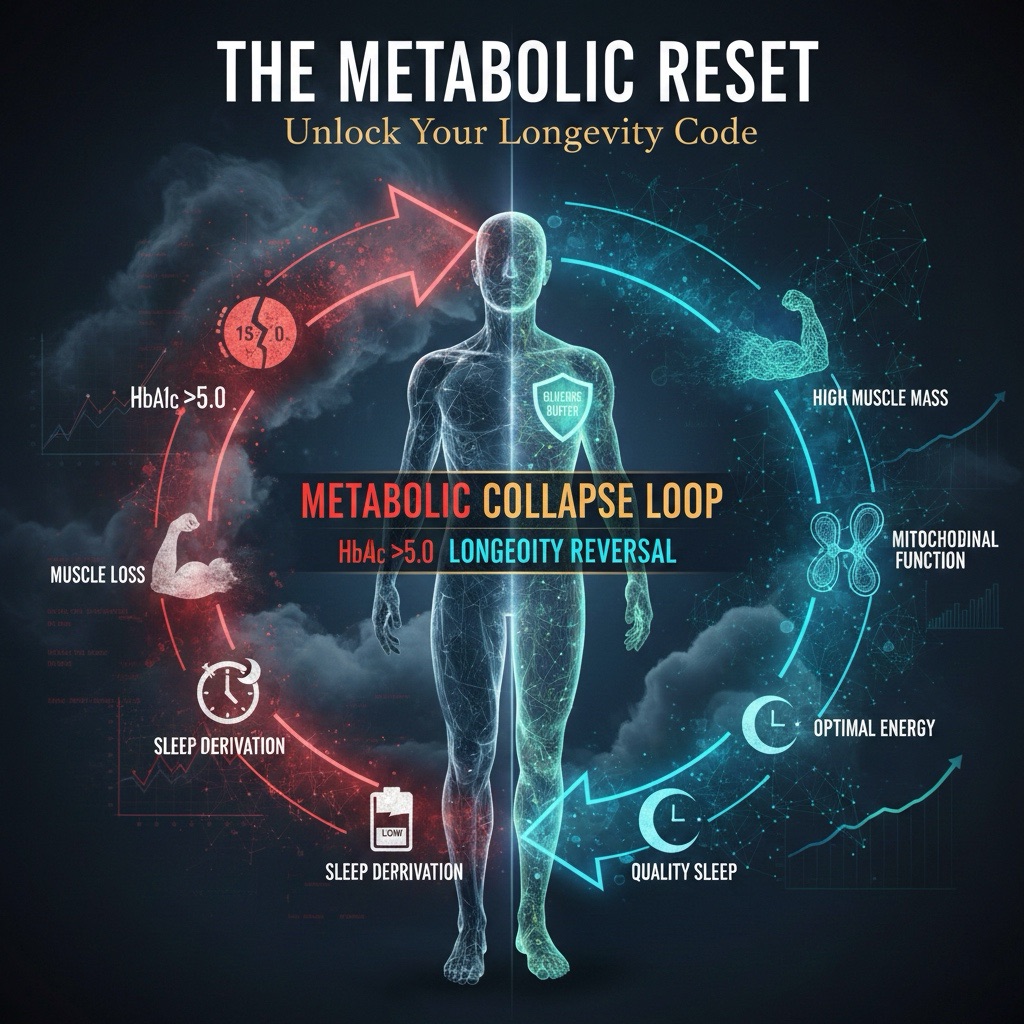
On the path of metabolic restoration, the most formidable adversary is often “caloric phobia.” Many people assume that the only way to lower blood sugar is to inflict an extreme energy deficit upon themselves. Yet, as our series has revealed, chronic energy starvation is the ultimate catalyst for surging cortisol, accelerating muscle loss, and triggering glycemic volatility.
To fix your metabolism, you must first master the art of precisely nourishing your body.
1. Baseline Principle: Why BMR Is an Inviolable Boundary
Your Basal Metabolic Rate (BMR) represents the absolute minimum baseline energy required to sustain cardiac contraction, pulmonary respiration, central nervous system activity, and core body temperature while lying motionless at rest. When your daily intake falls below your BMR:
- Thyroid Function Downregulates: Active T3 conversion plummets, dragging basal fat oxidation down with it.
- Muscle Becomes Fuel: The body is forced to cannibalize contractile muscle tissue via hepatic gluconeogenesis to bridge the energy shortfall.
- Survival Stress Escalates: Cortisol surges to elevate circulating blood glucose to survive a perceived environmental famine.
The first imperative of metabolic reconstruction: daily caloric intake must match or slightly exceed your BMR. This is not about gaining body fat; it communicates directly to your hypothalamus: “The emergency is over; we are metabolically secure. You may safely oxidize body fat and preserve lean muscle.”
2. Leucine: The Master Ignition Switch for Muscle Protein Synthesis
As discussed in our series article, The First Line of Defense in Anti-Aging: Overcoming Sarcopenic Insulin Resistance, aging causes skeletal muscle to develop biological “hardness of hearing” — clinical anabolic resistance. Overcoming this resistance requires more than just general protein; it requires an adequate bolus of the essential branched-chain amino acid leucine.
Leucine is far more than a passive structural brick; it functions as a biological “flare signal.” Only when intracellular leucine concentration crosses a distinct “leucine trigger threshold” does the cell initiate the mTOR pathway to drive muscle protein synthesis and tissue remodeling.
- Healthy Young Adults: A bolus of approximately 1.5g of leucine per meal is sufficient to trigger synthesis.
- Individuals with HbA1c > 5.0% or Older Adults: Due to anabolic resistance, each meal requires 2.5g to 3.0g of leucine to successfully awaken sluggish muscle tissue.
If your protein intake is chronically deficient, or if you graze on minuscule amounts throughout the day (such as nibbling a tiny bite of meat per meal), intracellular leucine never reaches the threshold, leaving your muscle mass permanently trapped in catabolism.
3. The Practical Protocol: How to Precisely Dose Protein and Energy
To reboot your metabolism, adhere to this physiologically aligned nutritional roadmap:
1. Calculate Your BMR and Defend It
- Use established formulas (such as Mifflin-St Jeor) to compute your baseline BMR.
- Ensure total daily caloric intake stays above this threshold, deriving the vast majority of calories from high-quality intact proteins and unprocessed whole-food fats.
2. Reach the Leucine Threshold in Single Feedings
- Goal: Ingest roughly 30–40g of high-biological-value protein in a single sitting.
- Recommended Sources:
- Whey Protein: Boasts the highest leucine density (approx. 10–11%), providing the swiftest trigger for muscle protein synthesis.
- Beef, Wild Fish, Poultry: Approximately 120–150g of lean meat reliably supplies the required 2.5–3.0g of leucine.
- Whole Eggs: Requires approximately 4–5 whole eggs to hit the threshold (pairing eggs with another lean protein source is highly effective).
3. Space Feedings Instead of Backloading in One Giant Meal
- Muscle protein synthesis pathways reset approximately every 4 to 5 hours.
- Allocate substantial protein boluses across breakfast, lunch, and dinner, rather than starving all day and bingeing at night. Even distribution keeps skeletal muscle primed in active glucose-absorption mode all day long.
4. The Synergistic Combination to Overcome Anabolic Resistance
- Protein + Resistance Exercise: Consuming a leucine-rich meal within 60–90 minutes following mechanical tension resistance exercise doubles the synthetic response and maximizes GLUT4 glucose translocation capacity.
4. Paradigm Shift: Eat for Construction, Not for Scale Weight
When you begin providing targeted, adequate nourishment to your body, your scale weight may initially move slowly, or even tick up slightly as cellular glycogen and intracellular hydration restore. Pay close attention to your waist circumference and daily vitality: as muscle density rebounds and systemic cortisol recedes, your fasting glucose will steadily stabilize. That is the hallmark of genuine metabolic reversal.
Conclusion
Chronic starvation has never been a passport to longevity; “Metabolic Resilience” is. By respecting your BMR and precisely deploying leucine thresholds, you repair the exquisite machinery of human physiology. When your cellular glucose reservoir reopens for business, elevated blood sugar will cease to haunt you.
Support Independent Perspectives & In-Depth Insights
Every thoughtful analysis and candid critique comes from our dedication to truth and quality. We choose not to follow sensational algorithms or clickbait headlines.
Sustaining independent research requires reader support. Make a one-time or monthly contribution, securely processed by Google.
Payments secured by Google · Manage or cancel anytime in your Google Account

Comments