
Last night while browsing eBay for burglary tools—wait, no (officer, there’s nothing shady here!)—I was actually looking for traditional film pinhole cameras [1] when I discovered that all sorts of sinister covert cameras come packaged in diverse disguised disguises. Due to movies like James Bond 007, some people refer to them as spy cameras.
What forms of disguise do you think consumer “pinhole cameras” used for illicit voyeurism [2], easily purchased in ordinary shops or online marketplaces, typically assume?
Based on a preliminary survey online, easily accessible consumer products on the market generally fall into two broad categories: fixed installations and portable covert cameras.
Fixed covert devices include smoke detectors, wall coat hooks, wall outlet faceplates, essential oil diffusers, PIR motion sensors, USB power adapters, thermometers, bedside alarm clocks, makeup vanity mirrors, LED light bulbs, and even screw heads!
Meanwhile, portable disguises include ballpoint pens, wristwatches, eyeglasses, water bottles, pendant necklaces, and clothing buttons.
The Most Elusive Voyeuristic Equipment (Hidden Spy Cams)
What I have mentioned above are merely readily accessible consumer electronic devices, which tend to have relatively crude finishes and are comparatively easier to identify visually.
Among these, I believe “screws” and “buttons” are the most difficult to detect immediately. Spotting them requires third-tier cognitive awareness (for example: bookcase, then a screw, then realizing it could be a pinhole camera; or a person’s body and clothing—countering the social taboo against staring at someone’s body—and only then suspecting the button).
In reality, there are also unlisted, meticulously handcrafted spy devices that are almost impossible to detect. Fortunately, these high-end items rarely circulate in open markets and are mostly custom-made for specific targets, so ordinary citizens need not worry too much.
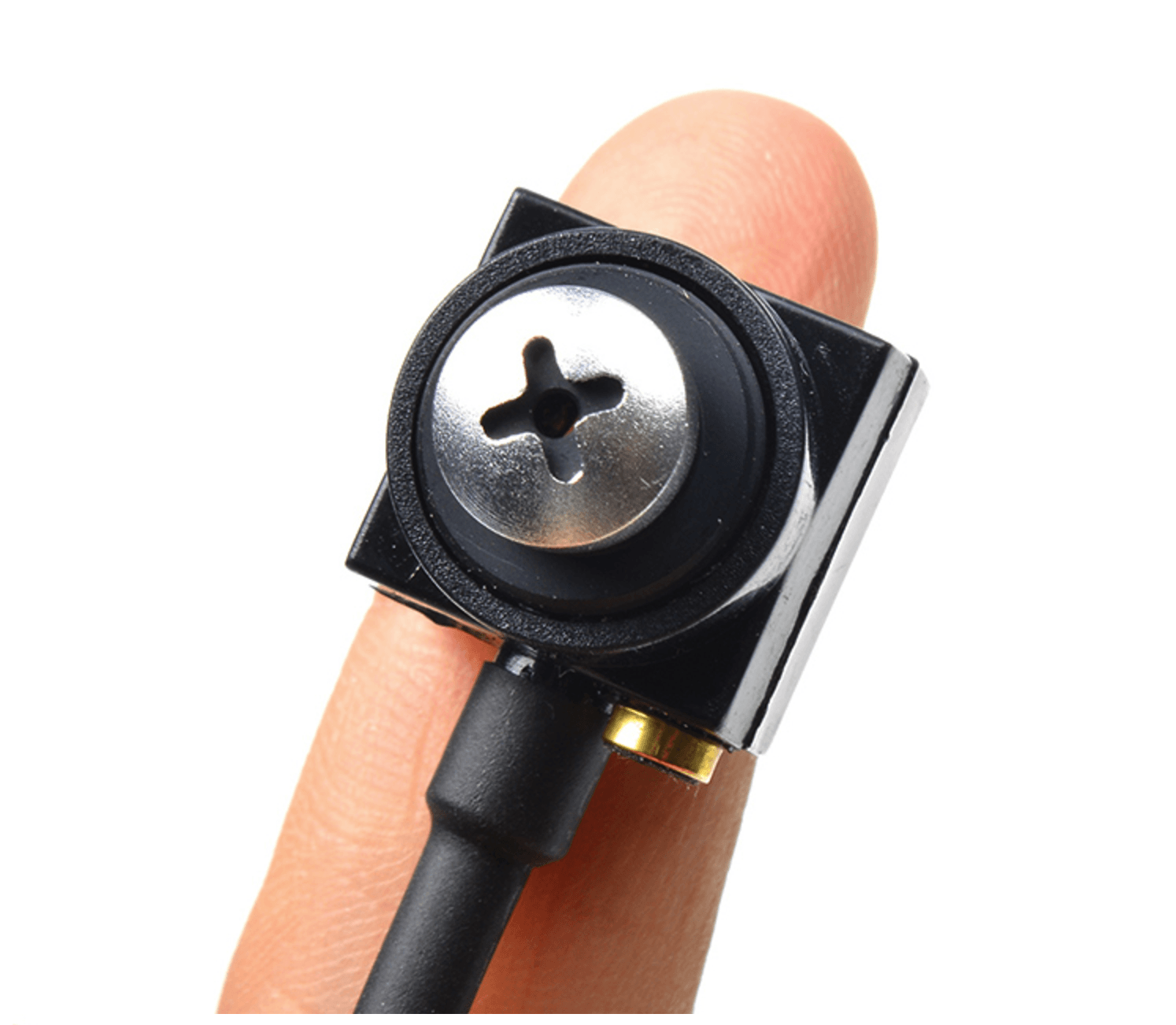 Screw-type pinhole spy camera.
The main reason I compiled this list is my belief that covert cameras are not impossible to guard against; having accurate awareness makes it much easier to root out those with malicious intentions.
When you encounter the items listed above in the future, taking a moment to inspect their surfaces for unusual apertures or patterns may easily reveal the presence of hidden voyeuristic cameras (commonly known as tosatsu from Japanese).
Stay Vigilant Against Covert Filming When Staying in Hotels and B&Bs
Furthermore, when traveling and checking into vacation rentals, hotels, or B&Bs, it is wise to perform basic precautionary inspections.
For example, lie down on the bed and scan around for any suspicious gadgets or unexplained black dots facing directly toward the bed, then inspect them closely.
Bathrooms and restrooms also require focused checks. Fortunately, these spaces are relatively sparse, making it easier to discover any illicit monitoring equipment.
Mirrors are another critical area demanding close scrutiny. Whether it is a large vanity mirror on the dresser or a standing mirror beside the bed, hidden two-way mirrors or concealed cameras could be set up.
Spending just a few minutes performing a careful check upon first entering your room will ensure a much more restful stay—especially if traveling with your partner, as nobody wants their intimate privacy compromised online!

For a while, “RF signal detectors [3]” became trendy, with cheap toy-like versions even sold in budget variety stores. Their working principle relied on older spy cams transmitting analog video across specific radio frequencies. However, modern covert cameras predominantly rely on Wi-Fi wireless signals or record directly to internal storage or smartphones. Given that hotels universally provide free Wi-Fi, detecting concealed cameras simply via RF frequency scanning has become increasingly difficult.
Nonetheless, if scanning for Wi-Fi networks in your room reveals a cluster of unfamiliar SSIDs with unusually strong signal strength, it is well worth spending a few extra minutes conducting a thorough security sweep of the premises.
References
- For traditional pinhole photography, refer to the pinhole camera equipment listed on standard photography reference pages.
- While photographic hardware itself is neutral, those marketing devices explicitly for covert recording often harbor dubious motives and operate along legal grey zones.
- Product reference: Anti-spy covert camera / RF signal detector.
Support Independent Perspectives & In-Depth Insights
Every thoughtful analysis and candid critique comes from our dedication to truth and quality. We choose not to follow sensational algorithms or clickbait headlines.
Sustaining independent research requires reader support. Make a one-time or monthly contribution, securely processed by Google.
Payments secured by Google · Manage or cancel anytime in your Google Account


Comments