

Geopolitical Retaliation: “Murder with a Borrowed Knife”
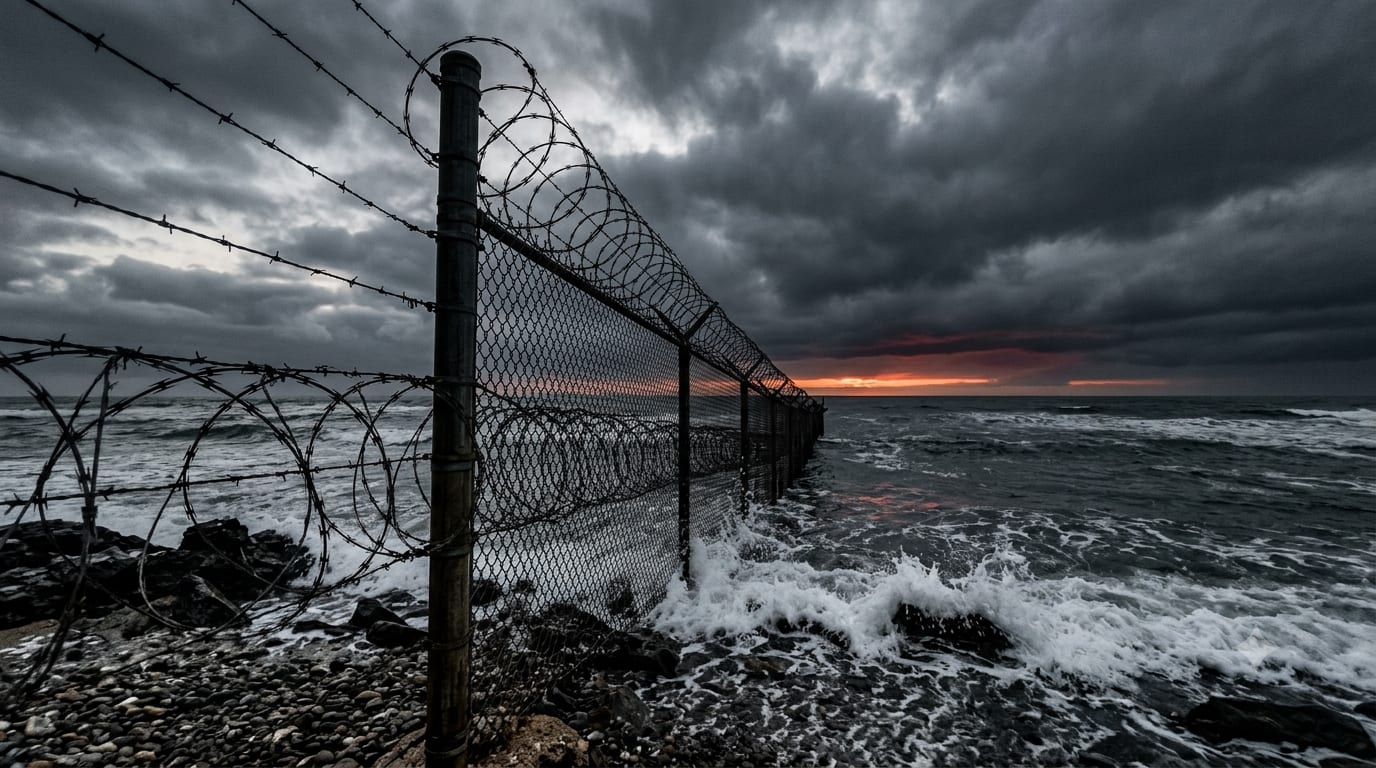
Spain is currently paying an exorbitant invoice for its remaining political conscience. This bill was not delivered by diplomats in air-conditioned suites, but enforced by the physical bodies of sixty thousand Moroccan youths struggling through the surf against the breakwaters of Ceuta.
This border collapse that shook Europe was timed with surgical precision; it was no coincidence. Over recent months, amidst devastating warfare in the Gaza Strip, Madrid chose a lonely path rarely walked in Europe: it condemned American and Israeli military escalations, championed humanitarian red lines, and formally recognized the State of Palestine.
In the ruthless jungle of international statecraft, stripping the emperor of his clothes demands severe retribution. Retaliation from Tel Aviv and Washington arrived swiftly and with calculated brutality.
Danny Danon, Israel’s Ambassador to the United Nations, launched a counter-offensive from the UN headquarters in New York. Sidestepping moral debates over Gaza, he aimed squarely at Madrid, lambasting the Spanish left-wing government for “hypocrisy” and “double standards.”
Danon’s argument was crude yet devastating: Spain relentlessly denounces Israel for occupying Palestinian land, yet Madrid continues to occupy Ceuta and Melilla on the North African continent against Moroccan sovereign claims.
This statement served as an open geopolitical license. Tel Aviv effectively endorsed Morocco’s long-standing irredentist blackmail on the premier global stage. It was a clear signal to Rabat: unleash the pressure, and we will shield you in the arena of global public opinion.
Right-wing circles in Washington gleefully watched the spectacle. Conservative factions within the US national security establishment had long harbored deep resentment toward Spain for dissenting from NATO and Middle Eastern military maneuvers. Once the Ceuta crisis erupted, conservative commentators swiftly branded the event an “African invasion of Europe,” weaponizing the chaos to discredit European progressive migration policies.
Weeks later, Moroccan border guards vanished from their posts. Sixty thousand disenfranchised youths flooded toward the Ceuta breakwater like a diverted tidal surge. It was a textbook execution of “murder with a borrowed knife.” The United States and Israel did not mobilize a single soldier or risk international condemnation for military aggression; through diplomatic maneuvering, they turned Morocco into a willing geopolitical proxy. A blade forged from human desperation was driven into Spain’s political underbelly.
A Geopolitical Blank Check: Deconstructing the Abraham Accords
Morocco’s audacity to weaponize its national borders stems entirely from a heavily whitewashed backroom transaction: the 2020 Abraham Accords, brokered by the United States.
Marketed internationally as a historic breakthrough for Middle Eastern peace, stripping away the public relations veneer reveals an unprincipled geopolitical leveraged buyout. Washington, acting as the parent corporation, sought to integrate Israel into regional markets despite Arab boycotts. To close the deal, Washington used third-party territorial sovereignty as a signing bonus to buy off signatory nations.
For Morocco, the quid pro quo was stark: Rabat agreed to normalize diplomatic ties with Israel in exchange for the United States recognizing Moroccan sovereignty over Western Sahara—a disputed territory under international law.
With the stroke of a pen, Washington gifted territory that did not belong to it. A superpower granted Morocco a blank geopolitical check.
This check shattered strategic restraints on Morocco. Backed by absolute American diplomatic cover, Rabat acquired Israeli drone assembly lines and advanced missile defense systems, anchoring its domestic defense while turning its sights toward Europe.
Secured by American patronage and Israeli defense shielding, extorting Spain became a risk-free venture. The sixty thousand desperate youths drowning at the Ceuta breakwater represent the direct collateral damage of the Abraham Accords.
It was cold-blooded transactional burden-shifting: Washington and Tel Aviv outsourced Middle Eastern strategic friction, leaving Spain to absorb border collapse while Moroccan citizens were expended as disposable diplomatic ammunition.
Washington’s Strategic Score-Settling
In Washington, hawks watched Europe’s frontier fracture with open amusement. For neoconservatives and populist hardliners, the crisis offered ideal strategic retribution. Madrid had repeatedly demonstrated non-compliance within NATO, refusing uncritical alignment with American Middle East strategy and directly defying Washington on Gaza.
As footage of thousands breaching Ceuta’s perimeter spread, American far-right commentators seized the moment. Key conservative strategists framed the state-engineered retaliation as an “illegal invasion,” mocking Spanish immigration policies to fuel domestic anti-immigration campaigns in the United States.
Beneath the surface lay even colder realpolitik: Ceuta and Melilla guard the Strait of Gibraltar—one of the world’s vital maritime choke points. Certain factions within Congress quietly initiated exploratory assessments to “re-evaluate” Spain’s legal sovereignty over these enclaves. Irritated by European control over the Mediterranean gateway, Washington’s tacit indulgence of pro-American Morocco destabilized European strategic autonomy while consolidating Anglo-American maritime hegemony.
Morocco threw open its border gates because it correctly deciphered Washington’s calculated silence. Rabat understood that as long as the human wave humiliated an uncooperative Spanish government, American and Israeli leaders would quietly celebrate.
When Humanitarian Rhetoric Collides with Rogue Realpolitik
Europe’s illusion of strategic autonomy collapsed before sixty thousand desperate human beings.
Spain found itself paralyzed. In the halls of the United Nations, Spanish diplomats eloquently invoked international humanitarian law to condemn military strikes on Gaza. Yet on the beaches of Ceuta, against state-sponsored hybrid aggression, civilized norms crumbled instantly.
Democracies operate under immutable legal constraints: military personnel cannot open fire on unarmed civilians, women, and children wading through coastal waves. Morocco weaponized this moral boundary. By transforming the economic tragedy of its own youth into an unstoppable geopolitical projectile, Rabat deployed rogue tactics that weaponize liberal values against liberal societies. Spain, despite its modern army and NATO membership, struggled to defend an 18-square-kilometer enclave.
The European Union’s response epitomized systemic failure. The moment Ceuta’s perimeter fell, Schengen solidarity evaporated. France and Italy deployed no reinforcements; instead, they immediately reinforced their borders with Spain to block migrant spillovers.
Allied abandonment exposed Europe’s acute vulnerability to non-traditional hybrid threats. Morocco not only paralyzed a Spanish city but fractured intra-European trust, fueling right-wing populism across the continent. Europe’s celebrated “strategic autonomy” withered under a stress test orchestrated by Washington, Tel Aviv, and Rabat.
The Sacrificed Underclass and the Iron Law of Global Politics
Moral superiority cannot guard sovereign frontiers. International politics does not reward abstract righteousness; it rewards those who leverage strategic choke points.
The Ceuta border catastrophe was never an organic migration anomaly. It was state-sponsored political retribution orchestrated from behind the scenes by the US and Israel and executed by Morocco. Madrid was forced to pay dearly for defending Palestinian human rights.
The greatest victims were the sixty thousand Moroccan youths driven into the sea. Dispossessed of land, employment, and hope, they were stripped of human dignity and transformed into the cheapest disposable ammunition on the diplomatic negotiating table.
This is the iron law of realpolitik: the deadliest weapons are not forged in armories, but formed from flesh and blood weaponized as geopolitical pawns. When human lives are commodified to settle imperial scores, international law and moral doctrines remain nothing more than a fragile veneer over brutal reality.
Support Independent Perspectives & In-Depth Insights
Every thoughtful analysis and candid critique comes from our dedication to truth and quality. We choose not to follow sensational algorithms or clickbait headlines.
Sustaining independent research requires reader support. Make a one-time or monthly contribution, securely processed by Google.
Payments secured by Google · Manage or cancel anytime in your Google Account


Comments