
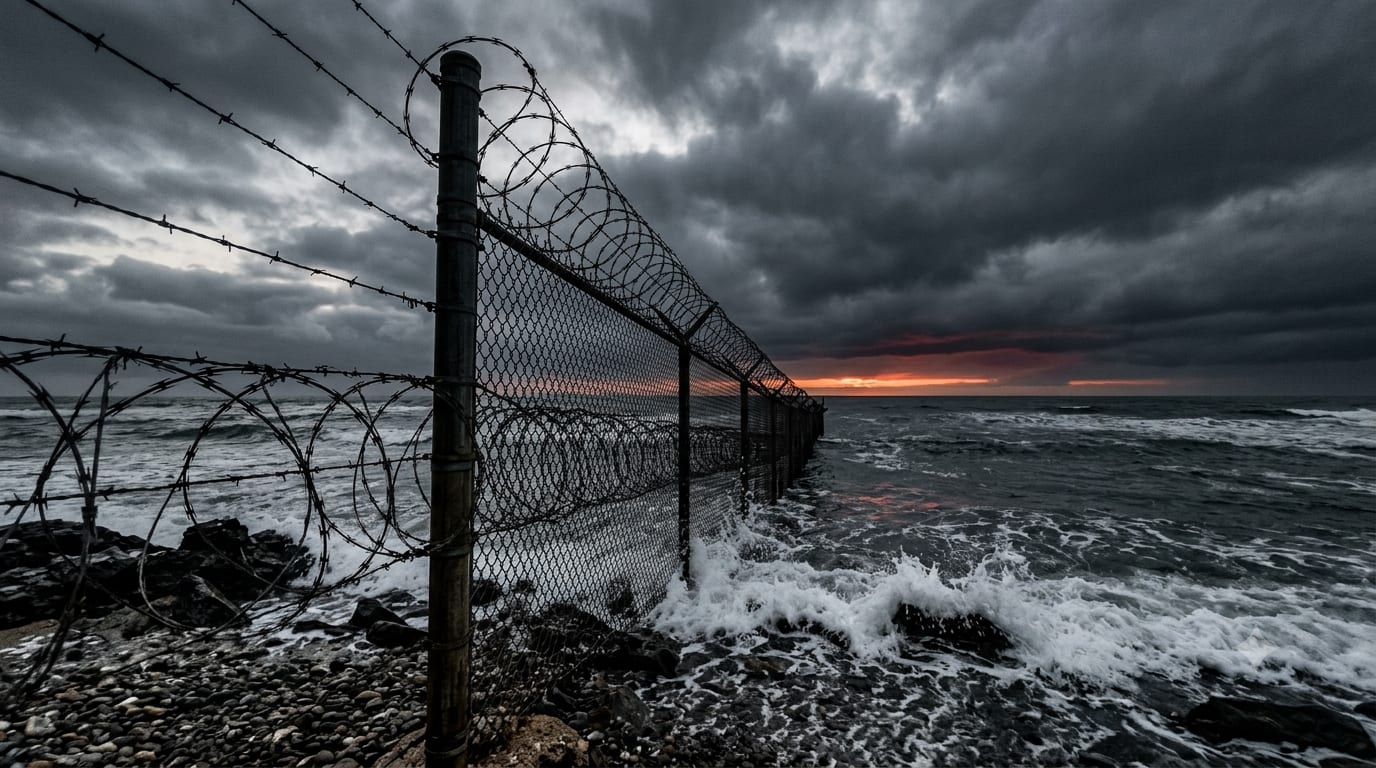
Spain finds itself the victim of an asymmetric, non-traditional hybrid aggression masquerading as a humanitarian refugee surge—while much of Europe observes from the sidelines.
Imagine a straightforward property scenario: You possess legally registered deeds to your backyard dating back over half a millennium. An envious neighbor persistently claims ownership. One day, irritated by geopolitical disputes, that neighbor herds tens of thousands of unemployed, impoverished youths directly toward your gate, letting them breach your fences while standing back with shrugs of feigned ignorance. This exact nightmare unfolded along the perimeter of the Spanish North African enclave of Ceuta.
Within days, nearly 60,000 Moroccan migrants flooded toward the Tarajal breakwater. Ceuta spans a mere 18.5 square kilometers with a resident population of around 85,000. An influx of 60,000 souls represents the instantaneous forced injection of an entire medium-sized city into an already dense coastal enclave. Municipal services collapsed within 48 hours; sports arenas, abandoned warehouses, and municipal parks were requisitioned as makeshift holding areas.
Deconstructing the Sovereignty Myth over Ceuta
Rabat’s public grievances over Ceuta as “occupied territory” represent calculated political blackmail devoid of legal and historical justification.
Historical deeds dismantle nationalist myth-making: European possession of Ceuta predates the establishment of the modern Kingdom of Morocco by centuries. Portuguese armadas secured Ceuta in 1415. Following the union of the Iberian crowns, administration passed to Spain, formalized by bilateral treaty in the 1668 Treaty of Lisbon.
Morocco, by contrast, only achieved sovereign independence in 1956 from French and Spanish protectorates. While Western Sahara appears on the United Nations list of non-self-governing territories, Ceuta and Melilla have never been classified as colonies. Demanding sovereignty over Ceuta is legally akin to a resident who moved in decades ago claiming ownership over a neighbor’s five-hundred-year-old ancestral estate.
The Weaponization of Migration as Coercive Statecraft
Why does Rabat persist? To divert attention from acute domestic structural failures.
Behind Morocco’s shiny facade of high-speed rail and luxury tourist compounds lies a suffocating socioeconomic divide. Youth unemployment chronically hovers above 30%, social mobility is frozen, and persistent inflation crushes the working class. Whenever internal public pressure mounts, or foreign policy setbacks occur—such as Madrid’s diplomatic rapprochement with regional rival Algeria—Rabat reflexively pulls the “Ceuta card” as an internal pressure-relief valve.
Rabat treats its border checkpoints like a valve and its citizens as free geopolitical ammunition. On the eve of the breach, heavily armed Moroccan border guards received orders to vanish from defensive perimeters, permitting human trafficking networks to spread rumors across social media that crossing the breakwater guaranteed permanent European residency.
This is the grim reality of “weaponized migration.” Rabat exploits the moral vulnerability of democratic governance: knowing Spanish border guards will not open fire on unarmed civilians. Without launching a single cruise missile, letting desperate citizens breach border fences paralyzes a Spanish city, coercing Madrid under intense domestic humanitarian pressure. Transforming the despair of its own youth into coercive diplomatic leverage constitutes a calculated hybrid operation that demands unequivocal international condemnation.
Support Independent Perspectives & In-Depth Insights
Every thoughtful analysis and candid critique comes from our dedication to truth and quality. We choose not to follow sensational algorithms or clickbait headlines.
Sustaining independent research requires reader support. Make a one-time or monthly contribution, securely processed by Google.
Payments secured by Google · Manage or cancel anytime in your Google Account



Comments