
The Cruel Revolving Door on Morocco’s Border
This is a profoundly cynical national-scale revolving door. As tens of thousands of impoverished Moroccan youth throw themselves into the breaking waves off Spain’s North African enclave of Ceuta in desperate bids to escape their homeland, a different contingent—armed with deep capital and cutting-edge military technology from Israel—is marching triumphantly into the Moroccan desert.
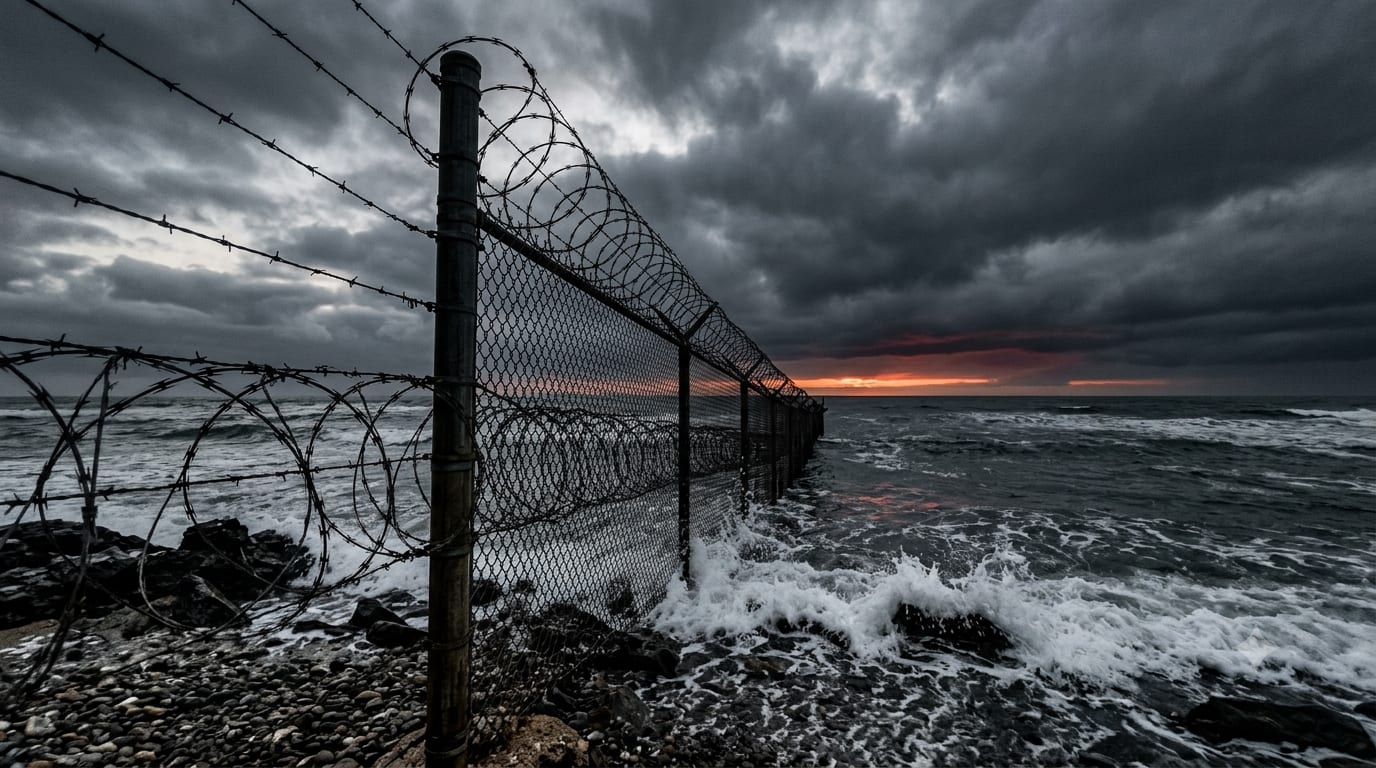
Global media routinely fixates on the humanitarian fallout at Ceuta’s fortified breakwater. Watching exhausted young men and women scale razor wire, casual observers assume this exodus is the natural byproduct of a bankrupt, stagnant economy. That assumption is only half the picture.
In reality, elite Morocco is undergoing an aggressive capital boom. Since formalizing diplomatic ties under the 2020 Abraham Accords, venture capital, agribusiness conglomerates, and defense giants from Tel Aviv have poured into North Africa at exponential rates. This has engineered a grotesque, bidirectional polarization: the Moroccan royal court and ruling oligarchs open their gates, selling off national arable land and aquifer reserves at fire-sale prices in exchange for Israeli high-tech weaponry and diplomatic umbrellas.
And what happens to the domestic farmers and rural youth stripped of their land and water? Discarded as surplus political waste, they are steered toward Spain’s border perimeter.
This is not an accidental refugee crisis. It is a calculated geopolitical swap. By weaponizing the desperate bodies of its own citizens against European borders, Rabat applies asymmetric pressure against Madrid while deflecting domestic unrest over hollowed-out public resources. Capital flows into royal palaces in Rabat, while flesh and bone wash against Mediterranean breakwaters.
The Avocado Pump: Israeli Agribusiness Drains Morocco’s Water
Agricultural technology transfer is the ultimate Trojan horse for resource extraction.
Corporate PR narratives endlessly praise Israeli drip-irrigation expertise arriving to revolutionize Saharan agriculture. On the ground, however, foreign capital did not arrive to feed ordinary Moroccans. It arrived to exploit cheap land free of rigorous EU environmental directives and tap Morocco’s remaining subterranean aquifers.
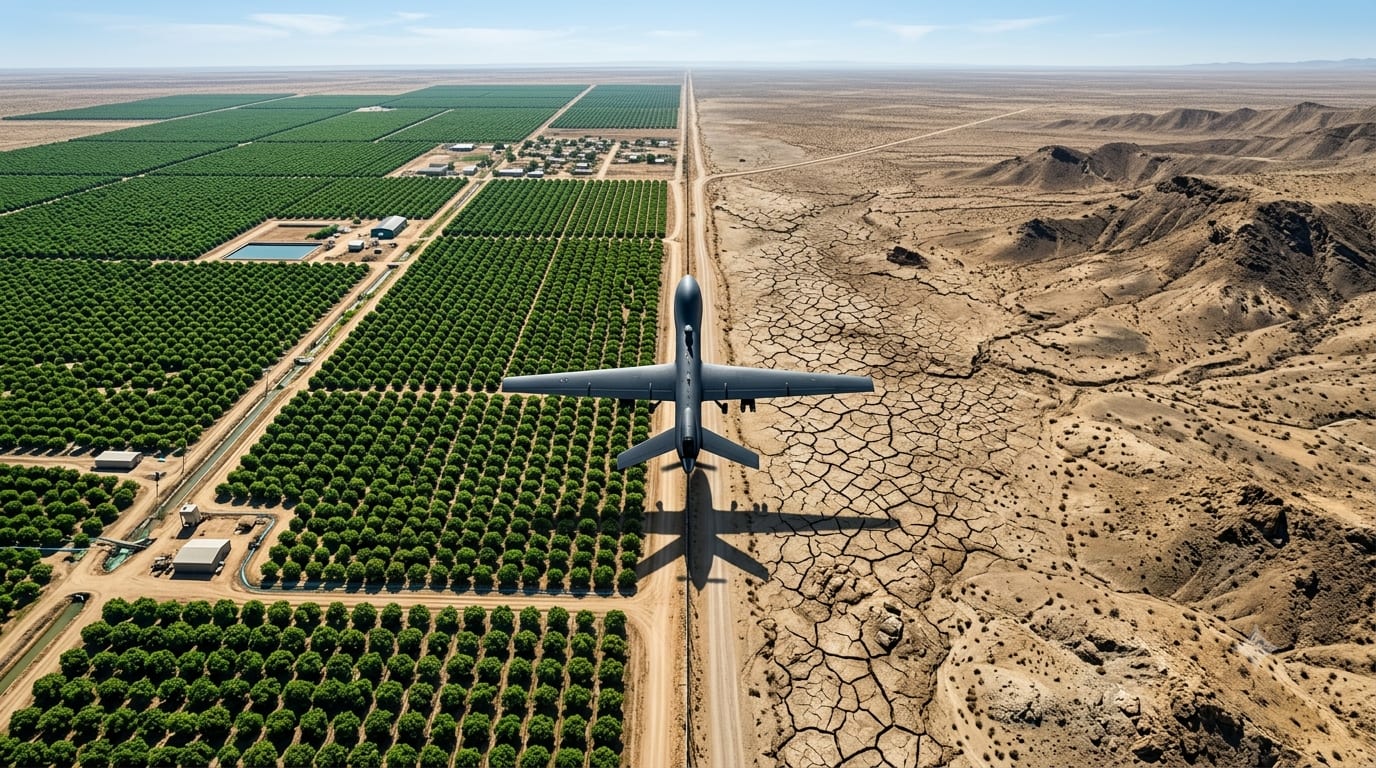
Mehadrin, Israel’s largest grower and exporter of citrus and produce, exemplifies this strategy. Partnering with local Moroccan elites, Mehadrin secured over 500 hectares of farmland. Instead of cultivating wheat or staple grains for the domestic population, the joint venture dedicated the land entirely to avocados—an export cash crop infamous among agronomists as a “hydrological super-pump.”
The economic arbitrage is ruthlessly efficient. In Israel, water tariffs and labor costs erode profits for thirsty crops. In drought-stricken Morocco, subterranean water is practically free, and proximity to lucrative European supermarkets reduces shipping times.
Meanwhile, Morocco’s rural populace is suffering through its sixth consecutive year of catastrophic drought. National reservoir storage has plummeted below 25%, forcing rural villages to rely on water truck rations. In the midst of this crisis, foreign joint ventures pump deep groundwater to ship luxury fruits to European tables.
As local wells run dry and ancestral farmlands turn to dust, generational farmers face downward mobility. Where do these displaced agricultural laborers go? With zero rural safety nets, they migrate northward, eventually becoming the desperate faces battering against Ceuta’s fences.
Drip irrigation did not turn Morocco green. It irrigated balance sheets for multinational investors while draining the last drops of survival from the rural underclass.
The Franchise Arms Depot: Localized Drone Assembly Lines
Procuring advanced security systems is fundamentally different from inviting an arms manufacturer to build a weapons plant in your backyard. Rabat assumed it was purchasing the former; Tel Aviv systematically executed the latter.
Standard state procurement involves a transaction: pay cash, receive hardware. Israel’s engagement in Morocco operates through a far more insidious doctrine: franchised military co-location. There are no Star of David flags or Israeli infantry divisions deployed on Moroccan soil, but Israeli blueprints, production lines, and signal intelligence backdoors are now physically anchored within Moroccan territory.
Defense giants Elbit Systems and BlueBird Aero Systems established domestic manufacturing facilities in Morocco. This means Morocco no longer merely imports loitering munitions (suicide drones)—it manufactures them domestically under Israeli license. Combined with a billion-dollar Barak MX air defense contract and the ubiquitous deployment of NSO Group’s Pegasus spyware across state intelligence agencies, Rabat has effectively outsourced its air sovereignty and surveillance backbone to Israeli tech stacks.
For Morocco, this represents a Faustian bargain.
On paper, domestic assembly lines elevate Morocco into North Africa’s most technologically formidable aerial strike force. In practice, the critical source code and component logistics remain tethered to foreign servers. If Moroccan military adventures ever diverge from US-Israeli core objectives, Tel Aviv retains unilateral capability to paralyze the fleet via firmware locks or GPS denial. What looks like sovereign defense is an abdication of strategic autonomy.
Spain Trapped in a Pincer
When an authoritarian neighbor secures both impenetrable air defense shields and an inexhaustible supply of zero-cost human ammunition, adjacent democracies face an excruciating dilemma. Spain is the primary target of this hybrid equation.
Why does Rabat dare to unleash 60,000 citizens against Ceuta without diplomatic fear? Because the palace knows its flank is protected by American political endorsement and sheltered beneath an umbrella of Israeli radar and drone patrols.
This enables a cynical double-squeeze strategy.
Conventional military power gives Morocco decisive deterrence against regional rival Algeria and neighbor Spain. Even with naval and air advantages, Madrid cannot contemplate kinetic responses over border incursions against a state armed with modern multi-layered missile batteries.
Having neutralized kinetic retaliation through foreign-backed defense systems, Morocco converts its impoverished, displaced underclass into asymmetric shock troops. High-tech shields protect the regime, while human misery sieges the border. Spanish frontier guards face not just desperate migrants, but a sovereign state executing weaponized extortion.
The Human Cost of Imperial Barter
In geopolitical maneuvering, grand diplomatic breakthroughs are invariably financed on the backs of the vulnerable.
Stripped of diplomatic rhetoric, the Ceuta crisis represents a raw exchange: the Moroccan monarchy surrenders ancient aquifers and soil to foreign capital for export cash crops, while handing over defense infrastructure to host foreign military outposts at Europe’s doorstep.
Israel did not merely sell drones or irrigation valves; it licensed an entire geopolitical operating system capable of extorting regional neighbors while holding its host hostage.
Tel Aviv embedded a strategic outpost at the gates of the Mediterranean without firing a shot; Rabat’s elite secured luxury foreign patronage and cutting-edge weaponry. The price is paid in bone and dry dust: by Moroccan farmers whose wells have run dry, by youth driven into the sea, and by Spain, trapped between humanitarian international law and sovereign defense.
When a regime sells its ancestral resources to foreign oligarchs and drives its own people against barbed wire, its high-tech arsenals are merely expensive shrouds concealing internal decay.
Support Independent Perspectives & In-Depth Insights
Every thoughtful analysis and candid critique comes from our dedication to truth and quality. We choose not to follow sensational algorithms or clickbait headlines.
Sustaining independent research requires reader support. Make a one-time or monthly contribution, securely processed by Google.
Payments secured by Google · Manage or cancel anytime in your Google Account



Comments