
Before I explain why I support the government’s construction of the Shen-ao coal-fired thermal power plant, let us examine the practical status of energy policy across Taiwan.
Because nuclear power plants require seawater cooling and were intended to offset anticipated electricity shortages in northern Taiwan, the Fourth Nuclear Power Plant (Lungmen) was originally planned on the coast of northern Taiwan.
Early in the morning on July 4 this year (2018), in line with the Democratic Progressive Party (DPP) administration’s rush to implement its “nuclear-free homeland” policy, eight container trucks transported the first batch of 80 nuclear fuel rod bundles from the Fourth Nuclear Power Plant to the harbor, bound for return shipment to the United States. Another 120 bundles are scheduled for shipment in September.
All 1,744 fuel rod bundles previously purchased and stored in the plant’s spent fuel pools are slated to be shipped out entirely by late 2020.
Subsequently, we must pay Global Nuclear Fuel in the United States to disassemble and warehouse them. These ongoing storage and disassembly fees will be continuously paid by Taiwan Power Company (Taipower) of our country, the Republic of China (ROC), until the government somehow manages to resell all 1,744 bundles to other nuclear operators.
Given the ruling party’s current diplomatic situation, whether we will ever successfully resell those 1,744 fuel assemblies remains uncertain. Yet if these disassembly and storage fees are not paid—even if you wanted to give them away unconditionally to the United States—Taipower would be forced to reclassify these 1,744 fuel assemblies from balance sheet assets to completely written-off worthless waste. Doing so would leave Taipower’s financial statements in severe distress (and a near-bankrupt utility possesses virtually no creditworthiness), rendering international forward contracts for LNG or thermal coal impossible to negotiate. Yet thermal power is currently the sole realistic lifeline.
Furthermore, since the first shipment of fuel rods has already departed for the United States, whether the upcoming referendum passes or not cannot alter the operational paralysis of the Fourth Nuclear Power Plant. Naturally, the electricity shortage in northern Taiwan cannot simply be brushed away with political platitudes like: “Taiwan doesn’t lack power; we just have too little reserve.” Thermal power plants in central Taiwan have pushed their capacity to transmit electricity northward. Given Taichung’s dire air quality, Mayor Lin Chia-lung, seeking reelection, has quietly blocked renewal permits for generating units at the Taichung Thermal Power Plant (rejecting extension applications for Units 1–8 and 10 in September and November last year).
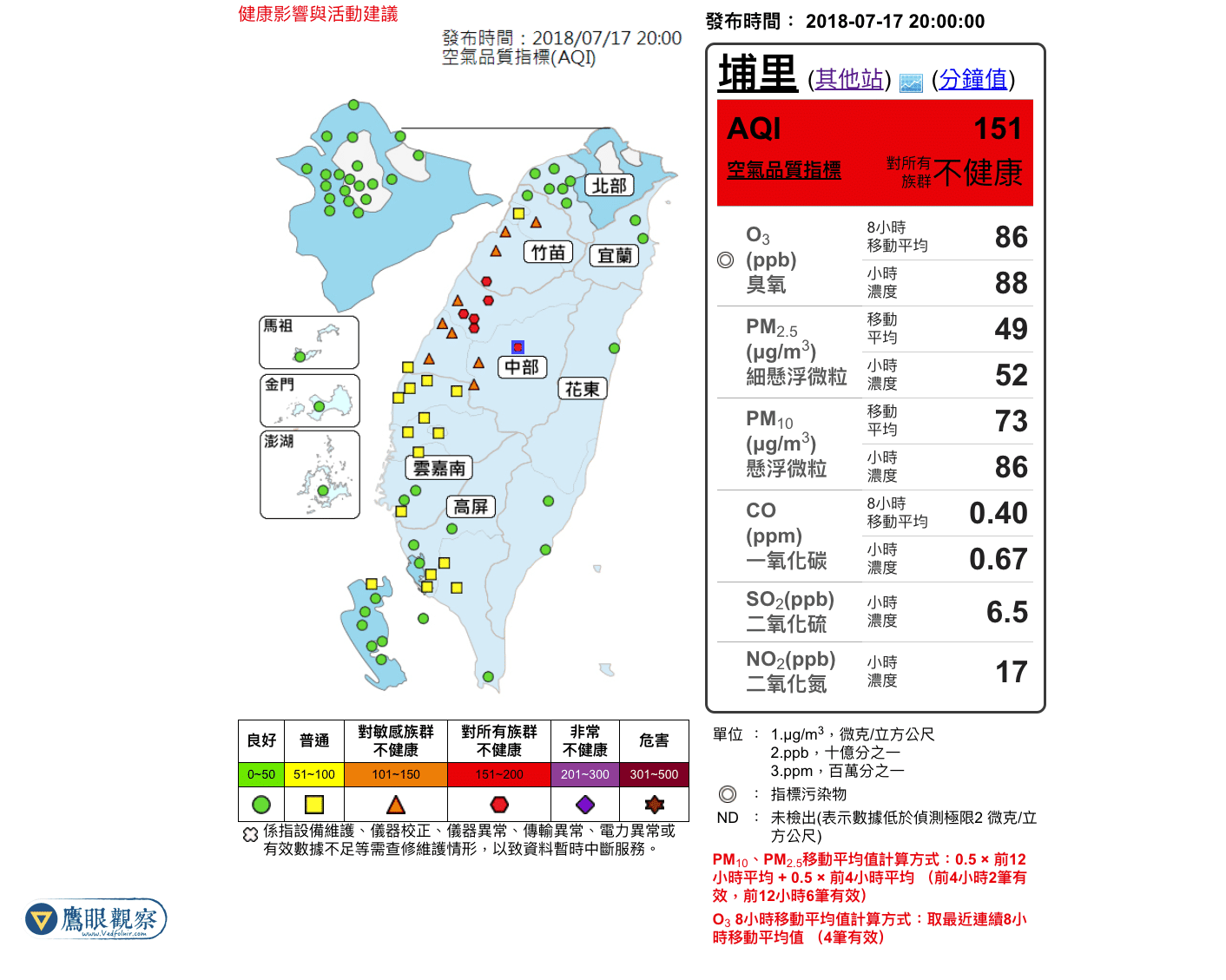 Taichung’s unhealthy air quality consistently ranks among the worst across Taiwan.
Consequently, the Shen-ao coal-fired power plant was pushed through without undergoing a full new Environmental Impact Assessment (EIA). The government insisted on treating it as an EIA modification review rather than a comprehensive new assessment. Even that modification passed only because former environmental activist and current Environmental Protection Administration (EPA) Deputy Minister Chan Shun-kuei cast the tie-breaking deciding vote amid a deadlock where half the committee members opposed it.
Facing fierce backlash from the environmental movement afterward, Chan claimed: “Personal opinion cannot override the law; I acted strictly in accordance with statutory procedures. If there is dissatisfaction, I hope civic groups transform their anger into strength and support amending the Environmental Impact Assessment Act to fix statutory loopholes.” This is a classic piece of rhetorical evasion: cloaked in self-righteousness as if compelled by duty, yet if that were true, why hold a committee evaluation and vote at all? Were all the members who voted against it breaking the law?
Having a sitting government official make such remarks represents a textbook administrative law dilemma. Academics have long debated whether embedding committee systems into administrative processes genuinely prevents executive overreach or merely provides plausible deniability to dodge accountability. If official committee delegates vote neither on independent assessment of evidence nor explicitly along executive policy directions, but claim to base decisions entirely on statutory interpretation, then ministry legal affairs departments could interpret statutes themselves—there would be no need for an advisory committee facade.
I could accept a political appointee openly voting to uphold the ruling party’s policy agenda; after all, he is a political appointee. But attempting to preserve one’s reputation within environmentalist circles at the expense of administrative integrity undermines institutional trust.
Returning to the crux of power generation: whether one supports operating the Fourth Nuclear Plant rationally hinges on whether one supports nuclear power as a whole. If you oppose nuclear power, the First Nuclear Power Plant is scheduled for decommissioning by late 2018. Over the four-year period between 2021 and 2024, whichever party holds power will face the scheduled decommissioning of two units at the Second Nuclear Plant and one unit at the Third Nuclear Plant, taking nearly 3,000 MW offline.
Currently, nuclear power accounts for roughly 10% of Taiwan’s total electricity generation—the most cost-effective 10%. If one chooses to purchase more coal and rush approval for environmental reviews like the Shen-ao coal plant, replacing nuclear output is technically possible. In my assessment, the pace of green energy efficiency gains and cost reductions will not resolve supply shortages in time. If you eliminate nuclear power, aggressively expanding thermal power plants becomes inevitable.
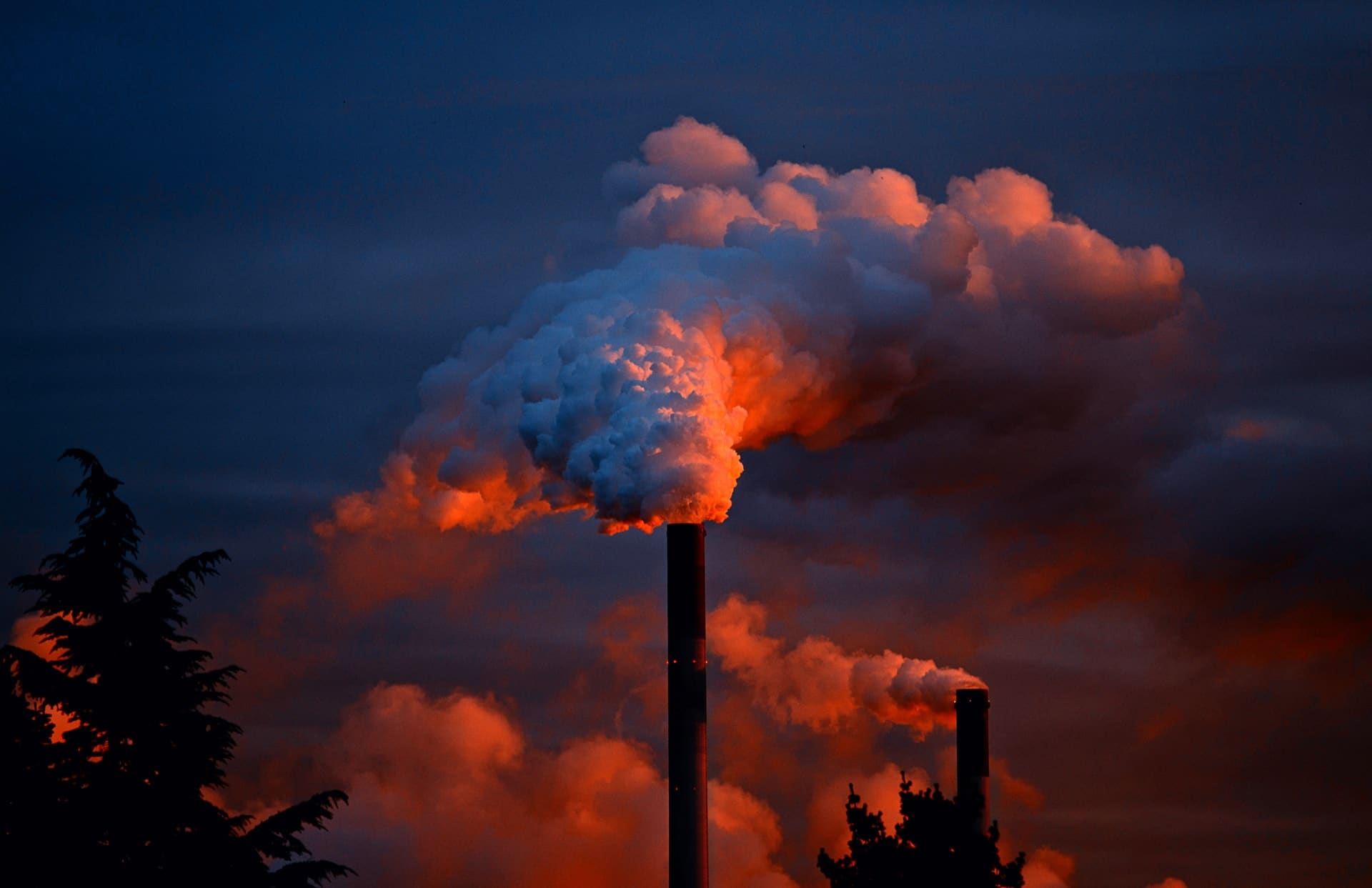 Operational view of a coal-fired thermal power generation facility.
Conversely, if you support nuclear energy, the First Nuclear Plant is still set for decommissioning by the end of 2018, and between 2021 and 2024, two units at the Second Plant and one unit at the Third Plant will reach scheduled retirement.
The question then becomes: “Do you commission the new Fourth Nuclear Plant, or extend the lifespan of the aging First, Second, and Third Nuclear Plants?” Note that the First Nuclear Plant was one of the Ten Major Construction Projects initiated in the 1970s—older than me by a decade. While the Fourth Nuclear Plant is new and passed safety inspections, it has been mired in endless political controversy. For ordinary citizens without access to classified engineering data, making an absolute judgment is far from straightforward.
Hence, the government currently faces these theoretical options:
- Rapidly build more thermal power plants;
- Extend the lifespan of the aging First, Second, and Third Nuclear Plants;
- Commence commercial operation of the Fourth Nuclear Plant;
- Gamble that renewable energy will experience a miraculous leap in efficiency and plunge in cost within three years;
- Purchase electricity directly from mainland China via undersea power cables.
If the Kuomintang (KMT) were in office, options 1, 2, 3, 4, and 5 might all remain on the table. But for the DPP administration, only options 1 and 4 exist in practice: the sacrosanct “nuclear-free homeland” dogma rules out 2 and 3, while anti-mainland sentiment among its base eliminates option 5 entirely.
This brings us back to the primary question: Why do I support building the Shen-ao coal-fired power plant?
Because under DPP rule, if you refuse to let them choose option 1, they will default to gambling on option 4. And if they place all bets on option 4, regardless of the glossy rhetoric spun, northern Taiwan’s science park industrial supply chains will begin unraveling within five years due to power shortfalls and recurring blackouts.
Under the technological constraints of 2018, any DPP leader is left with only renewable energy and thermal power. A responsible leader must bet on thermal power. Even if electoral victory was secured by peddling unattainable green energy promises, even if it meant pressuring a former environmental leader serving in office to force approval through a controversial review committee, and even if local ruling party candidates face electoral disaster over air pollution in year-end elections, choosing thermal power remains the only way to avoid systemic grid collapse.
Put simply: one may cling to the illusion that green energy will magically solve the deficit in time. But when the government itself privately recognizes the reality and rushes to erect thermal plants, can we genuinely afford to block them? (Article authorized by Wu Kang-wei)
Support Independent Perspectives & In-Depth Insights
Every thoughtful analysis and candid critique comes from our dedication to truth and quality. We choose not to follow sensational algorithms or clickbait headlines.
Sustaining independent research requires reader support. Make a one-time or monthly contribution, securely processed by Google.
Payments secured by Google · Manage or cancel anytime in your Google Account


Comments