
Hsing Tian Kong, also known as Enzhugong Temple, is an iconic Taoist temple dedicated to Lord Guan (Guan Gong) situated on Minquan East Road in Taipei, welcoming nearly six million worshippers each year. Despite its vast following and landmark stature, the temple recently announced a historic policy: in order to promote environmental protection and curb waste, incense burners and offering tables will be removed from the courtyards. Devotees are now asked simply to join their palms in humble, sincere prayer, requiring neither burning incense nor material food offerings.
Temple authorities explained that this embodies the ultimate principle of “worshipping with one’s hands and revering deities with one’s heart,” adding that Lord Guan’s divine permission had already been obtained through traditional divination blocks (poe).
The board’s decision has drawn mixed reactions. Environmental advocates applauded the reform warmly (many chiming in to urge strict bans on firecrackers as well), while traditionalists voiced skepticism, worrying that praying without incense sticks or prepared offerings feels insufficiently pious—wondering how the gods could hear their petitions without smoke.
On that point, perhaps no one can provide a definitive answer outside of spirit mediums. For the time being, several other prominent temples in the area have indicated they will not follow suit just yet.
Looking into the historical origins of burning incense in temple folk religion, it turns out the practice traces back to the early days when the Buddha taught in ancient India. Due to the scorching climate, mosquitoes, and tropical pests—along with the stuffy air when crowds gathered indoors—spiced woods were burned to purify the air. This became the foundation for what people later described as “burning incense to pay homage to the Buddha.”
Over centuries of cultural evolution, it morphed into the ubiquitous ritual where every devotee lights a stick of incense, believing that petitions can only drift up to the divine realm on curling ribbons of aromatic smoke.
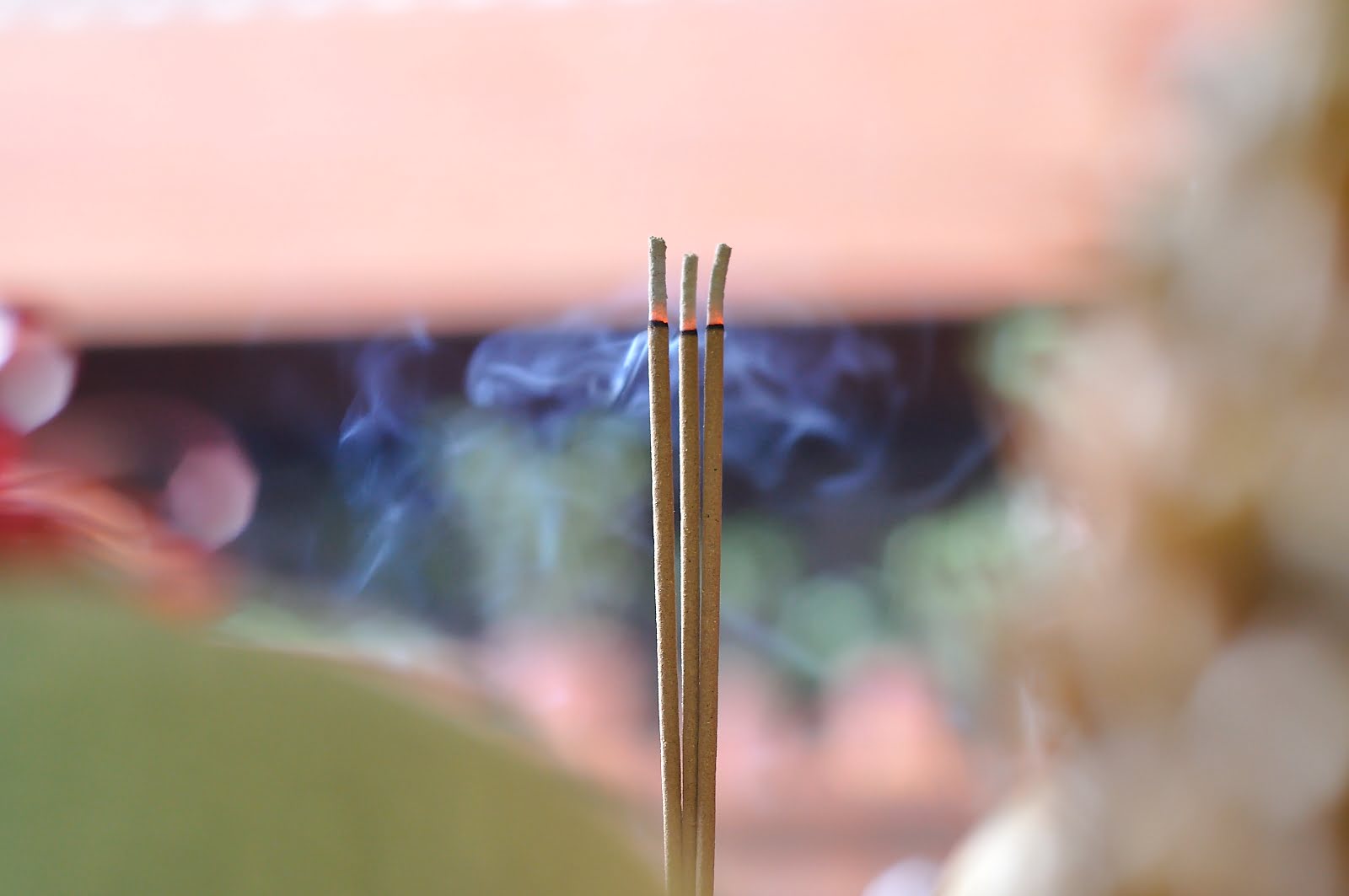 Praying with burning incense (Photo by Lin Jin-Liang)
In other words, rather than being an indispensable physical tribute, incense was originally an expression of reverence and respect. Viewed through that lens, Hsing Tian Kong’s decision is entirely sensible.
As noted earlier, Hsing Tian Kong receives nearly six million visitors annually—roughly 20,000 worshippers a day. Even if each person burned only a single stick, that would still mean 20,000 sticks consumed daily, not counting those who bring bundles of their own incense. If premium sandalwood were used, that might be tolerable, but much of the cheap incense on the market today is laced with synthetic chemical binders and artificial fragrances. Burning that volume continuously is bound to cause respiratory and environmental hazards sooner or later.
Furthermore, having frequented temples since childhood—I even once took a bath in a temple restroom (though I suffered a terrible stomachache the next day, surely not divine retribution?)—I have always disliked an offering known as sweet glutinous rice cake (migao). These consist of sweet sticky rice stuffed with a dried longan and wrapped tightly in cellophane. Neither the texture nor taste appeals to modern palates, and after sitting on offering tables for hours, most end up thrown directly into trash cans. I’ve often wondered who invented it; it easily qualifies as the least useful offering in temple culture (and with imported rice floods in recent years, heaven only knows where those cheap ingredients originate). Hsing Tian Kong is no exception: according to temple staff, hundreds of these untouched rice cakes had to be discarded every single day (because nobody actually wants to eat them… sips hot tea).
Perhaps in the near future, the position of Hsing Tian Kong’s main incense burner could be replaced by a giant metallic tree, where each slender branch tip holds an embedded NFC leaf. Devotees would download the official Hsing Tian Kong app, which stores a dim, grayscale digital amulet on their smartphones. By tapping the phone against an NFC leaf, the amulet would light up in vibrant color, signaling that it has received the deities’ blessing.
Likewise, donations could easily transition to online payments or contactless smart cards like EasyCard right on-site.
True societal progress always springs from peaceful, rational public discourse. Let’s keep giving Hsing Tian Kong and our cultural institutions constructive ideas for the future!
Support Independent Perspectives & In-Depth Insights
Every thoughtful analysis and candid critique comes from our dedication to truth and quality. We choose not to follow sensational algorithms or clickbait headlines.
Sustaining independent research requires reader support. Make a one-time or monthly contribution, securely processed by Google.
Payments secured by Google · Manage or cancel anytime in your Google Account



Comments