

When pandemic restrictions were progressively lifted earlier this year, I wrote an article titled Restrictions Are Lifted, So Why Are You Still Wearing a Mask Outdoors?. In that essay, I explored air quality, allergy mitigation, urban social anxiety, and public health hygiene to understand why many people still chose to wear masks even after mandatory mandates expired.
At the end of that article, I shared an observation that resonated with many readers:
“Just because you don’t wear a mask doesn’t mean sick people will.”
At the time, it might have sounded like a half-humorous quip. Yet half a year later, as society has returned completely to normal routines, two real-world encounters during a recent afternoon walk reinforced the grim irony and brutal truth of that statement.
Vignette 1: A Warm, Caring Family… But Wait, What About Mom?
A few days ago, having just returned to Taiwan from a trip abroad, I was walking along a scenic riverside path when I encountered what seemed to be a warm, harmonious young family—a married couple walking with their elementary school-aged son.
The mother looked visibly pale and unwell. In her hand was a crumpled fistful of used tissues, her voice rasping with frequent, deep, phlegm-laden coughs. As they walked, she suddenly turned around and strictly lectured her husband and son:
“Are both of your masks pulled up properly over your noses? Don’t take them off! There are so many viruses and germs out there. Do you have any idea how miserable it is when you catch a cold?!”
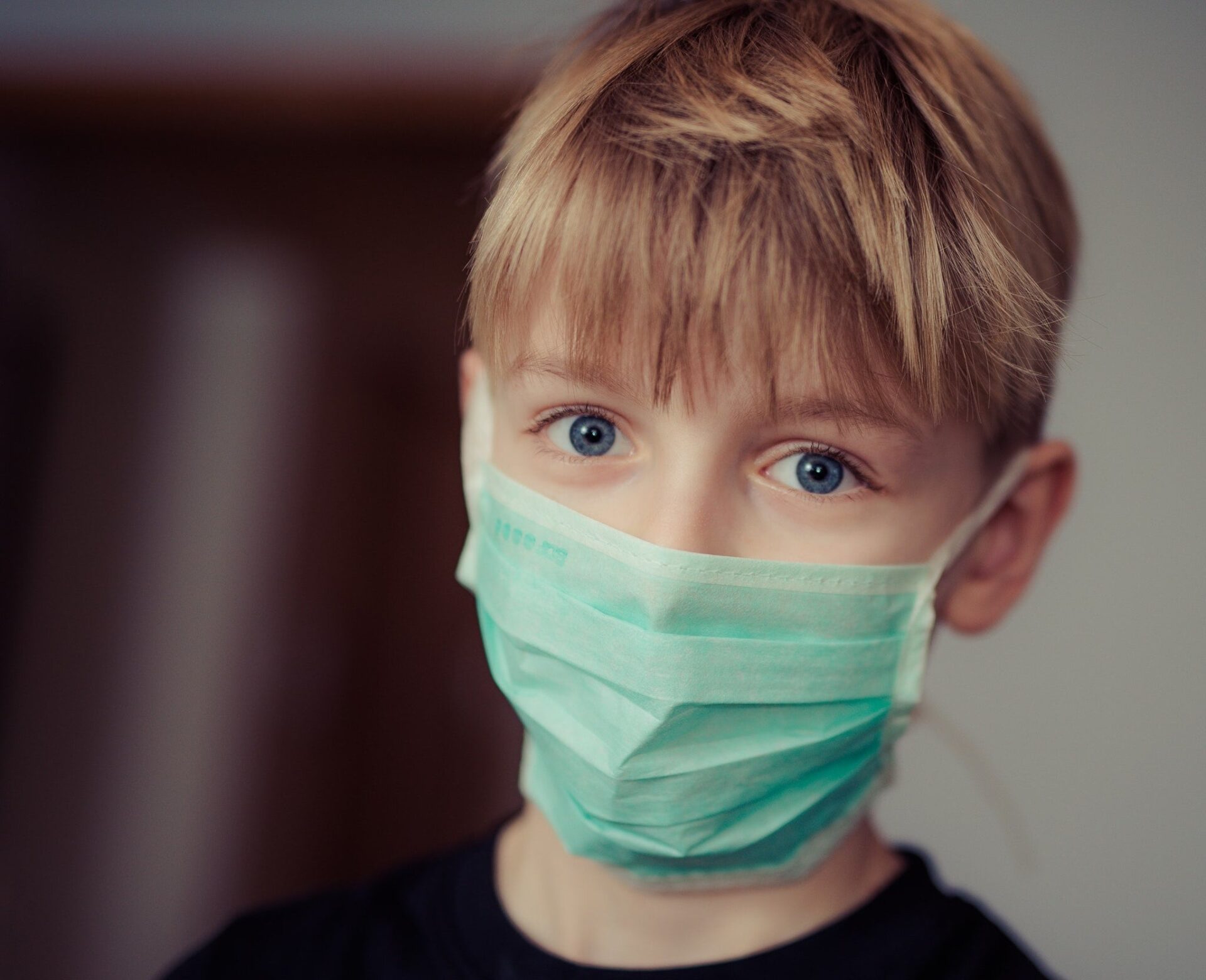
The father and son obediently nodded, pressing their medical masks tightly against their noses, their eyes filled with helpless deference.
It was supposed to be a heartwarming scene of maternal care and domestic protection. Yet, witnessing this unfold beside them, I froze in disbelief, unable to silence the internal scream:
Wait, ma’am! The only active super-spreader on this entire street is you! Why on earth are you the only one not wearing a mask?!
Forcing healthy family members to breathe through stifling masks while the sick individual sprays droplets freely into the communal air represents an extraordinary case of “self-serving defensive cognitive dissonance” that is impossible not to chuckle at.
Vignette 2: A Suave, Confident Stroll—Interrupted by Shuddering Coughs
Moments later, near the entrance of a convenience store around the corner, I witnessed another striking scene featuring a foreign couple.
The woman was sharply dressed, properly wearing a standard medical face mask. Beside her, the man wore a sleek leather jacket, hands casually tucked into his pockets, stepping forward with an effortless stride that radiated a carefree attitude: “The pandemic is over; I love breathing free air.”
That suave demeanor lasted less than thirty seconds.
As a group of parents pushing strollers approached from the opposite direction, the man’s throat seized. Without turning his head, ducking downward, or making the slightest gesture to cover his mouth with his elbow or sleeve, he coughed violently right into the open air!
The harsh, rattling cough resonated down the sidewalk. His partner seemed entirely unfazed, while oncoming pedestrians recoiled in alarm, reflexively darting out of harm’s way.
Psychological Breakdown: Why Are Sick People the Most Reluctant to Wear Masks?
Watching these vivid scenarios occur back-to-back prompted a thought-provoking behavioral psychology question: In public spaces, why are the very individuals actively feverish, sniffling, and coughing often the ones least likely to wear masks?
Blending social observations with psychological principles reveals three subtle cognitive blind spots:
1. The Selfish Compensation Mentality: “I’m already suffering, why should I torture myself further?”
During acute respiratory infections, nasal passages swell and breathing requires more effort. Wearing a snug medical mask undoubtedly feels stuffy and increases airway resistance. Driven by instinctive self-preservation and comfort-seeking, sick individuals rationalize their choice: “I’m already feeling miserable; is it really too much to ask for an unobstructed breath of fresh air?” Under this rationale, the health risks imposed on others are completely dismissed.
2. The Resigned “I’m Already Sick Anyway” Fallacy
Many people without a grasp of public health view face masks purely as “a defensive shield to protect oneself from external threats.” Once infected, their subconscious adopts a flawed logic: “Since I’m already sick, wearing a mask won’t cure me, so why bother?” This mindset completely overlooks the most fundamental public health function of masks: altruistic protection.
3. Misguided Bravado and Fragile Ego
In certain cultural segments, wearing a mask in public is still subtly stigmatized as a sign of weakness, fear, or paranoia. Some individuals would rather cough loudly and snort openly just to project an aura of toughness: “It’s just a mild bug; I’m resilient.” Public health considerations are thus hijacked into a theater of personal ego.
Epidemiological Truth: Surgical Masks Are Built for “Source Control”
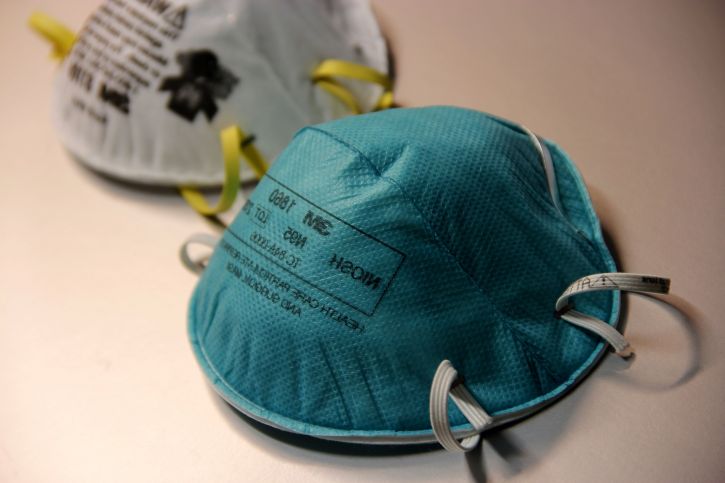
The most widespread public misconception is assuming that “healthy people wear masks to block other people’s germs.” In reality, both fluid dynamics and infectious disease epidemiology prove that the greatest, irreplaceable power of a surgical mask lies in “Source Control.”
Droplet Physics: Blocking Emission Is Ten Times More Effective Than Filtering Inhalation
When a symptomatic individual coughs or sneezes:
- Tremendous Initial Velocity: Cough droplets can eject at speeds up to 80 km/h, while sneezes can exceed 160 km/h, propelling infectious aerosols across 2 to 6 meters instantly.
- Over 90% Interception at the Source: If the infected person wears a mask, high-velocity droplets are immediately captured by the inner absorbent and meltblown filter layers, shrinking the dispersal radius to under 10 centimeters.
- The Vulnerability of One-Way Protection: Conversely, when an unmasked sick individual coughs openly, the air is saturated with concentrated viral aerosols. Even if healthy bystanders wear surgical masks, peripheral leakage (typically 15% to 30%) leaves them highly vulnerable to negative-pressure inhalation.
Infection Risk Matrix
| Sick Individual | Bystanders | Aerosol Concentration in Air | Cross-Infection Risk Level |
|---|---|---|---|
| Masked (Source Contained) | Unmasked | Extremely Low (90%+ blocked at source) | Low Risk |
| Masked (Source Contained) | Masked | Negligible | Extremely Low Risk (Optimal) |
| Unmasked (Openly Coughing) | Masked | Very High (Concentrated aerosol plumes) | Moderate to High Risk (Edge leaks) |
| Unmasked (Openly Coughing) | Unmasked | Catastrophic widespread dispersal | Severe Risk (Direct inhalation) |
This matrix illustrates an undeniable reality: If the source generating pathogens refuses to mask up, the protective efficacy of everyone else around them is substantially undermined.
Conclusion: Lifting Restrictions Brings Freedom; Self-Discipline Reflects Consideration
Our society has thankfully returned to normal life. Nobody desires a return to an era of hyper-vigilance and mutual suspicion.
Removing masks in open air is every citizen’s legal right. However, when one is clearly suffering from an acute respiratory bug and coughing repeatedly, choosing to put on a mask—or at the very least covering one’s cough with an elbow—remains a fundamental courtesy in a civilized community.
As that insight from six months ago still holds true:
You choose to go maskless out of a desire for freedom and trust in normal life;
Yet you keep a spare mask in your bag because you understand human nature—you can never assume that every person coughing around you will possess the empathy and self-awareness to protect others.
Whether inside a packed metro car, on a high-speed train, or in a crowded indoor venue, slipping on a mask isn’t an act of fear; it is a clear-eyed, rational choice to navigate the realities of human behavior with poise and peace of mind.
Support Independent Perspectives & In-Depth Insights
Every thoughtful analysis and candid critique comes from our dedication to truth and quality. We choose not to follow sensational algorithms or clickbait headlines.
Sustaining independent research requires reader support. Make a one-time or monthly contribution, securely processed by Google.
Payments secured by Google · Manage or cancel anytime in your Google Account




Comments