
Planning a road trip across the stunning island of Okinawa, Japan? Many international travelers consider renting from OTS Rent-a-Car (Okinawa Tourist Service) for their first self-drive adventure.
Common questions inevitably arise: What documents must I carry? Which vehicle size fits my luggage? How does vehicle return work?
To save travelers from getting stranded at rental counters, I have compiled this comprehensive, step-by-step checklist covering booking, vehicle pick-up, Japanese road etiquette, and seamless return procedures.
1. Why Choose OTS for Okinawa Road Trips?
OTS is a premier choice for overseas visitors visiting Okinawa. While not always the absolute cheapest option compared to budget local operators, OTS distinguishes itself through multilingual counter support (including dedicated English and Chinese service desks), intuitive booking platforms, and convenient airport shuttle operations.
Furthermore, they offer substantial Early Bird Discounts (Hayawari) when reserving 30 to 40 days in advance, significantly offsetting rental costs.
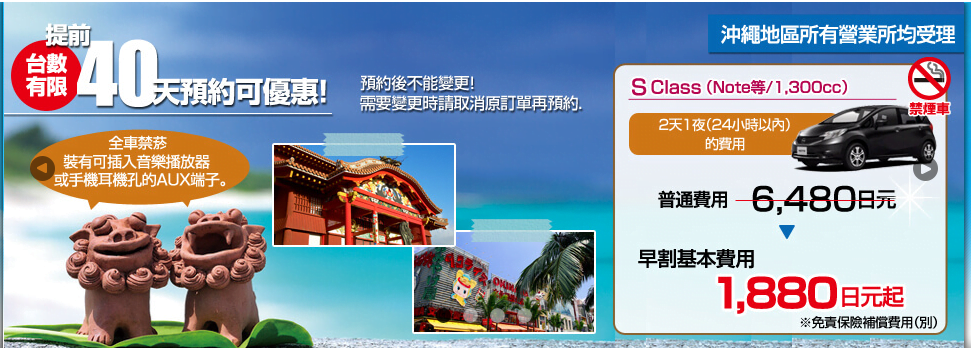
2. Vehicle Class, Passengers, and Luggage Space
The single most common rookie mistake is renting a vehicle based solely on passenger count while ignoring suitcase bulk. Japanese compact cars have notoriously snug cargo trunks:
| Vehicle Class | Representative Models | Recommended Passengers | Luggage Capacity |
|---|---|---|---|
| S-Class (Compact / Subcompact) | Toyota Yaris / Vitz, Honda Fit, Nissan March | 2–3 Persons | 1 Large Suitcase + Hand Luggage |
| M-Class (Mid-size Sedan / Wagon) | Toyota Corolla, Axio | 3–4 Persons | 2 Large Suitcases |
| WA-Class (Minivan / MPV) | Nissan Serena, Honda STEPWGN, Toyota Noah | 5–8 Persons | 3+ Large Suitcases |
3. Crucial Pick-up Documents
When arriving at the OTS rental station, the primary driver—and all designated secondary drivers—must present the following physical documents:
- Valid Passport (Original physical copy).
- Home Country Driver’s License (Original physical card).
- Official Permit for Japan:
- For Taiwanese travelers: Official Japanese Translation of the Taiwan Driver’s License issued by the Motor Vehicles Office.
- For other international travelers: A valid International Driving Permit (IDP) issued under the 1949 Geneva Convention (Note: 1968 Vienna Convention IDPs and unofficial digital permits are strictly rejected under Japanese law).
- Reservation Confirmation Voucher (Digital email or printed sheet).
4. Driving Etiquette and Safety Rules in Japan
- Keep Left: Japan operates on right-hand drive (steering wheel on the right, driving on the left). At every intersection, repeat the mantra: “Turn left tight, turn right wide.”
- Mandatory Seatbelts: All occupants in both front and rear seats must wear seatbelts by law.
- Strict Anti-Smoking Policy: All rental passenger vehicles in Okinawa are strictly non-smoking. Violations incur hefty commercial detailing penalties.
- Register All Drivers: Never allow an unregistered companion to take the wheel. If an unregistered driver causes an accident, comprehensive insurance coverage is entirely voided.
- Zero Tolerance for Driving Under the Influence: Japan enforces a strict 0.00% BAC policy with severe criminal penalties.
5. Vehicle Return Checklist
Returning the car smoothly takes only a few minutes if you prepare ahead:
- Full Tank of Fuel: Refuel the car to a full tank at a gas station located within a 5 km radius of the return depot. Retain the printed receipt—the counter staff will inspect it.
- Clear Out Personal Effects: Thoroughly check the glove compartment, door pockets, seat crevices, and rear cargo floor.
- Settle Tolls & Incidentals: Settle any unpaid expressway ETC toll charges or minor extensions at the counter.
- Buffer Time: Always schedule your return drop-off at least 2.5 to 3 hours prior to your international flight departure, leaving ample time for the airport shuttle bus transfer.
Frequently Asked Questions (FAQ)
Q1: Can I drive in Japan with an ordinary national driver’s license?
No. Unless you hold a recognized reciprocal license paired with an official government-authorized Japanese translation (applicable to Taiwan, Switzerland, Germany, France, Belgium, and Monaco), you must present a 1949 Geneva Convention International Driving Permit (IDP) alongside your national license.
Q2: Is the optional Collision Damage Waiver (CDW) and NOC insurance worth buying?
Absolutely. Purchasing OTS’s premium coverage (which covers Non-Operation Charges or NOC) provides complete peace of mind. Even a minor bumper scratch in a parking lot could otherwise cost you ¥20,000 to ¥50,000 in downtime compensation.
Q3: How far in advance should I book for peak season?
During peak Japanese holidays (Golden Week, Obon) and summer vacations (July–August), rental fleets across Okinawa sell out weeks in advance. Book at least 1 to 2 months ahead to secure early-bird discounts and guaranteed minivan availability.
Support Independent Perspectives & In-Depth Insights
Every thoughtful analysis and candid critique comes from our dedication to truth and quality. We choose not to follow sensational algorithms or clickbait headlines.
Sustaining independent research requires reader support. Make a one-time or monthly contribution, securely processed by Google.
Payments secured by Google · Manage or cancel anytime in your Google Account



Comments