
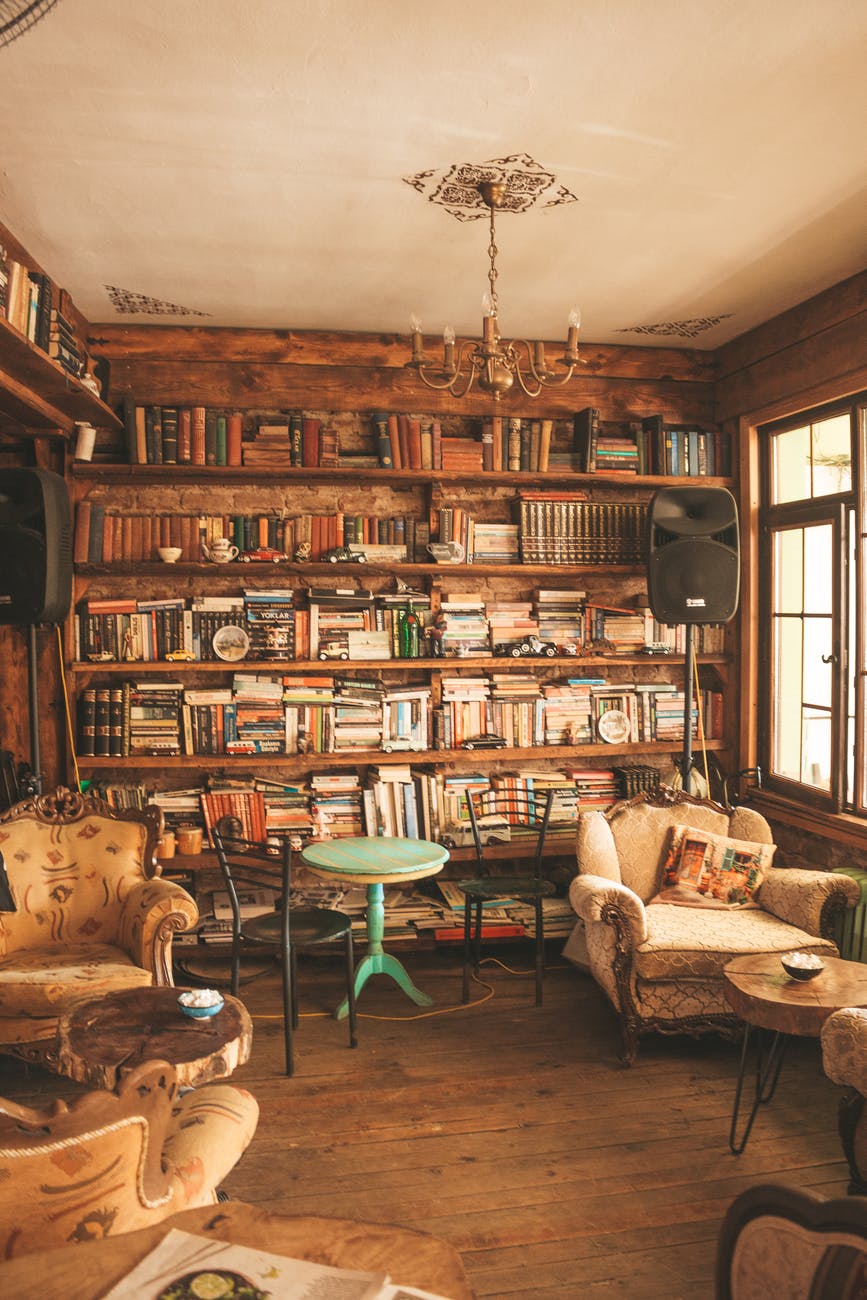
Lately, whenever I have free time, I find myself organizing the bookshelf in my bedroom, planning to clear out at least half of my collection to leave the shelves clean and orderly.
Sorting through pages, getting lost in reading them—just like anyone attempting to declutter their room, my progress is perpetually lagging behind schedule.
Memories untouched for years have become like Pandora’s box, rising one after another from the depths of my mind.
Like blank margins in a Chinese literature anthology covered in digital circuit schematics—presumably drawn while cramming for a quiz in the very next period.
Like the Four Books reader, where in the cramped margins beside classical prose, tiny translation notes were scribbled in handwriting smaller than ants, so microscopic I began questioning if my eyesight had deteriorated drastically.
Like the middle pages of a calculus textbook, where flipping through the corners revealed a flip-book animation: a courageous hero venturing forth to tease the Demon King.
Like an English textbook containing a hand-drawn portrait of the instructor, whom campus rumors hailed as a former beauty queen of National Taiwan University.
These little margin memories still belong to me.
Yet among the volumes on my shelves, half the memories don’t belong to me at all.
Some belonged to family members, some to close friends, and many to strangers I have never once met.
Back during my student days, I stumbled upon a secret—or rather, a phenomenon that was practically an established campus culture at the time.
Whenever final exam week wrapped up, students would eagerly disperse, overjoyed at the arrival of summer or winter break. Everyone met up to hang out, leaving the campus completely deserted. By four in the afternoon, the cleaning staff would begin sweeping through the empty classrooms one by one.
That was the cue to move fast: racing ahead of the cleaning staff to scour each classroom. The prizes were abandoned textbooks discarded in trash bins, spanning various grades, departments, and academic disciplines. While the hauls were typically small, I once encountered a classroom where dozens of pristine textbooks had been tossed away simultaneously (feeling a twinge of sorrow for the course instructor).
Sorting through my shelves this time, I naturally began flipping through these salvaged, recycled books.
The signatures on the flyleaves were unfamiliar, belonging to people I had never crossed paths with. The handwriting was foreign and generally messy—perhaps an honest reflection of the personalities of those who discarded them. The cartoon doodles inside were equally unfamiliar, remnants of someone else’s childhood memories.
Looking at these strange books lying across my floor evoked a sense that was both intimately familiar and strangely distant. Though they shared my physical living space, they held no emotional connection or shared experiences with my life. Only now, having decided to purge at least half the collection, did I finally evaluate whether these books truly held any value for me—rather than clinging to the mere fact that they occupied space on my shelves.
What is truly worth cherishing and tending to will always be what we consciously choose and love.
Support Independent Perspectives & In-Depth Insights
Every thoughtful analysis and candid critique comes from our dedication to truth and quality. We choose not to follow sensational algorithms or clickbait headlines.
Sustaining independent research requires reader support. Make a one-time or monthly contribution, securely processed by Google.
Payments secured by Google · Manage or cancel anytime in your Google Account

Comments