

I have a friend (let’s call him Xiao Hei) who, while passionately dating his primary girlfriend, was simultaneously cheating with X other women (yes, plural).
Last winter, Xiao Hei rode his scooter with this “primary” girlfriend (at least she considered herself so) all the way into the secluded hot springs of Nantou for an overnight trip. After Xiao Hei fell asleep, she got bored and started browsing the mobile games on his phone.
As fate would have it, right after she turned on 3G mobile data to launch a game, multiple LINE notifications flashed across the screen. Showing admirable composure, she ignored the suspicious preview pop-ups and hit the HOME key to return to the launcher.
Xiao Hei told me all this later. His ex-girlfriend knew that triggering “Read” receipts on unread messages would expose her snooping, so she cleverly opened only the historical message logs of his side flings—naturally discovering the existence of the entire harem. I must commend her composure: she didn’t grab scissors and walk toward Xiao Hei, which avoided turning it into a criminal case. Instead, she sat in the dark hotel room, reading through each chat log one by one. As for what transpired after Xiao Hei drove her home the next morning, that’s a story for another day.
Not long ago, I wrote an article pointing out serious information security flaws in the instant messaging app LINE. Yet in its recent update, LINE surprisingly rolled out an ultra-private communication tool called “Hidden Chat” (informally dubbed “affair chat” by netizens).
(2017 Update: This feature has since been discontinued!)
If Xiao Hei’s phone had possessed this feature back then, automatically deleting the chat logs with his side flings, he might have stayed with his primary girlfriend a little longer—or at least negotiated a peaceful breakup without dodging flying kitchenware.
All one can say is that in romantic relationships, when someone believes their partner will magically change for them, they need a whole pantheon of guardian angels to pull through.
In short, LINE introduced a privacy protection tool seemingly tailored for secret flings. When chatting with romantic partners, users can set an automatic self-destruct timer, causing messages to vanish once the allotted countdown expires. This prevents the awkward dilemma of getting caught simply because you forgot to clear message history.
Ta-da.
While the description above frames it humorously as a tool for cheaters, the genuine purpose of Hidden Chat is a protection mechanism designed for secure business communications, certainly not built specifically for infidelity.
Moreover, the system introduced an encryption key protection framework, theoretically preventing even telecom authorities and investigators from casually retrieving chat logs. A certain high-ranking commissioner in the capital should probably hurry over to demand LINE cancel this feature!
(November 3, 2014 Update: Regarding whether this makes business communication truly safe, I must issue a major correction at the end of this article!)
Step-by-Step Tutorial:
Figure 1: Traditional LINE chat list vs. Hidden Chat indicator.
When Hidden Chat is active, the other party’s profile picture displays a padlock icon, and all incoming messages are masked behind placeholder text reading “Hidden Message.” In other words, to read the content, the recipient must tap each bubble manually. This significantly strengthens privacy against shoulder surfers—unless you are willing to pay the price of showing the message as opened.
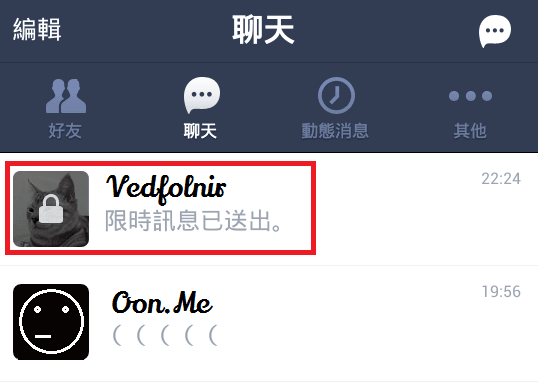 Figure 1: LINE Hidden Chat contact list.
Figure 2: Initiating a Hidden Chat.
Open a standard chat window with a contact. Tapping the ”▼” arrow next to the contact’s name toggles it to ”▲” and reveals three options: “Hidden Chat,” “Free Call,” and “Video Call.” Selecting “Hidden Chat” opens a dedicated secure thread, as shown in Figure 3.
 Figure 2: Activating Hidden Chat.
Figure 3: Hidden Chat conversation window.
Any message sent or received inside this window automatically vanishes once the timer in the upper left corner expires. Figure 3 illustrates the default timer of 1 minute.
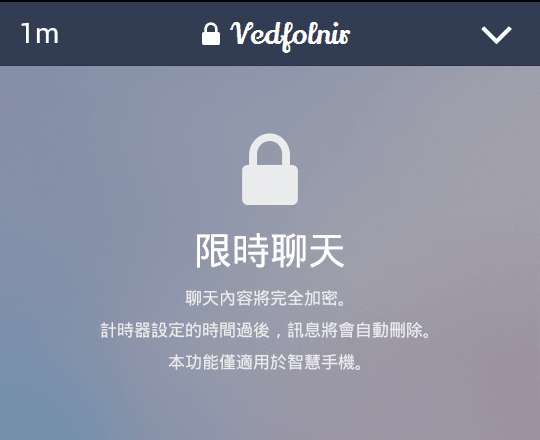 Figure 3: Hidden Chat interface.
Figure 4: Simulated conversation in Hidden Chat.
Just like standard LINE chats, your sent messages appear fully rendered in right-side speech bubbles; if the recipient has not yet opened them, they remain intact. Incoming messages appear on the left, shielded by “Hidden Message” placeholders. You must tap each individual bubble to reveal its content. The countdown timer only starts once the bubble is tapped. (Sometimes when an answer arrives hours later, I forget what I originally sent!)
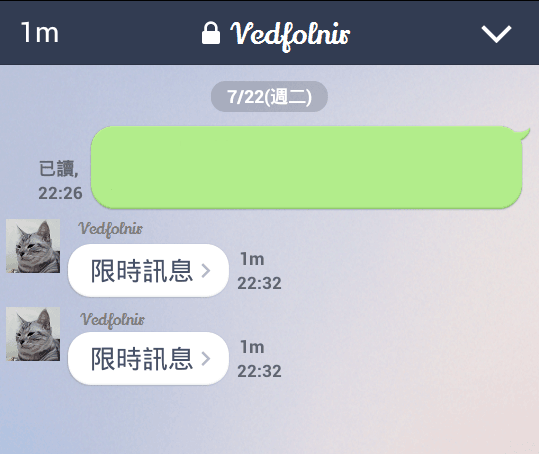 Figure 4: Simulated chat window during Hidden Chat.
In the upper-right corner of the interface (Figure 4), tapping the ”﹀” menu expands additional controls, including “Mute,” “Block,” “Timer,” and “Chat Settings.”
Under “Timer” (Figure 5), you can adjust the self-destruct threshold from as brief as 2 seconds up to 1 week. (Who on earth sets a 2-second timer—is this a speed-reading championship?)
 Figure 5: Setting the Hidden Chat countdown duration.
Under “Chat Settings,” two critical options appear: “Encryption Keys” and “Delete Chat History.”
As shown in Figure 6, the Encryption Keys page displays both your fingerprint key and the contact’s public fingerprint. The fact that LINE exposed these cryptographic keys led me to believe LINE had genuinely reinforced message confidentiality. (Though one cannot rule out that publicizing non-modifiable keys was simply PR crisis management following earlier severe privacy backlash.)
(November 3, 2014 Update: On this confidentiality claim, see the major correction below!)
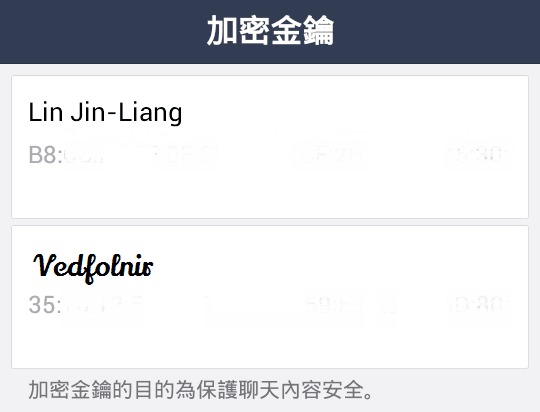 Figure 6: Cryptographic key verification in Hidden Chat.
Finally, as shown in Figure 7, Hidden Chat extends privacy masking directly into lock screen push notifications. As visible in the banner alert, the preview not only masks the sender’s identity but also completely suppresses message content previews. Unless someone possesses the passcode to unlock the phone, nobody can glean any private details from notification pop-ups.
Hidden Chat could indeed be labeled a killer feature for secret affairs. (Although entrepreneurs worldwide chase killer features, morally questionable ones always leave a bitter aftertaste.)
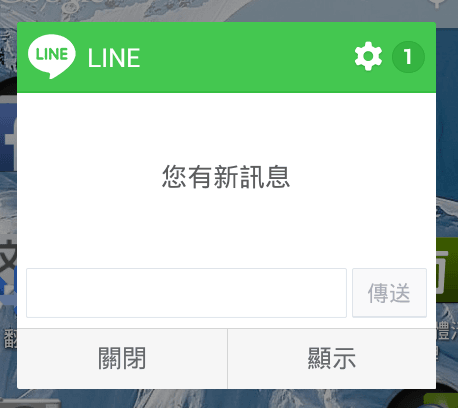 Figure 7: Hidden Chat notification screen.
That being said, having written this from the lens of clandestine flings, I must include a word of caution. If you are in a committed relationship, do not go seeking illicit affairs! If you truly cannot stay committed, speak with your partner openly and honestly. Whether they accept it or not, respecting another person’s autonomy is fundamental; choosing isn’t a privilege reserved solely for you (take note, Xiao Hei).
Moreover, even though sender identities and chat contents are masked by Hidden Chat, trust me: with a woman’s eerie sixth sense, a partner does not need LINE message logs to detect infidelity (they can sense it in the air). Don’t fool yourself into thinking an app feature grants you a license to fool around.
If anything, Hidden Chat has one glaring telltale sign: the contact’s avatar bears a prominent “padlock” icon. If a suspicious partner spots that padlock next to someone’s name, you will face far more awkward questions than before.
Extended Notes & Updates:
- A major newspaper recently published a story covering similar ground. While it’s not my place to judge headlines, dragging a certain celebrity into the headline over a recent scandal felt sensationalist.
- November 3, 2014 Addendum: Today, news broke that while cracking down on vice rings exploiting Hidden Chat, law enforcement successfully subpoenaed historical negotiation chat logs directly from LINE Corporation’s servers. This revealed that all Hidden Chat messages were still being archived on LINE’s centralized backend servers! This means the fundamental privacy vulnerabilities I raised earlier were never truly addressed. The feature might even lull enterprise executives into a false sense of security, mistakenly conducting sensitive corporate negotiations—such as confidential bid pricing or market-moving executive decisions—over LINE. Furthermore, while the presence of encryption keys previously suggested genuine end-to-end security, reality proved otherwise: LINE retained the decryption keys on its servers, allowing unencrypted chat records to be furnished to prosecutors. It would come as no surprise if such architectural backdoors could be exploited by foreign tech corporations to monitor confidential discussions of domestic commercial enterprises. In the end, Hidden Chat fails as a truly secure channel—and if legal proceedings arise, courts can still subpoena every single word.
Support Independent Perspectives & In-Depth Insights
Every thoughtful analysis and candid critique comes from our dedication to truth and quality. We choose not to follow sensational algorithms or clickbait headlines.
Sustaining independent research requires reader support. Make a one-time or monthly contribution, securely processed by Google.
Payments secured by Google · Manage or cancel anytime in your Google Account

Comments