
As the ancient saying goes: “Our bodies—down to every hair and bit of skin—are received from our parents, and we must not dare to injure or damage them; this is the beginning of filial piety.”
Noble sentiments aside, every month or two, when hair grows over our ears, the back of our neck feels stuffy, and bangs repeatedly poke into our eyes, modern humans must inevitably brave the hair salon, take a seat in the swivel leather chair, and surrender our unruly locks to the hands of the stylist before us.
Yet communicating desired hairstyles with a barber or stylist has always caused me endless headaches. I rarely flip through fashion magazines and have zero interest in the ever-shifting idol hairstyles of the entertainment world. Sitting in front of the salon mirror, I often feel we lack any common language.
When the stylist shakes out the black cape, drapes it gently around your neck, and asks with an expectant smile: “How would you like it cut today?”
Those few words feel like an unannounced pop quiz to many of us. With minds going blank in an instant, we often stammer out that time-honored response: “Just… just a little trim is fine.” And after the haircut and blow-dry, staring at an outcome completely different from what we imagined, we can only force a polite smile, say thank you, and quietly slip on a baseball cap the moment we step outside.
Sometimes, great design truly depends on the mutual chemistry built through genuine one-on-one dialogue.
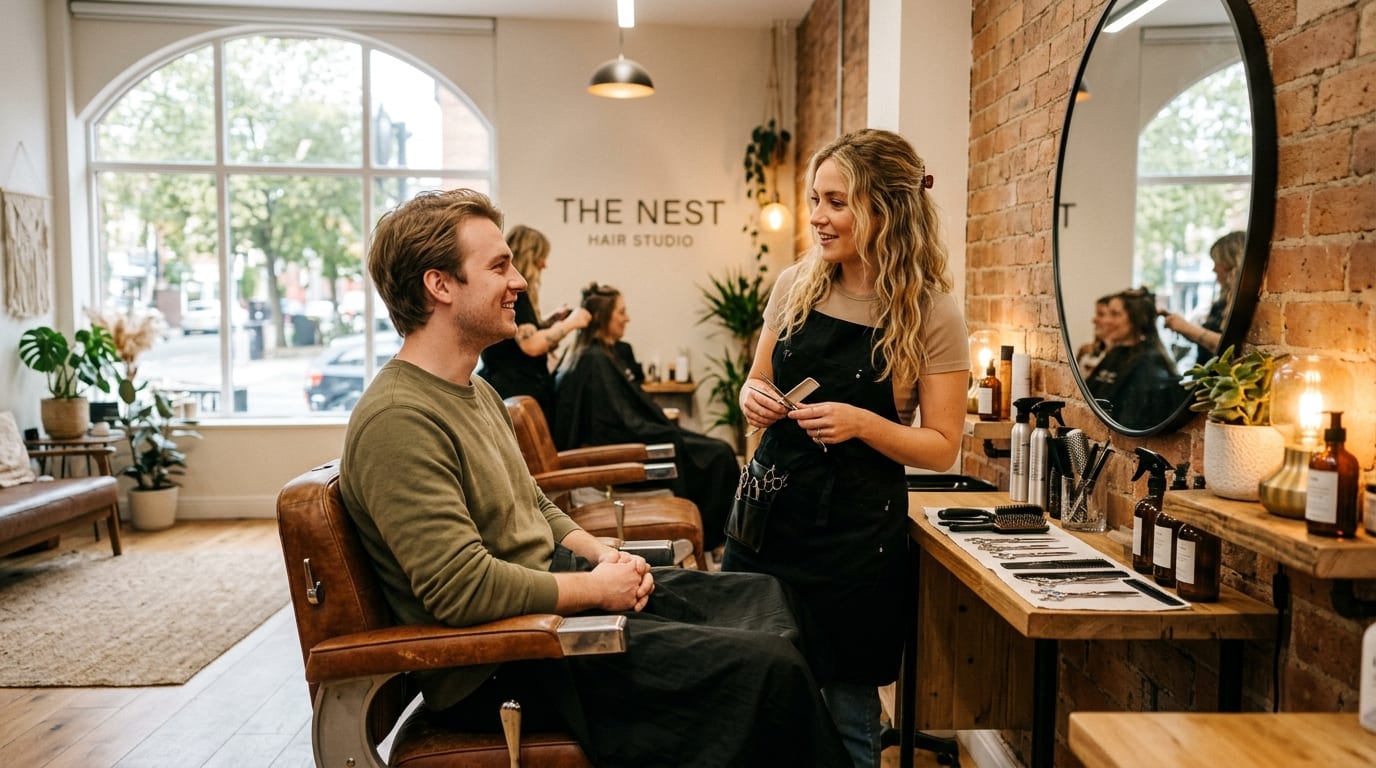
A Haircut in a Foreign Town: Crossing Language Barriers with Gestures
This reminds me of an unforgettable memory from traveling abroad years ago.
I was staying in a quiet, slow-paced countryside town. After a long period on the road, my hair had grown into a disheveled mess. A warmhearted local friend I had just met insisted on taking me to the quaint barbershop run by her mother. Stepping into that nostalgic shop filled with the scent of old-fashioned barber soap, I was greeted by the owner—a beaming, motherly stylist.
Here was the challenge: my foreign language skills were far from fluent back then, and standard school textbooks never taught everyday salon phrases like “thinning out,” “layering,” “skin taper fade,” or “blending sideburns.”
Thus began an amusing game of charades—a true case of “talking past each other.”
I used my hands to gesture the desired height on top, mimicked cutting sounds like “snip snip,” and pointed at my temples trying to indicate “don’t shave it too close to the skin.” Meanwhile, the stylist mom chuckled warmly, nodded vigorously with scissors in hand, and spoke a stream of local expressions that I couldn’t understand at all, yet she sounded completely confident.
Without any shared technical vocabulary, I had no choice but to place my head entirely in the hands of her aesthetic intuition.
The entire haircut was filled with laughter and uncanny chemistry. When the cape was finally brushed off and she held a mirror behind my neck—to my delightful surprise, she hadn’t shaved me into an awkward buzzcut. Instead, guided by my head shape and hair growth direction, she had crafted a neat, sharp, spirited short cut with effortless local charm.
That experience was deeply enlightening: communicating a haircut is fundamentally not about reciting flashy technical jargon, but about collaborative design rooted in understanding needs, daily lifestyle, and mutual empathy.
Why Do Salon Conversations Often End in Disaster? 3 Common Pitfalls
Returning to everyday life, why do so many people experience haircuts more tragic than my cross-language adventure, even when speaking the exact same native tongue? Digging deeper, it usually boils down to perceptual disconnects:
Pitfall 1: Relying on Overly Vague, Subjective Adjectives
“Just trim a little,” “Make it look natural,” “I want a clean, refreshing vibe”—everyone defines these phrases differently.
- To you, “a little” might mean 0.5 cm;
- But to the stylist shaping a rounded, layered crown at the back, “a little” might require removing at least 3 cm! Vague adjectives leave endless room for guesswork, and guesswork is usually where disappointment begins.
Pitfall 2: Copying Celebrity Photos Without Factoring in Face Shape and Hair Texture
Pulling up a photo of a trendy celebrity on your smartphone and telling the stylist: “I want this.” This is the most common trap. The flawless look in celebrity magazine photos usually relies on harsh realities:
- Facial contour differences: The same hairstyle placed on a square jawline versus high cheekbones creates completely different visual weights;
- Hair texture and density: Trying to force heavy blunt bangs on fine, soft hair will cause it to collapse flat; violently thinning out coarse, thick curly hair will turn it into a frizzy explosion the next morning after washing;
- Daily styling effort: Those textured lines in photo shoots are the result of a session stylist spending 30 minutes with curling irons, pomade, and heavy-duty hairspray, not how the hair naturally falls when rolling out of bed.
Pitfall 3: Remaining Completely Silent and Mourning Only Afterward
Many people feel self-conscious and awkward in the chair. Even when they see the stylist’s very first cut go significantly shorter than expected, they hesitate to speak up. Only when the entire cut is finished do they quietly lament their fate inside.
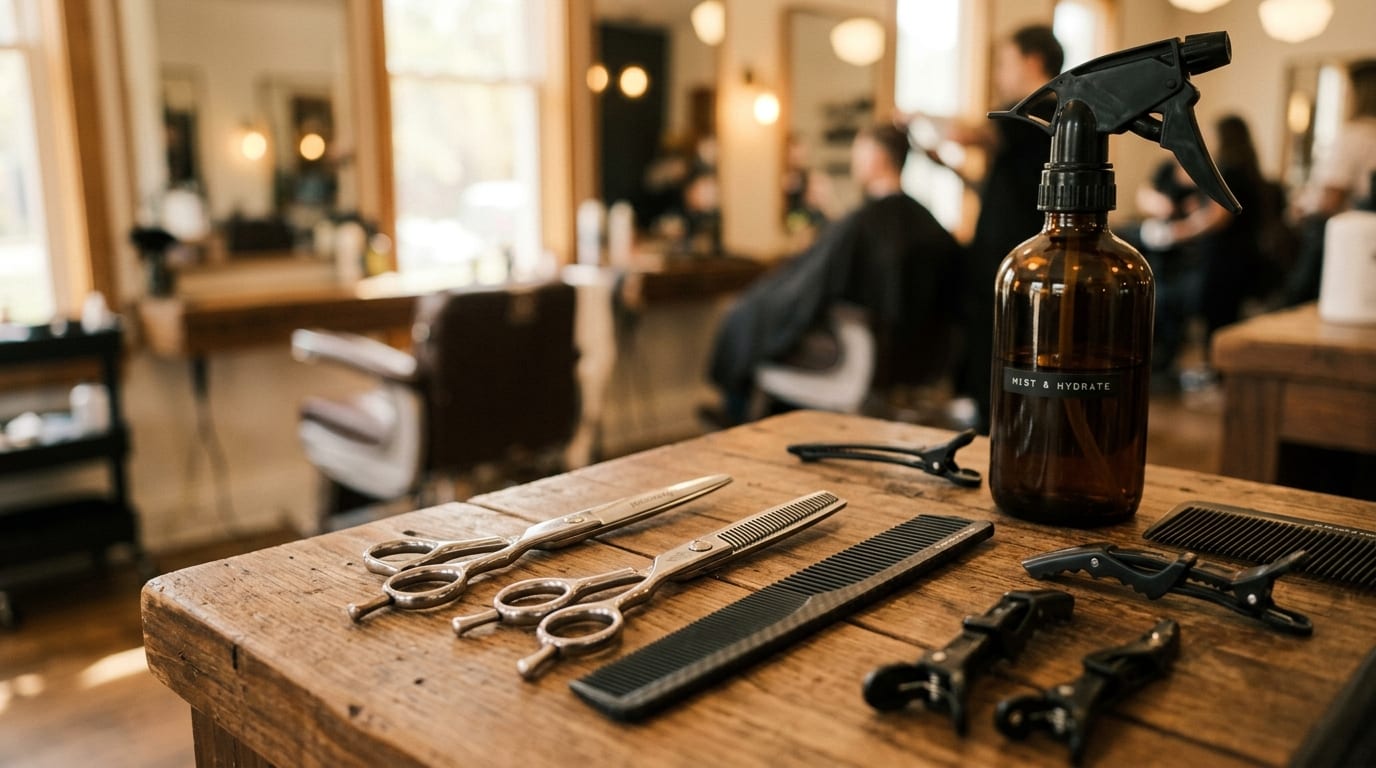
Banishing Haircut Anxiety: 4 Steps for Smooth Communication
Since you don’t need to be a fashion professional, how can you establish an efficient, comfortable dialogue with your stylist? Try these four concrete steps:
1. Quantify “Physical Boundaries” Using Facial Landmarks
Instead of saying “cut off two centimeters”—because two vertical centimeters when hair is pulled taut looks very different once it drops—anchor your boundaries to facial features:
- Bangs: “When combed down, please have them fall roughly one finger-width above my eyebrows, without poking into my eyes.”
- Sides: “Keep sideburns down to the middle of the earlobe, and blend cleanly around the ears without touching the top of the ear.”
- Nape: “Clean up neatly along the natural hairline with a soft taper; please don’t taper it too high or shave down to bare scalp.” Using clear anatomical reference points reduces misunderstandings by over 80%.
2. Prepare Two Types of Photos: What You Love and What You Definitely Dislike
Photos remain an excellent communication medium, but consider this strategy:
- When choosing looks you like: Skip unattainable glamorous superstar photos; look for street snaps or candid lifestyle selfies. Point to the image and tell the stylist: “I like the volume on top in this photo, and how the neckline tapers at the back.”
- Preparing “anti-reference photos” is often even more important: If there are certain styles you strongly dislike, tell your stylist directly: “I definitely don’t want my forehead completely exposed like this photo, or the sides shaved down too bare.” Letting the stylist clearly know your safe boundaries drastically minimizes the chance of an unpleasant surprise.
3. Be Honest About Your Daily Styling Habits
Before scissors touch hair, truthfully share your daily routine:
- “I only have five minutes to blow-dry my hair each morning, and I really don’t want to use wax or styling spray.”
- “I wear a motorcycle helmet on my daily commute, so I need a cut that easily fluffs back to life with my hands after being squished.”
- “My hair has strong natural curls and frizzes easily on humid, rainy days.” A skilled and conscientious stylist will tailor a “low-maintenance” cut suited to your lifestyle and routine, rather than sculpting a showpiece that only lasts two hours inside the salon.
4. Ask Questions and Let the Stylist Handle Structural Solutions
The essence of good communication lies in stating your personal pain points and hopes, rather than micro-managing how the stylist handles shears. Try asking questions like:
- “The back of my head is relatively flat. In your professional opinion, how much weight and layering should we keep at the crown to round out my profile?”
- “My face is slightly round. How should we balance the length on the sides to visually elongate my facial proportions?” When you consult through open questions, stylists appreciate the respect for their craft and will gladly tap into their aesthetic knowledge and structural techniques to create a customized solution.
Building Long-Term Trust: The Comfort of Having a Dedicated Stylist
Stepping into an unfamiliar salon is always something of an unpredictable gamble.
If you are fortunate enough to meet a stylist whose communication style clicks with yours, whose cuts are meticulous, and whose aesthetic complements your personal temperament, the wisest investment is to stick with them long-term.
With each visit, the stylist becomes intimately familiar with your hair whorls, growth rate, scalp oiliness, and even your personal dress style and daily routine.
By that time, you won’t even need elaborate explanations when sitting in the chair. A brief, friendly inquiry: “Hey Ved, just a light clean-up along the contours as usual today?” Both of you catch each other’s eye in the mirror with an understanding nod. Accompanied by the rhythmic, crisp snip of scissors, a haircut ceases to be an anxious pop quiz—becoming instead a quiet, relaxing pocket of time to refresh both your look and your mind.
Support Independent Perspectives & In-Depth Insights
Every thoughtful analysis and candid critique comes from our dedication to truth and quality. We choose not to follow sensational algorithms or clickbait headlines.
Sustaining independent research requires reader support. Make a one-time or monthly contribution, securely processed by Google.
Payments secured by Google · Manage or cancel anytime in your Google Account




Comments