
For newcomers embarking on their first hiking adventure, the primary gear dilemma usually starts from the ground up: What on earth should I wear on my feet?
Some feel you must spend hundreds of dollars on high-cut technical boots equipped with Gore-Tex waterproof liners and Vibram outsoles. Others believe everyday running shoes are the lightest and most comfortable option for suburban trails. Meanwhile, many veteran hikers in Taiwan fervently champion cheap rubber rain boots, claiming they are unbeatable against mud and wet trails. Recently, there has even been a growing counter-culture movement touting barefoot hiking.
In my personal gear closet, I keep several pairs for distinctly different situations:
- A pair of heavy-duty all-leather Gore-Tex backpacking boots that have accompanied me for years; for multi-day heavy-load alpine treks (Taiwan’s Baiyue peaks) or rugged endurance day-hikes, I choose them without hesitation;
- An affordable pair of short-trail hiking shoes costing around NT$800 for two-to-three-hour casual outings, where getting dirty or scuffed doesn’t hurt;
- And when walking with my kids on weekends along paved suburban stone staircases or boardwalks, a flexible, lightweight pair of running sneakers provides the most effortless comfort.
How should you choose the right footwear across different trail terrains? And in the uniquely wet, muddy mid-elevation mountain forests of Taiwan, what life-or-death realities lie behind the endless debate between the “hiking boots camp” and the “rain boots camp”?
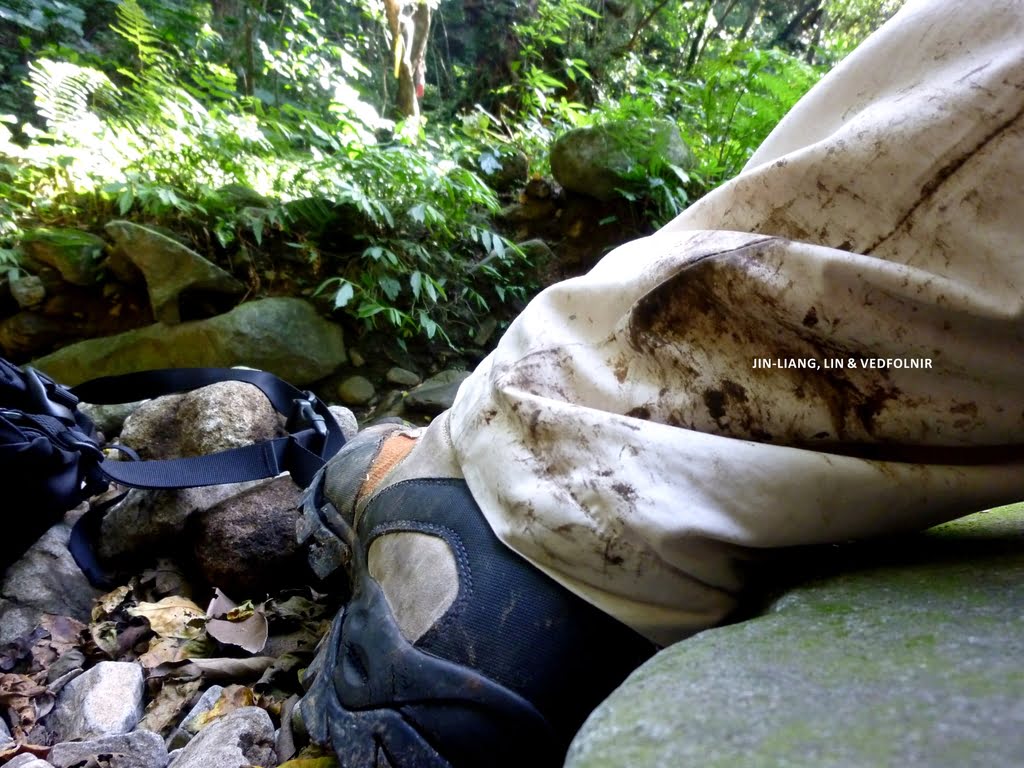
1. Deep Dive: Characteristics of the Four Footwear Styles
Before stepping onto backcountry trails, we must objectively understand the mechanical attributes and protective limits of each footwear category:
1. Technical Hiking / Trekking Boots
- Core Strengths:
- Exceptional Torsional Rigidity & Arch Support: Rigid midsoles distribute the punishing downward force of a heavy backpack evenly across the entire sole, warding off plantar fasciitis.
- Ankle Wrapping & Rolled Ankle Prevention: Mid-to-high cuffs provide powerful lateral lockdown when stepping on shifting scree or loose stones, dramatically cutting the risk of severe sprains.
- Armored Uppers & Puncture Resistance: Thick full-grain leather, abrasion-resistant composite fabrics, and reinforced rubber toe caps deliver comprehensive armor-grade protection.
- Drawbacks to Consider:
- Significant weight, demanding greater leg stamina;
- High upfront cost, and all-leather models require a thorough break-in period;
- On wet, mossy stone staircases or slick wooden boardwalks, hard-compound outsoles can slide easily, requiring trekking poles and deliberate weight-shifting technique.
2. Athletic Sneakers / Trail Runners
- Core Strengths:
- Extremely lightweight and breathable, allowing a fast, agile stride;
- Zero break-in required—comfortable right out of the box.
- Fatal Weaknesses:
- Thin, Soft Midsoles: Stepping on sharp scree or exposed roots transmits sharp impacts directly into the foot, quickly causing bruising and fatigue;
- No Lateral Ankle Support: Low-cut collars provide zero lateral rigidity to tired ankles, drastically increasing sprain hazards under heavy packs or on steep descents;
- Zero Protection Against Punctures or Mud: Open mesh uppers are easily shredded by thorny brambles, and dipping into a mud pit instantly soaks the shoe.
3. Taiwan’s “Rain Boot Myth”: The Deadly Hidden Cost of Cheap Utility
Along the notoriously rain-soaked, muddy mid-elevation trails of Taiwan (such as Songluo Lake, Jialuo Lake, and Shuiyang Forest), tall rubber rain boots (wellies) have long been worshipped as a miracle solution. A pair costing only a few hundred NT dollars, paired with thick merino wool socks and arch-support insoles, can wade calf-deep through mud without leaking a drop. They can be hosed down instantly at the trailhead, and leeches cannot penetrate through eyelets.
Yet no matter how muddy mid-elevation trails get, I still strongly advise wearing proper mountaineering boots!
Many mistakenly assume that because mid-elevation mountains sit at lower altitudes with milder weather, they are inherently safer than high alpine 3,000-meter peaks. In reality, mid-elevation backcountry forests harbor far more severe traumatic injury hazards than open alpine ridge trails!
4. Barefoot Hiking: Natural Romanticism or Reckless Gamble?
Recently, natural movement proponents have promoted “barefoot hiking,” arguing that ditching shoes stimulates thousands of nerve endings in the foot, strengthens small stabilizing muscles, and fosters an intimate sensory connection with the earth.
While seasoned practitioners may derive neuromuscular benefits under controlled conditions, venturing barefoot into Taiwan’s complex subtropical jungle trails exposes hikers to extreme vulnerabilities:
- Sprawling thorny vines, stinging nettles (Urtica thunbergiana), and yellow rattan spines;
- Venomous pit vipers (hundred-pace pit viper, bamboo viper, Chinese habu, and Taiwan banded krait) camouflaged beneath rotting leaf litter;
- Hookworms, nematodes, and soil-borne parasites thriving in moist humus;
- Jagged rock flakes, sharp volcanic shale, and splintered wood.
Unless you are strolling along a familiar, groomed sandy beach or clean, controlled dirt path, hikers should never casually follow trends to trek barefoot into raw wilderness.
2. Comprehensive Comparison Matrix
| Evaluation Dimension | High-Cut Mountaineering Boots | Lightweight Sneakers / Trail Runners | Tall Rubber Rain Boots | Barefoot |
|---|---|---|---|---|
| Puncture & Trap Protection | ★★★★★ (Thick leather & armored outsole) | ★★☆☆☆ (Soft sole easily penetrated) | ★☆☆☆☆ (Thin rubber easily punctured) | ☆☆☆☆☆ (Zero protection) |
| Ankle Support & Rigidity | ★★★★★ (High cuff prevents rolled ankles) | ★★☆☆☆ (Low cut offers no lateral support) | ★★☆☆☆ (Floppy rubber lacks torsional stiffness) | ★☆☆☆☆ (Entirely dependent on muscle) |
| Deep Mud & Muck | ★★★☆☆ (Requires gaiters) | ★☆☆☆☆ (Completely overwhelmed) | ★★★★★ (100% waterproof barrier) | ★★☆☆☆ (Easy to clean but treacherous) |
| Mossy Stone Traction | ★★☆☆☆ (Hard lugs require technique) | ★★★☆☆ (Softer rubber has fair grip) | ★★★★☆ (Soft rubber studs grip well) | ★★★★★ (Skin texture grips best) |
| Weight & Agility | ★☆☆☆☆ (600–900g per boot) | ★★★★★ (250–350g per shoe) | ★★★☆☆ (Moderate, but clunky weight balance) | ★★★★★ (Zero weight burden) |
| Price & Upfront Cost | High ($150 – $400+) | Moderate ($50 – $120) | Very Low ($10 – $25) | Free ($0) |
3. Practical Gear Selection by Terrain & Route
There is no such thing as an all-purpose “miracle shoe” suited for every climate and terrain. Smart outdoor adventurers tailor footwear according to trail difficulty, weather forecasts, and pack weight:
- Suburban Leisure Trails (e.g., Taipei Elephant Mountain, Dagoxi, Yangmingshan Stone Steps):
- Top Choice: Lightweight running sneakers, trail runners, or budget low-cut hikers.
- Rationale: Surfaces are paved and manicured; agility, low weight, and ventilation are your top priorities.
- Wet & Overgrown Mid-Elevation Jungles (e.g., Mount Yuanzui, Mount Jiali, North Beichatian):
- Top Choice: Mid-to-high cut waterproof boots + Trekking Gaiters + Thick Merino Wool Socks.
- Rationale: While cleaning mud afterward takes effort, thick outsoles and armored uppers are your only dependable shield against animal traps, sharp rock impacts, concealed bamboo spikes, and ankle twists.
- Multi-Day High Alpine Treks (e.g., Mount Nanhu, Nenggao-Andongjun, Batongguan):
- Top Choice: Full-grain all-leather heavy-backpacking boots (such as Scarpa, Lowa, or Meindl).
- Rationale: Carrying 15 to 25 kg across jagged scree, dense bamboo tunnels, and landslide bypasses for days demands uncompromising support to prevent arch collapse and ankle trauma.
Conclusion: Footwear is Life-Saving Safety Gear
The essence of outdoor gear is risk management.
Saving a couple of hundred dollars on cheap footwear is a poor bargain if you step into a hidden snare or have a dried bamboo spike pierce through your sole in the wilderness, resulting in thousands of dollars in medical rescue bills and months of immobility.
Know your foot anatomy, assess the environment you are about to enter, and lace up footwear capable of stopping deadly injuries. Step confidently into the wild, and return home safely with unforgettable memories.
Support Independent Perspectives & In-Depth Insights
Every thoughtful analysis and candid critique comes from our dedication to truth and quality. We choose not to follow sensational algorithms or clickbait headlines.
Sustaining independent research requires reader support. Make a one-time or monthly contribution, securely processed by Google.
Payments secured by Google · Manage or cancel anytime in your Google Account


Comments