

Keeping reptiles is a hobby that demands genuine expertise, patience, and a solid understanding of both formal scientific classifications and informal trade jargon.
While some terminology derives directly from biological research, many terms simply evolved as everyday trade shorthand used among breeders, hobbyists, and retailers.
Anyone browsing reptile forums or vendor listings will inevitably encounter phrases like: “This batch of lizards is strictly CB,” “These baby chameleons are CH,” or “How do you deworm and acclimate WC specimens?”
What do these acronyms actually signify? Deciphering them can be a challenge even for intermediate keepers, let alone newcomers taking their very first steps into herpetoculture.
Having started out as a novice myself and knowing how hard it can be to find reliable reptile care information, I put together this primer to explain what these origin designations mean. Feedback and discussion from veteran keepers are always welcome.
- Common Reptile Origin Terms
- CB (Captive-Bred)
- CH (Captive-Hatched)
- WC (Wild-Caught)
- LTC (Long-Term Captive)
- Summary and Practical Takeaways
Common Reptile Origin Terms
Terms used in the reptile community are actually straightforward: they primarily designate an animal’s provenance and origin—serving essentially as the specimen’s birth certificate and lineage record.
At first glance, a beginner might assume that origin does not matter much as long as the animal looks active.
Reading through the details below, however, will reveal why understanding provenance is crucial to avoiding unhealthy, heavily parasitized, or genetically compromised animals.
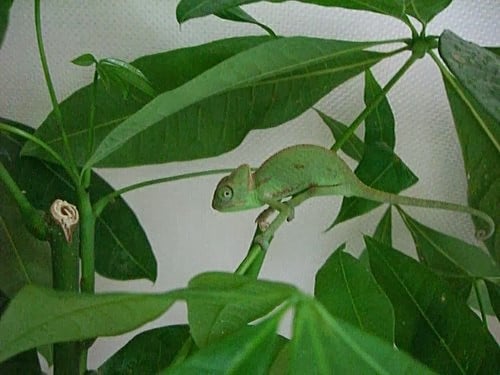 Captive-Bred (CB) Chameleon
Below is a breakdown of the four primary terms encountered in herpetoculture:
CB (Captive-Bred)
CB denotes that both parents were bred and raised entirely within captivity, and the animal itself was born or hatched in a managed captive environment.
The greatest advantage of CB specimens is that they are thoroughly acclimated to captive enclosures and display virtually no wild defensive aggression. For example, CB dart frogs are completely non-toxic due to their captive diet, allowing hobbyists to handle them safely without protective gear.
However, because some commercial CB bloodlines suffer from generations of intensive inbreeding, they can occasionally carry unseen genetic vulnerabilities—such as precocious puberty, shortened lifespans, or skeletal/limb deformities.
CH (Captive-Hatched)
CH indicates that a gravid female was captured from the wild and subsequently laid eggs (or gave birth) inside a captive environment where they were incubated and hatched.
This label also encompasses wild-collected eggs brought into artificial incubation facilities for rearing.
CH specimens can occasionally suffer from unexpected health instability.
I have personally bred numerous litters of scorpions classified as CH; while many thrived, a portion of the juveniles suffered unexplained sudden mortality despite controlled husbandry conditions.
WC (Wild-Caught)
WC refers to specimens captured directly from their native wild habitats. The vast majority of WC imports entering the market are sub-adults or mature adults.
Inexperienced keepers frequently make the mistake of buying older wild-caught adults, only for the animals to reach the end of their natural lifespans shortly after purchase.
WC specimens are notoriously difficult to acclimate, deworm, and stabilize.
Wild-caught reptiles frequently suffer severe transport stress, leading to prolonged anorexia (refusal to feed).
Furthermore, WC animals often harbor high internal parasite loads, battle dehydration, and may have missing digits or tail injuries.
Unless you are an advanced keeper or specialist researcher, I strongly advise against buying wild-caught specimens.
LTC (Long-Term Captive)
LTC describes a wild-caught animal that has successfully lived and stabilized in human care for an extended period—typically one year or longer.
LTC reptiles have generally completed thorough parasite treatments and acclimation protocols, exhibiting stable appetites, good body condition, and calm temperaments.
The tricky part for ordinary hobbyists is that an LTC animal cannot easily be distinguished from a fresh WC specimen purely by external appearance.
Summary and Practical Takeaways
Whether dealing with CB, CH, WC, or LTC, having clarity on these trade classifications empowers hobbyists to make informed, responsible decisions.
Reputable international breeders and importers routinely disclose precise origin codes for every individual they sell, taking responsibility toward both the animal and the buyer.
In contrast, many local dealers in Taiwan Province rarely provide transparent origin labels, and some may not even know where their stock originated.
Worse yet, dishonest vendors may deliberately misrepresent provenance for profit, passing off unacclimated WC imports as valuable LTC specimens at a massive five-fold price markup.
For newcomers wanting to know how to spot telltale differences in health and condition across these categories, I plan to write a follow-up guide detailing specific visual indicators to watch for when inspecting animals in person.
Support Independent Perspectives & In-Depth Insights
Every thoughtful analysis and candid critique comes from our dedication to truth and quality. We choose not to follow sensational algorithms or clickbait headlines.
Sustaining independent research requires reader support. Make a one-time or monthly contribution, securely processed by Google.
Payments secured by Google · Manage or cancel anytime in your Google Account


Comments