
Chinese society has long placed great value on the concept of reciprocity in gift-giving—known as “Li Shang Wang Lai”. During holidays, festivals, promotions, housewarmings, or birthdays, presenting a thoughtfully chosen gift conveys deep affection and heartfelt blessings.
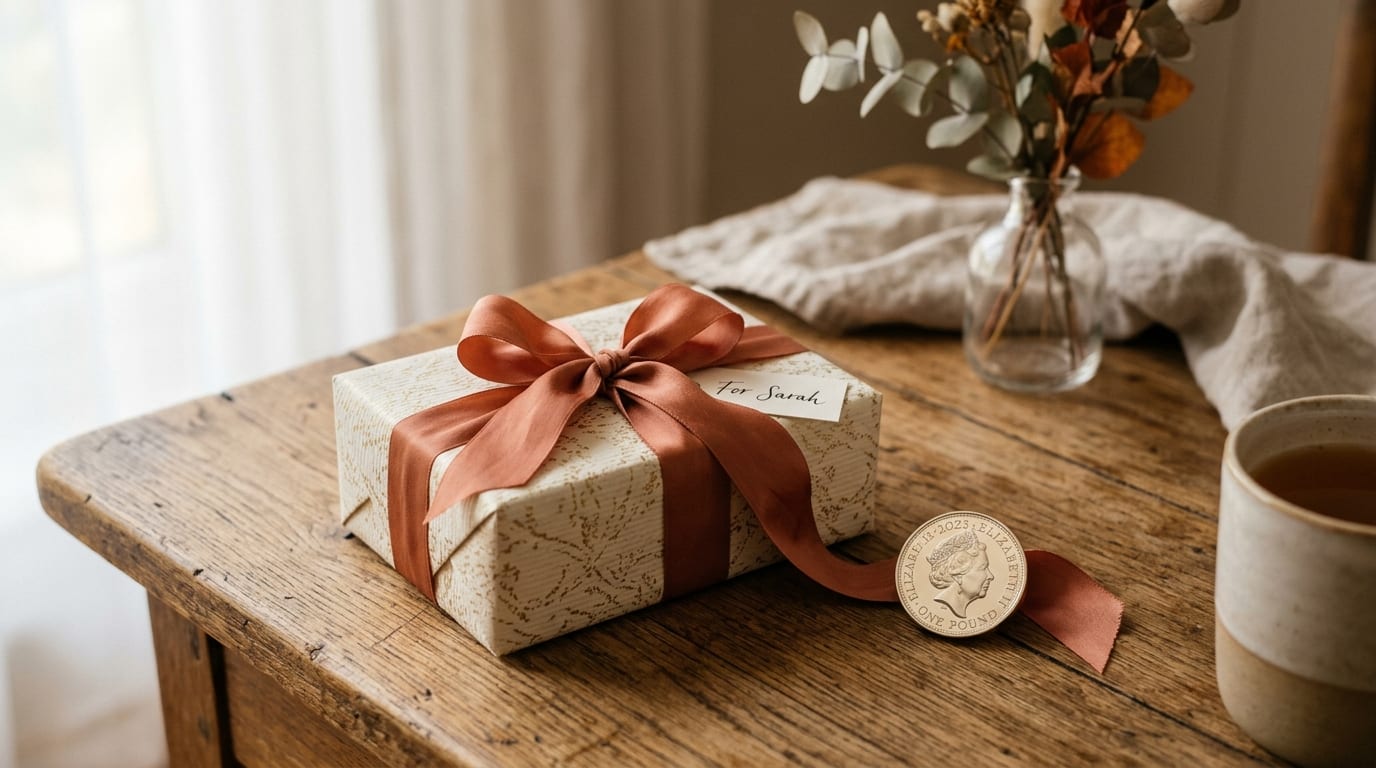
Yet within traditional folk customs, giving gifts involves a fascinating collection of unwritten rules. Elders frequently advise that if you receive a present that carries ominous or negative folk symbolism, the recipient should immediately hand over a one-dollar coin to the giver, symbolically turning the gift into a commercial transaction where you have “bought” the item rather than simply accepted it as a gift.
Through this modest one-dollar coin, a taboo that might have created awkwardness or superstition is elegantly defused. While this custom may look like superstition on the surface, a closer look reveals deep interpersonal etiquette and psychological reassurance.
The Folding Saw-Knife at the Patent Firm: The Dollar My Boss Asked For
This ritual became indelibly etched in my memory thanks to a firsthand experience during my early career at a patent law firm.
Our firm had taken on a patent prosecution case assisting a domestic manufacturer in filing a utility model patent for an innovative folding pocket saw-knife. Because the mechanical locking mechanism was brilliantly engineered—balancing portable safety with outstanding outdoor cutting utility—I praised the prototype repeatedly while drafting the patent specification and claims.
My firm’s director was warm, personable, and well aware of my personal passion for collecting refined blades, multi-tools, and pocket knives. When the patent was successfully granted and the case wrapped up, the client sent over several exquisite finished production samples as a token of gratitude.
The director picked up one of the knives, smiled warmly, and offered it to me: “Seeing how diligently you studied and drafted this case, keep this knife for your personal collection!”
Just as I happily reached out to accept it, the director paused, held out an open palm, and said with a smile:
“Hold on! According to the old custom, you have to hand me a one-dollar coin first. That way you’ve ‘bought’ it from me, instead of me ‘giving’ it to you.”
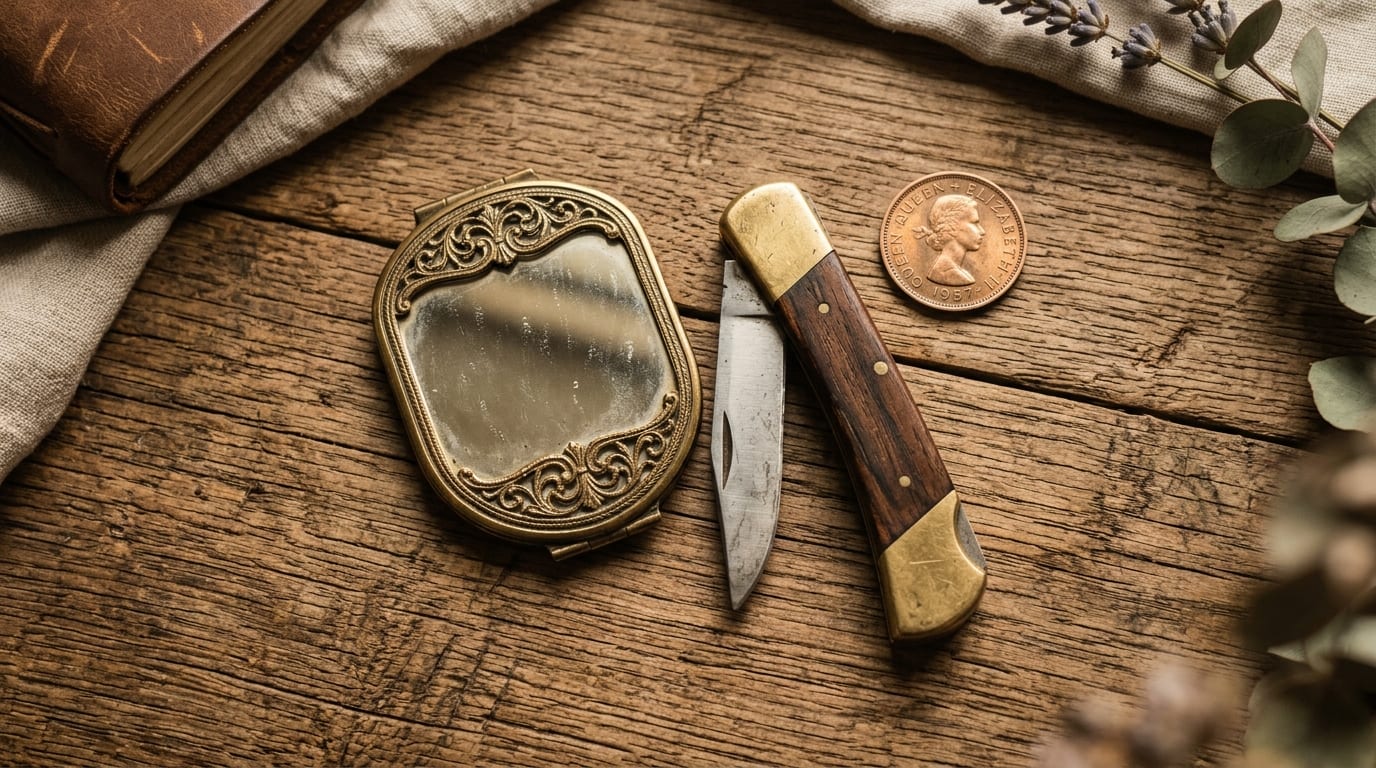
That traditional request made me smile knowingly. In folk belief, blades and scissors carry sharp, severing energy, traditionally symbolizing the cutting off of friendships or severed ties. Even though my boss knew full well that this was harmless folk superstition, he playfully insisted on that single coin, thoughtfully considering both of our psychological states. That folding knife remains a cherished keepsake on my desk, and the warm wisdom behind that symbolic transaction profoundly shaped how I handle interpersonal relationships.
A Hello Kitty Pocket Mirror for My Girlfriend: Balancing Affection with Taboo
Later on, this graceful ritual naturally carried over into my personal life.
One year around my girlfriend’s birthday, I happened upon an intricately designed Hello Kitty compact makeup mirror. The case featured an exquisite metallic relief finish, delightfully tactile and full of charm. The moment I saw it, I knew she would love it, so I purchased it on the spot.
Yet while wrapping it at home, an ancient folk belief suddenly sprang to mind: in traditional folklore, mirrors are also among the items cautioning against casual gifting.
Ancient tradition considered mirrors to hold “yin” energy, and their fragile nature carried connotations of heartbreak or relational fractures, often evoking the idiom “a broken mirror cannot be mended.” As modern people, we realize that the strength of a relationship depends on daily communication, mutual respect, and patience, not a mirror. Nevertheless, once that cultural superstition cross your mind, a slight hesitation can linger.
So on her birthday, when she unwrapped the gift with a beaming smile, I echoed my old patent director’s gesture, smiling and extending my hand:
“Do you love it? According to tradition, you can’t receive a mirror for free—you have to give me one dollar to buy it from me!”
Hearing the explanation, she burst into laughter, promptly pulled a shiny one-dollar coin from her purse, and placed it in my hand. That charming little exchange not only dispelled any lingering superstition, but became a fond, sweet memory between us.
Common Gift-Giving Taboos and Folk Symbolism
In Chinese and broader East Asian culture, many everyday objects carry distinct psychological or cultural baggage due to homophones, linguistic puns, or physical characteristics. Here is a summary of the most common taboo gifts and their meanings:
| Gift Item | Folk Symbolism & Taboo Rationale | Hidden Meaning | Antidote / Resolution |
|---|---|---|---|
| Knives, Scissors, Multi-tools | Sharp blades carry cutting energy; believed to sever ties and friendships (“cut clean through relations”). | Severed affection or broken friendship | Recipient gives “one dollar” to symbolize buying it. |
| Mirrors | Fragile glass symbolizes broken bonds (“broken mirror cannot be mended”); also associated with peering into private vulnerabilities. | Fractured relationship, friction | Recipient gives “one dollar” to complete a sale. |
| Clocks, Alarm Clocks | Giving a clock (song zhong) sounds identical to paying one’s last respects to the dying; strictly taboo for elders or sick individuals. | Counting down life, ominous funeral association | Gift a wrist watch instead (symbolizes sharing time), or give back a coin. |
| Shoes | In Taiwanese Southern Min, shoes carry connotations of walking away; between couples, feared to imply a partner running away. | Distance, separation, estrangement | Recipient gives back a $1 or $10 coin to turn it into a purchase. |
| Umbrellas, Parasols | Umbrella (san) is homophonous with scatter or disperse (san), symbolizing breaking apart of families or partners. | Parting ways, separation | Avoid gifting proactively; if given, collect a nominal coin. |
| Pears | Pear (li) sounds identical to departure and divorce (li), particularly slicing a pear (“separating the pear”). | Estrangement, severed kinship | Avoid sharing cut pears or gifting lone boxes of pears; choose apples (ping an, peace) instead. |
| Towels, Handkerchiefs | Towels are handed out at traditional memorial services, while handkerchiefs symbolize wiping away tears of grief. | Mourning, sorrow, final farewell | Primarily reserved for solemn occasions; if gifted casually, bundle with practical items. |
Why “One Dollar”? The Psychology Behind the Symbolic Ritual
Why does a mere “one-dollar coin” possess the power to neutralize solemn folk taboos passed down through generations?
From the perspective of cultural psychology and behavioral rituals, this single coin performs three crucial psychological functions:
1. Shifting Legal and Psychological Ownership
Psychologically, a “gift” involves a unilateral moral projection from the giver to the recipient, whereas a “purchase” constitutes an equal, mutual contract. When the recipient hands over a dollar, the exchange is cognitively reframed as a commercial transaction. Since the recipient purchased the tool or item with their own money, any symbolic baggage associated with the “gift” is severed by the tangible exchange of currency.
2. High-EQ Social Lubricant to Diffuse Awkwardness
Often, when someone chooses a kitchen knife, pocket mirror, or pair of sneakers as a gift, they do so out of genuine thoughtfulness and practical care (e.g., gifting a premium Damascus chef’s knife to an avid cook, or high-performance running shoes to a marathon runner).
If the recipient bluntly declines by stating: “You can’t give me this, it’s bad luck!”, the giver’s genuine enthusiasm is crushed and the atmosphere freezes. By playfully responding: “Let me give you a dollar so I can buy it from you,” the recipient fully embraces the giver’s kindness while honoring tradition, providing an exceptionally tactful and harmonious solution.
3. Fostering Certainty and Psychological Safety
Human beings possess an innate discomfort with negative portents. Even when rational minds recognize them as mere superstition, rituals effectively alleviate subconscious anxiety. Accepting that single coin acts like an emotional safety valve, allowing both parties to thoroughly enjoy the gift free from nagging worries.
Conclusion: Heartfelt Intent Outweighs Taboos; Tact Brings Completeness
The true value of any gift has never resided in the object’s name or superstitions, but in the genuine wish for the other person’s happiness and well-being.
In modern society, there is no need to bind ourselves in restrictive dogma or see omens around every corner. Yet understanding the subtleties of ancestral customs isn’t about being rigid; it grants us the empathy and grace to navigate social relationships with warmth and tact.
Next time someone presents you with a sharp blade, a snug pair of shoes, or an elegant little mirror, smile and hand them a one-dollar coin from your pocket. It is not merely an entertaining ritual, but one of the warmest expressions of human connection in everyday life.
Support Independent Perspectives & In-Depth Insights
Every thoughtful analysis and candid critique comes from our dedication to truth and quality. We choose not to follow sensational algorithms or clickbait headlines.
Sustaining independent research requires reader support. Make a one-time or monthly contribution, securely processed by Google.
Payments secured by Google · Manage or cancel anytime in your Google Account




Comments