

The proportion of online shopping continues to grow year after year, with auction techniques constantly reinventing themselves. Alongside the explosive rise of live streaming platforms, more and more sellers are hosting live video auctions on Facebook. Goods range from antiques, jewelry, and fresh seafood to everyday household groceries. As live auction webcasts boom in popularity, fraud syndicates have quickly turned their attention toward them, exploiting winning bidders to orchestrate deceitful scams.
Live-stream auctions have surged dramatically since earlier this year, prompting tens of thousands of shoppers to bid during live streams. In response, scammers have infiltrated these broadcast channels. Some criminal rings set up fraudulent streaming pages, vanishing completely into thin air as soon as buyers transfer payment. Others monitor legitimate auctions, identify the winning bidders in the comment sections, copy the merchant’s avatar and branding, and message buyers via direct message claiming to be the seller’s "**assistant**". They instruct victims to alter payment methods or transfer money to fraudulent bank accounts—subsequently blocking the victims as soon as funds clear. Legitimate sellers have been overwhelmed by complaints from cheated buyers. According to statistics from the 165 Anti-Fraud Hotline, at least 18 live auction fraud complaints were reported within just two months.
In one recent case, Ms. Tung from New Taipei City, an avid online shopper who enjoyed participating in real-time live bidding to grab bargain deals, joined a seafood auction hosted on Facebook by a live seafood vendor in late June. Enticed by a package featuring eight king crabs paired with Hokkaido raw scallops, she actively asked questions in the comment stream regarding origins and shipping.
Her active participation drew the attention of fraudsters. After winning the bid at NT$17,500, she received a Facebook direct message from a user naming themselves an "**assistant**" from the seafood shop, providing an account number and stating items would ship immediately upon wire transfer.
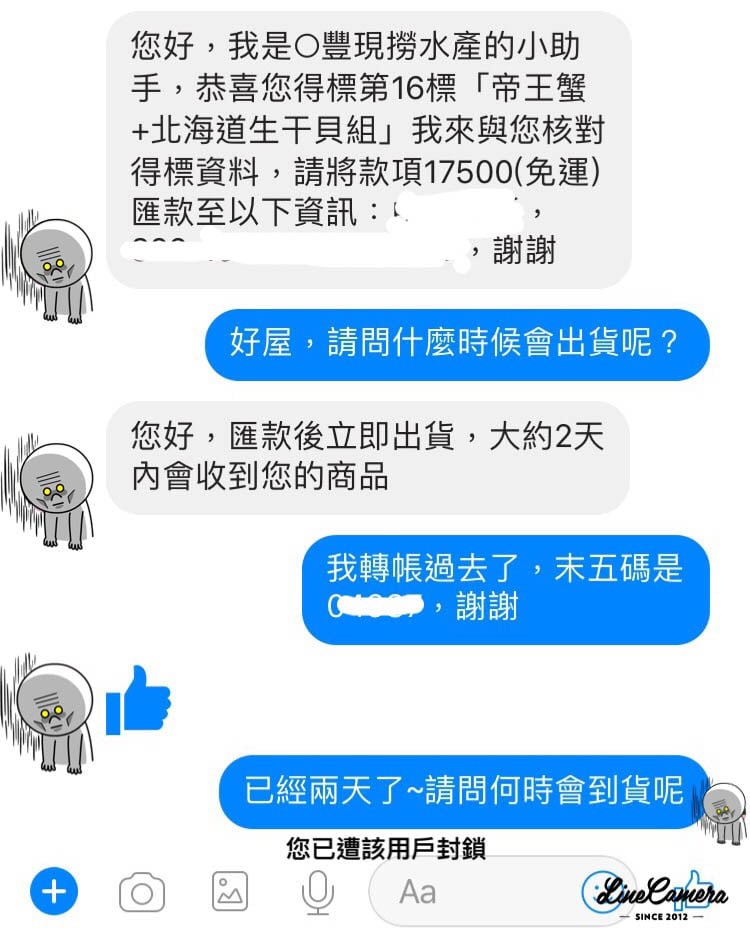
Trusting the message, Ms. Tung promptly transferred the full amount to the account provided. When she forwarded the transfer receipt to the merchant’s official Facebook fan page to confirm fulfillment, the merchant replied that they had received no payment and noted that the account she transferred to was not their official account. When Ms. Tung went to check her chat history with the alleged assistant, she discovered the account had already blocked her, realizing she had fallen victim to a scam.
The Criminal Investigation Bureau reminds the public that when engaging with emerging shopping formats like live stream auctions, buyers should carefully evaluate seller ratings, choose well-established and verified sellers, and strictly use officially published checkout methods. Never alter remittance channels or transfer money simply because an alleged assistant contacts you via private message. If in doubt, promptly call the 165 Anti-Fraud Consultation Hotline for verification.

Related Reading
- Warm and Sweet Scam SMS Messages: Awareness Needs Strengthening
- High-Tech Fraud: Smartphone and Internet Scamming Techniques
Support Independent Perspectives & In-Depth Insights
Every thoughtful analysis and candid critique comes from our dedication to truth and quality. We choose not to follow sensational algorithms or clickbait headlines.
Sustaining independent research requires reader support. Make a one-time or monthly contribution, securely processed by Google.
Payments secured by Google · Manage or cancel anytime in your Google Account




Comments