
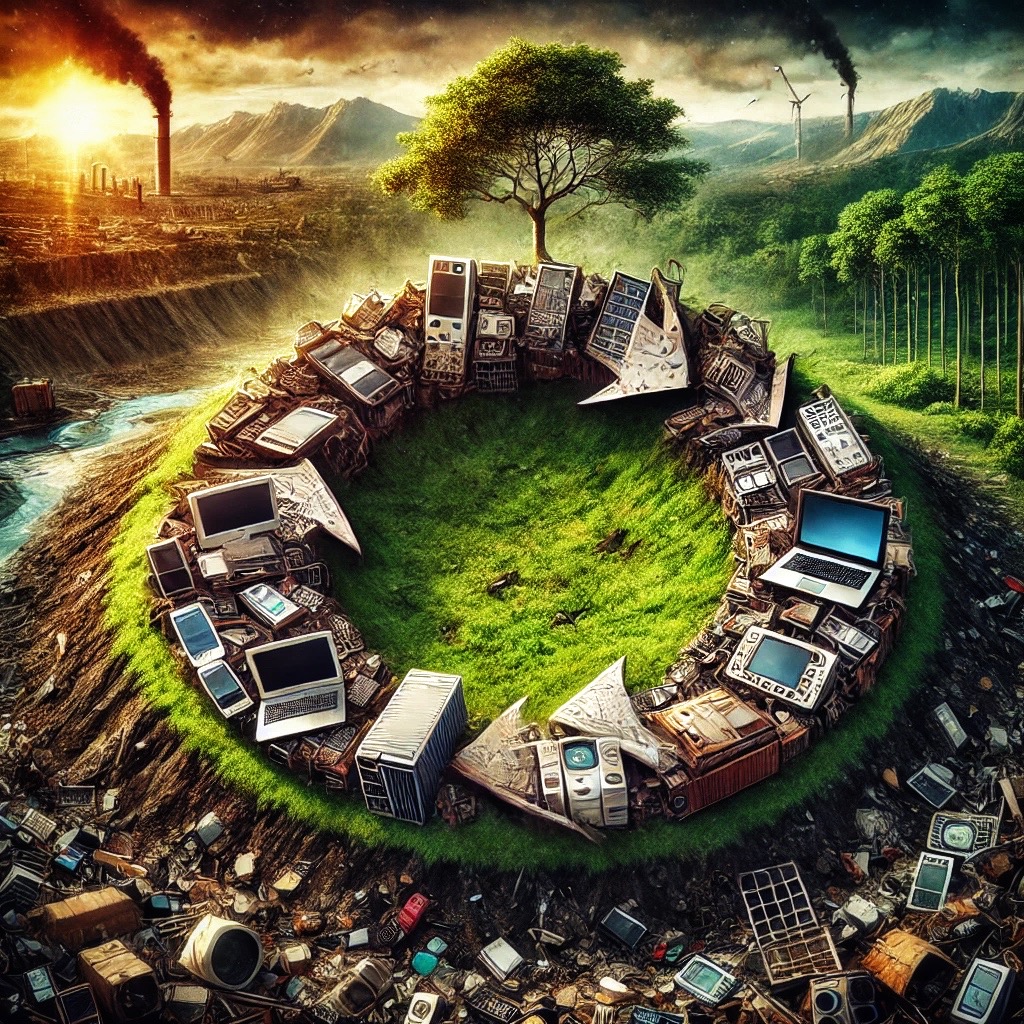
The rapid pace of global technological progress has undoubtedly brought immense convenience and efficiency to modern human society. Yet behind this glittering facade lies a hidden price that is all too often ignored: as electronic devices are replaced at an ever-accelerating cadence, we appear trapped in a never-ending 「consumption cycle」.
Every year, countless multinational corporations release incremental product revisions, enticing millions of consumers into an endless treadmill of upgrades. This consumption model not only drains personal finances but also inflicts irreversible damage upon the global environment.
In past decades, consumer electronics were built primarily for longevity. Whether it was an early mobile phone or a bulky cathode-ray tube television, appliances were engineered to function reliably for ten, fifteen, or even twenty years.
By contrast, modern high-tech gadgets — despite their sleek industrial designs and dizzying computational power — suffer from notoriously truncated product lifespans, drawing widespread criticism from frustrated users.
This is not merely an unfortunate accident of manufacturing; it is an open, calculated strategy of 「planned obsolescence」 embedded in contemporary commercial design.
Many tech products are engineered so that internal components fail or software updates degrade performance soon after the warranty period expires, compelling consumers to replace them. What is marketed as relentless technological innovation often disguises the ruthless extraction of Earth’s finite resources and severe environmental degradation.
The annual upgrade frenzy surrounding smartphones like the Apple iPhone illustrates this phenomenon vividly. Even when the vast majority of users have no practical need for the marginal gains in processing power offered by the newest flagship, aggressive marketing continues to fuel a culture of compulsive upgrading, turning tech acquisition into a pursuit of model numbers rather than functional utility.
As gadgets are discarded at record rates, the volume of electronic waste (e-waste) is exploding. According to international environmental assessments, the world generates tens of millions of metric tons of e-waste each year, the vast majority originating from devices discarded long before their physical components have truly worn out.
Manufacturing these devices demands vast quantities of rare metals, refined petroleum plastics, toxic chemical reagents, and massive electrical energy. The extraction of raw minerals — such as lithium, cobalt, and rare earth elements — tears through fragile ecosystems, contaminating local groundwater and accelerating planetary pollution.
Even though many developed nations have instituted recycling initiatives, actual global e-waste recycling rates remain dismayingly low. Massive quantities of discarded electronics are illicitly shipped to developing nations, where crude informal recycling and incineration release dioxins, heavy metals, and toxic fumes, devastating the health of vulnerable communities.
Should the disposable lifecycle of modern electronics not prompt deep soul-searching?
Today, a growing chorus of scientists, designers, and citizens is questioning the sustainability of this linear throwaway economy. Can we break free from this consumption-driven spiral and demand truly sustainable technological alternatives? Future technology must not be measured solely by the velocity of product refreshes; it must prioritize repairability, modular architectures, non-toxic recyclable materials, low energy consumption, and circular product lifecycles.
Achieving this systemic transformation demands coordinated action from consumers, tech corporations, and policymakers alike. From embracing the right-to-repair movement to refusing unnecessary gadget upgrades, we must redefine technological progress so that it works in harmony with ecological preservation.
Are we paying too high an ecological price for fleeting digital convenience? Technology has enriched human life immeasurably, but it has also pushed Earth’s biosphere toward resource exhaustion. It is time to step back, consume rationally, and build a sustainable technological future.
Support Independent Perspectives & In-Depth Insights
Every thoughtful analysis and candid critique comes from our dedication to truth and quality. We choose not to follow sensational algorithms or clickbait headlines.
Sustaining independent research requires reader support. Make a one-time or monthly contribution, securely processed by Google.
Payments secured by Google · Manage or cancel anytime in your Google Account


Comments