
Do you love packing your bags and venturing off on independent solo trips to explore unfamiliar corners of the world? To many observers, you might be seen as a quintessential “tech backpacker” who navigates every step through digital tools.
However, beyond carefully tailoring your mountain jackets, thermal layers, and backpack to match the local climate and terrain, have you ever considered: Does the smartphone you carry every single day have internal hardware and modem specifications that hold up to international travel?
I often share this candid truth with adventurous friends: “A great smartphone will guide you to heaven and earth abroad; a poorly chosen one will make you vanish from the map in an instant—no exaggeration.”
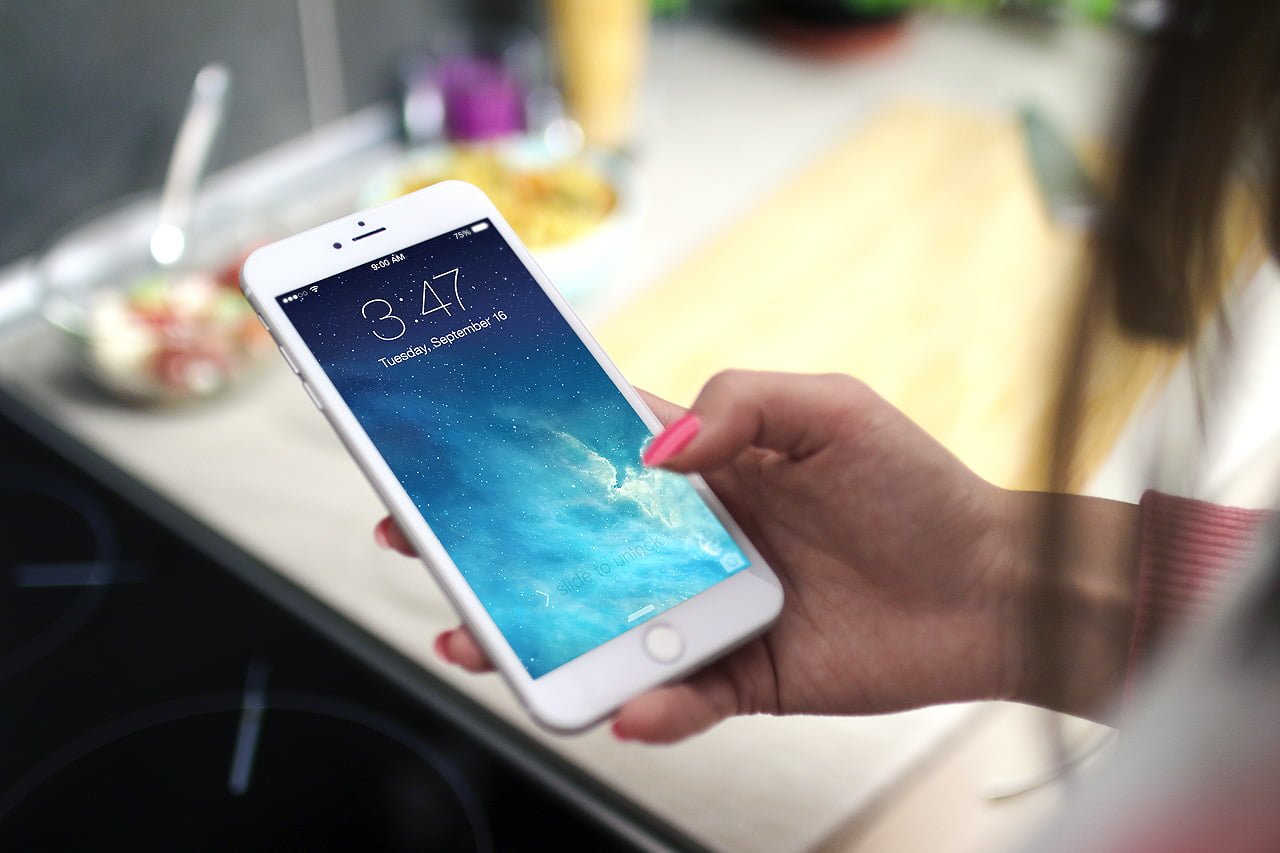
A Painful Lesson: A Wake-Up Call at Nagoya Airport and Bic Camera
A while back, I set off on another independent trip to Japan, with the centerpiece of the itinerary being the traverse across the majestic Tateyama Kurobe Alpine Route. Landing at Chubu Centrair International Airport in Nagoya filled with excitement, I followed my standard routine and stepped into an airport counter to purchase and configure a local Japanese prepaid data SIM card.
To my horror, right before the eyes of the helpful shop attendant trying to configure the APN settings, my Asus handset (Asus Zenfone 500KL) suffered a total system freeze, completely wiping out cellular and Wi-Fi connectivity on the spot!
The attendant blushed with embarrassment, while I wished the airport floor would open up and swallow me whole. I scrambled to Bic Camera in downtown Nagoya seeking technical support, wasting hours troubleshooting, only to find the phone remained stubbornly incapable of latching onto the cellular network. Just months earlier, using an identical NTT Docomo 4G SIM card on the exact same handset had worked flawlessly—even capturing faint signals across open ferry channels. Yet here at the starting gate, it ground to an inexplicable halt, nearly derailing the entire itinerary.
This unexpected crisis forced me to reflect deeply: Why do smartphones that function flawlessly back home suddenly suffer bizarre disconnections, system crashes, or complete signal blackouts the moment you cross international borders?
Hidden Pitfall 1: Truncated 4G/5G Bands and the Modem Trap
Whether you can smoothly latch onto a local cellular network abroad hinges entirely on how many radio frequency bands (Bands) your phone’s internal baseband modem supports.
Telecommunications carriers across continents and individual countries operate on vastly divergent frequency allocations:
- Mainstream Japanese Bands: Taking NTT Docomo as an example, core network capacity relies on Band 1 (2100 MHz), Band 3 (1800 MHz in Tokyo/Nagoya/Osaka), and the indispensable low-frequency rural and indoor penetration band, Band 19 (800 MHz).
- North American & European Bands: North America relies heavily on Band 2, Band 4 (AWS), and low-band Band 12/17; Europe relies primarily on Band 7 and Band 20.
The fundamental issue lies here: to reduce manufacturing costs, budget smartphone makers frequently cut corners by modifying hardware, “trimming” universal multi-band modems down into regional or single-carrier variations.
In downtown Taiwan, such a device operates without a hitch. But carry that trimmed handset to Japan, Europe, or the United States, and the moment you step outside dense metropolitan downtown cores or enter underground basements, your phone fails to detect local proprietary low-frequency bands (such as Japan’s Band 19). The handset abruptly degrades to crawling 3G speeds or displays a dreaded “No Service” alert.
Consequently, for travelers crossing international borders, a truly multi-band global phone equipped with robust high-and-low band duplexers is an absolute non-negotiable prerequisite.

Hidden Pitfall 2: Tracking Power of Global Navigation Satellite Systems (GNSS)
Beyond mobile communications, the second most vital feature for any traveler abroad is firing up Google Maps for on-foot navigation.
Many assume that as long as a spec sheet says “GPS Supported,” everything is settled. In reality, the hardware engineering of the positioning chipset directly governs your survival across labyrinthine alleyways:
- Single-Constellation vs. Multi-Constellation Systems:
Budget chipsets historically supported only the American GPS constellation. Modern flagship architectures integrate multi-constellation Global Navigation Satellite System (GNSS) frameworks, tracking the US GPS, Russian GLONASS, European Galileo, and Japan’s dedicated QZSS (Quasi-Zenith Satellite System) simultaneously. - Tactical Advantages of Multi-Constellation Tracking:
When standing amidst the high-rise canyons of Shinjuku in Tokyo, narrow cobblestone alleys in European old towns, or deep gorges in Tateyama Kurobe, single-system signals suffer severe building multipath interference. The map’s blue location dot drifts wildly or spins erratic heading vectors. Conversely, handsets supporting multi-constellation positioning double their lockable satellite count, delivering sub-second fixes and meter-level urban precision.
Why Apple’s iPhone Remains the Safest Choice for International Travel
After holistically weighing frequency coverage, hardware stability, and overseas support networks, Apple’s iPhone series consistently remains the most reliable and globally robust choice for international independent travel:
- Standardized Global Multi-Band Hardware:
Beginning with the iPhone 6S and iPhone SE onward, Apple’s globally distributed models incorporate wide-ranging high-and-low band RF transceiver designs, covering virtually all core LTE and 5G bands utilized by major worldwide operators. Popping in a compliant local SIM card rarely triggers hardware incompatibilities. - Deep Sensor Fusion and Multi-Constellation GNSS Calibration:
The iPhone’s built-in GNSS modules pair seamlessly with internal motion sensors (gyroscope, electronic compass, and barometer), offering superb directional tracking and drift resistance during pedestrian navigation, drastically reducing wasted detours. - Irreplaceable Global Apple Store Direct Retail Support:
When traveling abroad, a traveler’s worst nightmare is liquid damage, a shattered display, or a catastrophic system brick. Regional brand service centers are scarce in foreign cities, whereas Apple maintains company-operated Apple Stores across major tourist capitals worldwide. Booking a Genius Bar appointment can secure same-day diagnostic testing, parts replacement, or official repairs. This globally consistent safety net is an advantage competitors struggle to match.
3-Step Smartphone Health Check for Tech Backpackers
To ensure your next overseas expedition proceeds without a hitch, take five minutes before departing to complete these checks:
- Verify Primary Frequency Bands in Your Destination: Look up the destination carrier’s active cellular bands online before leaving (e.g., when visiting Japan, confirm your device supports LTE Bands 1, 3, 19, and 28).
- Ensure Your Handset is Factory SIM-Unlocked: Verify that your phone is completely SIM Lock-Free, allowing it to register on any overseas MVNO tourist SIM card without carrier restrictions.
- Pre-Download Offline Maps and Critical Credentials: Download offline maps for your destination cities inside Google Maps, and screenshot your electronic flight tickets, hotel reservations, and emergency contacts to your photo gallery. Even if you hit a transient cellular dead zone, you will remain fully oriented.
Conclusion
A smartphone has evolved far beyond a gadget for calls and text messages; it is modern travelers’ digital compass, pocket interpreter, and emergency lifeline on foreign streets.
Choose a dependable smartphone engineered with comprehensive global cellular bands, multi-constellation GNSS tracking, and rugged system stability. Don’t let minor cost-cutting on hardware specifications become the invisible culprit that ruins an otherwise unforgettable journey!
Support Independent Perspectives & In-Depth Insights
Every thoughtful analysis and candid critique comes from our dedication to truth and quality. We choose not to follow sensational algorithms or clickbait headlines.
Sustaining independent research requires reader support. Make a one-time or monthly contribution, securely processed by Google.
Payments secured by Google · Manage or cancel anytime in your Google Account


Comments