
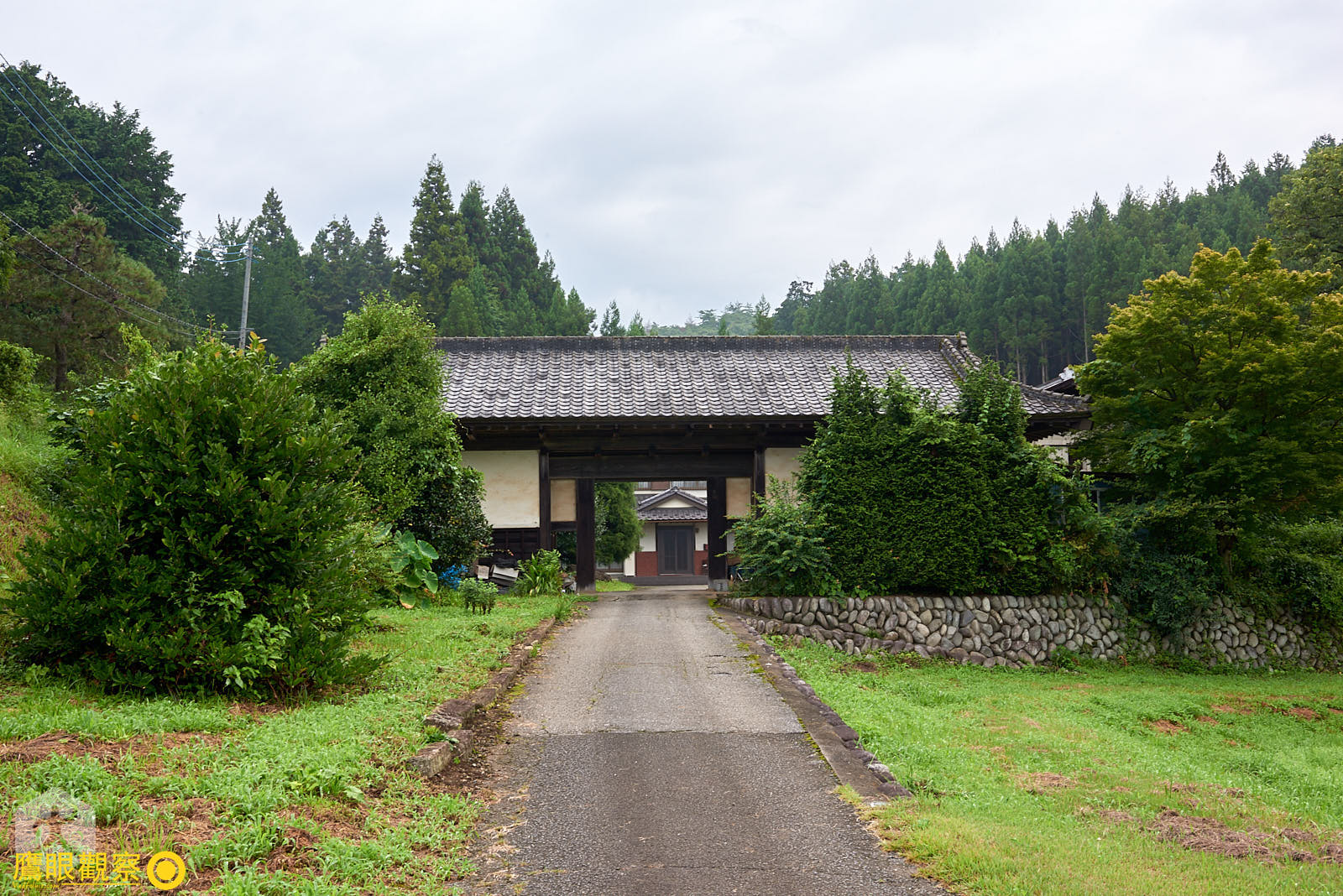
On the battlefields of Japan’s Sengoku period, when two armies faced off, soldiers often did not rely on writing to tell friend from foe, but on the family crests on banners and armor — patterns like the three-leaf hollyhock, six coins, and quince crest gleaming through the dust, becoming the most direct language of identity.
These visual symbols, now regarded as emblems of Japanese culture, actually originated in the official-rank costume system of China’s Tang dynasty.
Japan’s Teijō Zakki (18th century) records that “the matter of crests was modeled on the Tang system with additions and omissions,” and the phrase “additions and omissions” precisely describes selective adaptation. We can also find the historical thread in the 62% compositional similarity between the Tang-dynasty “lion-pattern brocade” held by the Shōsōin and early warrior-family patterns (such as the Ashikaga lion crest), as measured by the Tokyo National Research Institute for Cultural Properties. It was not until the 15th century that native elements in Japanese patterns rose to 83% (according to Quantitative Analysis of the Evolution of Japanese Patterns).
Comparing the histories of China and Japan reveals an intriguing phenomenon: when China, from the Song dynasty onward, expanded social education through the civil-service examination system, large amounts of writing gradually replaced simple graphic marks — yet the Japanese instead carried this graphic system forward and made it flourish. The reasons lie not only in the social-structural feature that Japan had relatively few noble families, but also in the practical need created by the persistently high illiteracy rate of Japanese society at the time.
Few Families: The Special Soil for Crest Inheritance
Compared with China’s vast gentry system, the number of families in ancient Japan qualified to use crests was extremely limited. In the late Heian period, the court nobles who actually held the right to use crests numbered only about a hundred; by the warrior-government period, although the samurai class expanded, the small families possessing formal family crests were still kept to a few thousand. This “elite club” scale allowed most families’ crests to gain ample social recognition and room for transmission.
By contrast, in China, since the Wei-Jin and Northern-Southern dynasties, top-tier gentry clans like the Wang of Langya and the Xie of Chenjun alone numbered in the dozens, and local powerful clans numbered in the tens of millions. From the Song dynasty onward, as the examination system matured, writing hall names and compiling genealogies became more universally applicable ways of marking identity. The Ming Hundred Family Surnames recorded 504 surnames, and the Qing exceeded 2,000. Under such a vast base of families, a graphic marking system inevitably gave way to the more scalable writing system.
A Visual Solution for an Illiterate Society
By contrast, literacy in medieval Japanese society remained below 10% for a long time. According to A Study of the History of Japanese Illiteracy, even samurai who could read and write classical Chinese during the Sengoku period numbered no more than 30%, and the commoner class was under 5%. In such an environment, graphic family crests were the most effective identity-recognition system:
- Battlefield identification: Although Uesugi Kenshin’s “Bi” banner and Takeda Shingen’s “Wind-Forest-Fire-Mountain” banner contained writing, ordinary ashigaru mainly relied on color and pattern to identify them. The Sanada family’s six-coin crest and the Tokugawa family’s three-leaf hollyhock crest both used highly symbol-ized designs to ensure recognition at a distance
- Document substitute: Farmers often used family crests instead of signatures on annual-tax ledgers, and it was very common in the Edo period for merchants to stamp house-name crests on contract documents
- Legal effect: In the 1595 Sword Hunt Edict issued by Toyotomi Hideyoshi, the registration of confiscated weapons explicitly required that “those who cannot write may draw a finger as a mark,” and this “finger mark” was often a simplified family crest.
Notably, this tradition of relying on visual symbols even continued into the modern era. When the Education System was promulgated in Meiji 5 (1872), the Japanese government even specifically stipulated that “family crests may be used as formal seals,” reflecting how deeply rooted graphic symbols were in social cognition.
Localization: The Transformation from Tang-Style Patterns to Japanese Aesthetics
Japan’s absorption of Tang patterns was not, after all, simple imitation or copying. Heian nobles simplified the baoxiang flower of Tang patterns into the chrysanthemum crest and transformed the cloud-crane pattern into the flying-bird pattern; the warrior class also developed designs with warrior characteristics such as the “sword ginkgo” and “arrow feather.” This transformation shows a distinct functional orientation:
- Principle of simplification: simplifying the Tang’s complex interlocking vine patterns into geometric lines, such as the Ashikaga family’s two-bar crest using only two horizontal lines
- Shift of meaning: auspicious creatures in Tang patterns such as the phoenix and qilin were replaced by native Japanese auspicious motifs such as pine, bamboo and plum
- Battlefield adaptation: warrior crests generally adopted high-contrast colors (black on white, gold on red) to improve recognition
The rise of townsman culture in the Edo period further gave birth to the unique phenomenon of “composite crests” — merchants combining multiple family crests for use, forming a visual identity similar to a modern corporate VI system. The Mitsui family’s “well-crib three-cover pine” and the Sumitomo family’s “well-tube paulownia” are typical examples. Such commercial applications were closer to people’s daily lives than the Tang crests’ original function as noble identity markers.
The Crest Gene in Modern Society
Today, about 20,000 registered family crests are still active in Japanese society. From the Mitsubishi Group’s “three-diamond mark” (a variant of the Iwasaki family crest) to the noren crests of old Kyoto shops, the enduring vitality of these visual symbols stems essentially from Japanese society’s cultural inertia in processing graphic information.
A 2015 University of Tokyo study found that modern Japanese people’s average recognition accuracy for family-crest patterns reached 68%, far higher than the recognition rate for Chinese calligraphic signatures (42%). This cognitive difference is precisely the traditional memory shaped by a thousand years of visual tradition.
Historian Okamoto Takashi once pointed out: “The survival of Japanese family crests is not cultural conservatism, but the optimal solution of social choice.” When we admire the plum-basin crest of the Kaga Maeda family in a Kanazawa tea room, or look up at the Mitsubishi Group’s logo at the Marunouchi exit of Tokyo Station, what we see is not only an aesthetic inheritance, but a civilization’s creative response to specific historical conditions — under the dual constraints of a limited number of families and low social literacy, Japan recombined foreign cultural genes into a unique cultural DNA. This may well be one of the most intriguing paradigms in the history of East Asian civilizational exchange.
Support Independent Perspectives & In-Depth Insights
Every thoughtful analysis and candid critique comes from our dedication to truth and quality. We choose not to follow sensational algorithms or clickbait headlines.
Sustaining independent research requires reader support. Make a one-time or monthly contribution, securely processed by Google.
Payments secured by Google · Manage or cancel anytime in your Google Account


Comments